Warfare is a challenging subject, and it should be. Violence,
deprivation, and destruction are the dark side of human
behavior (fig. 1). The realities of warfare
nonetheless repeatedly define nations through landscape-scale
strug-
gles, born in distant political capitals, that visit
themselves upon the ordinary person. As a society, we are
often ashamed of conflicts even as we celebrate the valor of
the heroes who fight in them. As individuals, we nearly all
carry a story of the ways in which our family has been touched
or traumatized by conflict.
Literary and artistic renditions provide a reference to travails through a chain reaction of bravery and grief that we struggle to filter through a generational lens. We scrape around to find the encouragement of ancient words as a shorthand for our own disbelief and shock at the raw misery of conflict and its aftermath, like the young man from Steven Crane’s The Red Badge of Courage who envisions his mother admonish-ing him with the Classical reference “come back with your shield or on it” while of course—as mothers will—she expresses only lament as he enlists. As archaeologists, our reticence to contemplate warfare is further conditioned by a desire to seek out the wondrous positives of ancient civilizations. When we do look for signs of ancient conflict, we can be deflected by confirmation bias that defaults to a gentler understand-ing of the past. Architectural evidence for violence often is ambiguous, with outcomes similar to the slow natural degradation and casual pilfer-ing of centuries that turn thriving structures into ruins. Historical texts of warfare and casualties are often interpreted as exaggerated, and an understandable reticence to study human remains has foreclosed some of the most direct evidence of combat.
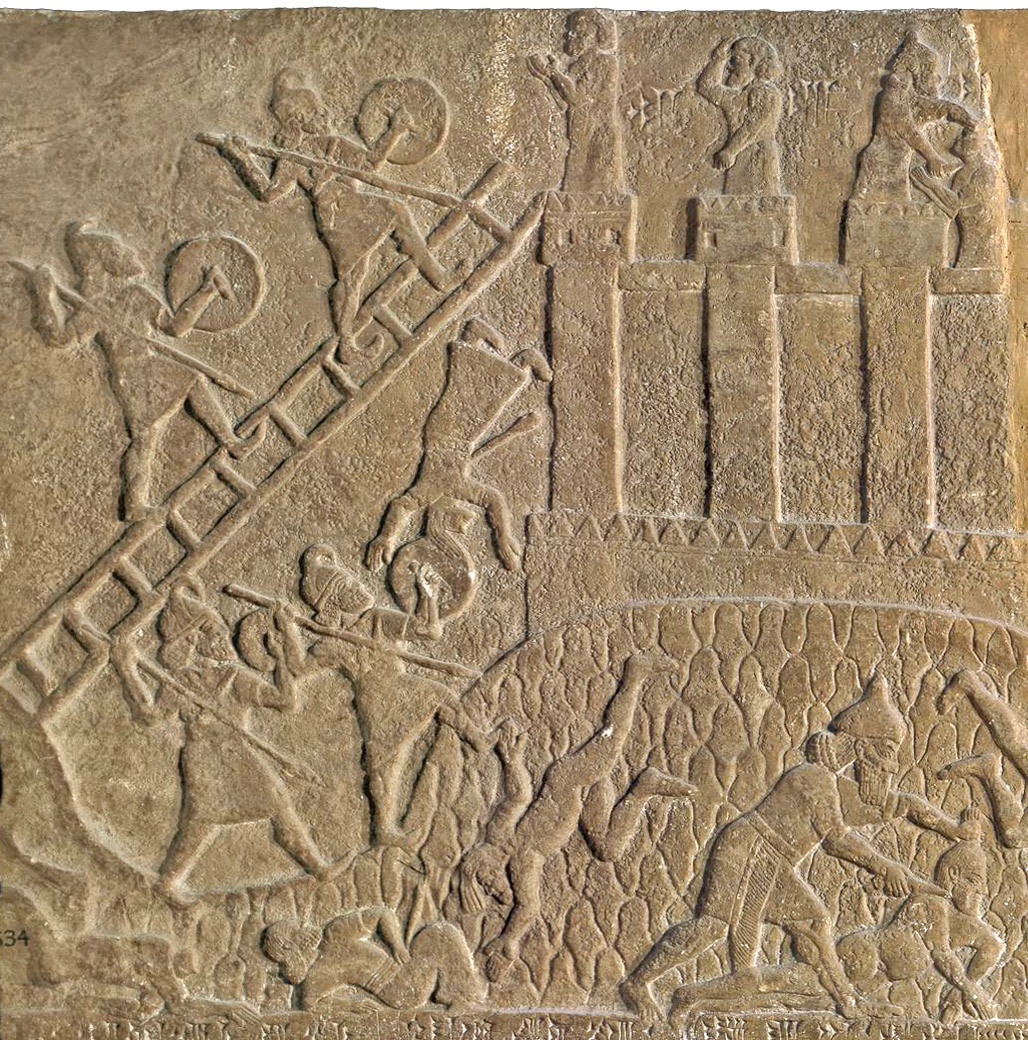
Like many others, for much of my career I elected to look past the cultural causes of disintegration and avoided the subject of conflict in my research. I much preferred to focus on the constructive parts of human society, such as cities and institutions. I also found that people who stud-ied warfare tended to be a little pugnacious themselves, making them unappealing to talk to at conferences and dinner parties. Warfare was a wasteful fact of both human society and academic conversation, and I wanted nothing to do with it.
But about three years ago I was contacted by old friends who were organizing a symposium about warfare for the Society for American Archaeology annual meetings. They were looking for someone to rep-resent South Asia in their global session. Would I consider joining them? I initially hesitated but realized that my distaste for the subject was a blind spot that I should not ignore. I went to the conference and found myself amid a dozen of the nicest people I have ever met, all of whom had done tremendous work on the subject of warfare in both small-scale and complex societies. The conference session subsequently won an award, allowing us to meet again and engage in a deeper conversation at the Amerind Foundation in Arizona. The outcome was a book entitled Warfare and the Dynamics of Political Control (University of Arizona Press, 2025).
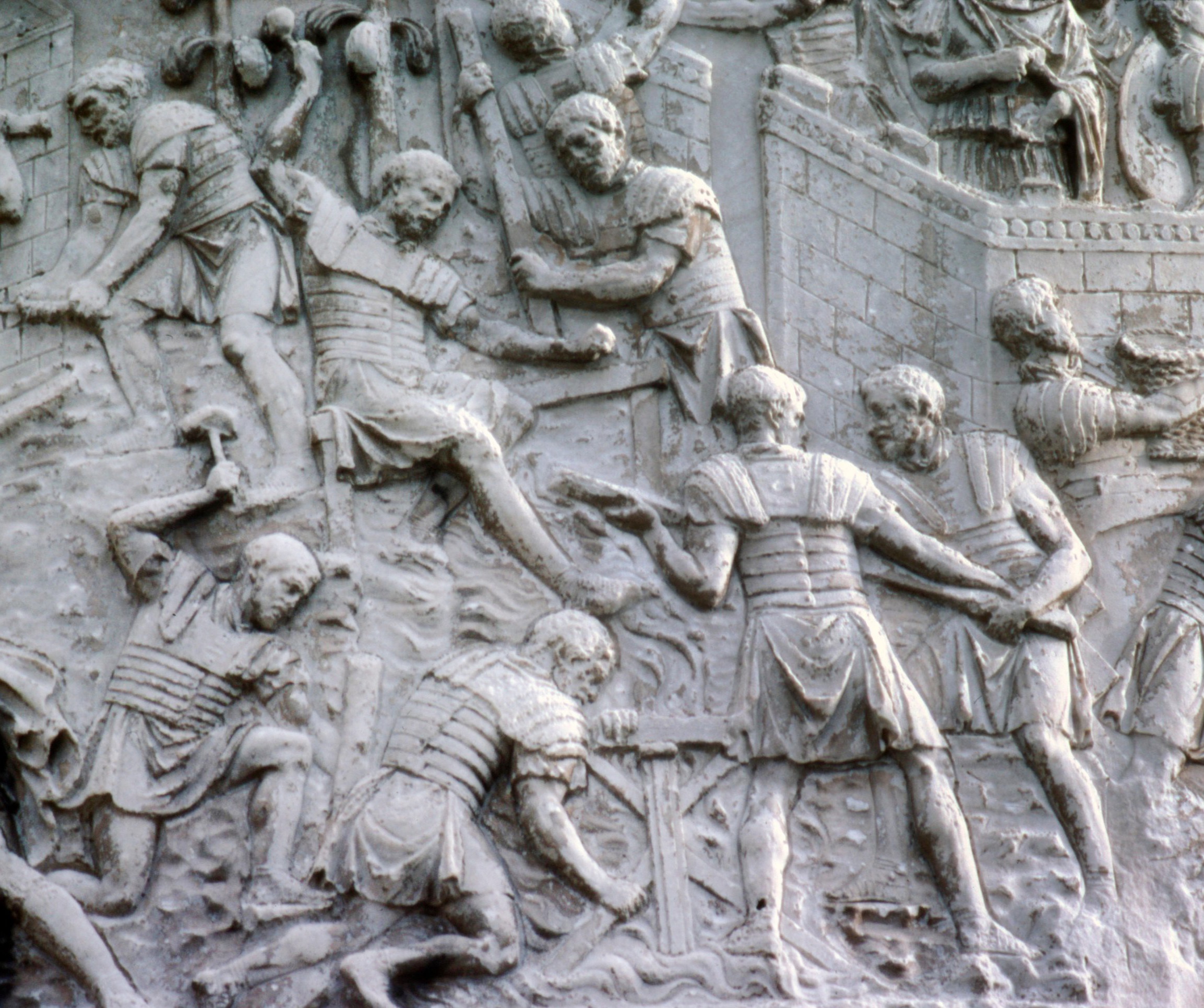
My colleagues were deeply committed to understanding warfare as an often-irreplaceable component of political economy. Warfare was more than just a phenomenon of battles taking place at specific places and times. Instead, warfare was a matter of ongoing investment and strategy built into a lasting landscape of construction and logistics. The preparation for warfare engaged many more people than any battles that ensued, often resulting in dual-use infrastructure that improved local conditions and remained on the landscape for centuries (Fig. 2). The aftermath of recovery also resulted in new opportunities for at least some segments of society, including merchants and farmers, who bene-fited from new connections.
HOW TO STUDY AN INVISIBLE SUBJECT?
Understanding warfare in the Indian subcontinent is challenging, in part because of the historical expectation of pacifism that has permeated most outsiders’ understandings of the region. The twentieth-century nonviolence movement received its most globalized proponent in the form of Indian activist and nation-builder Mahatma Gandhi, whose nur-turing of the concept of peaceful public protest was elemental to South Asia’s independence from Great Britain. Unfortunately, the real story of colonial devolution and the independence of India and Pakistan in 1947 (with a further disaggregation of Pakistan and Bangladesh in 1971) was violent at the time and remains volatile today.
Archaeological and historical assessments of warfare demonstrate that preparation for conflict and the reality of its aftermath were always a part of civilization in South Asia, as they were elsewhere in the world. Could warfare be approached as a scholarly subject, putting aside a sense of apology and dismay at its existence? I decided that my interest in warfare was guided by a desire to understand shifts in the logistics of conflict over time and the way in which preparation for warfare constituted a cre-ative and consolidating factor in the societies of the Indian subcontinent. The Bronze Age Indus period of the region that is now in Pakistan and western India is represented by a somewhat enigmatic cultural cohesion that does not at first glance seem to involve conflict. Nonetheless, the presence of walled precincts within cities such as Harappa and Dholavira starting more than 4,500 years ago has led researcher Mark Kenoyer to propose that the compounds were the domains of competing merchant communities. Aside from that, there is no iconography of violence and the script remains undeciphered, although the presence of considerable wealth in both small and large sites of the Indus period suggests the potential for strife. Around 1900 BCE, the Indus cities began to be aban-doned, resulting in a nearly 1,000-year period of a return to small villages across the subcontinent.
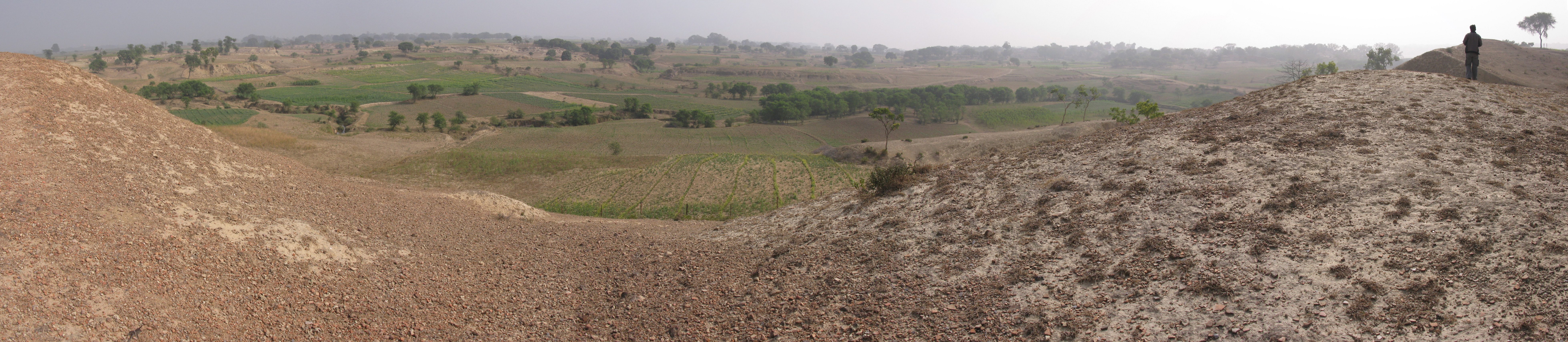
In the mid-first millennium BCE, people once again started con-gregating in sites that we can call cities on the basis of their size and occupational density (fig. 3). In the Early Historic period (circa third century BCE–fourth century CE), more than half of the subcontinent’s urban settlements had massive encircling ramparts that enclosed their popula-tions. Research by our joint Deccan College–UCLA team has focused on one such site in eastern India at Sisupalgarh near the modern state capital of Bhubaneswar. Excavations by our team, and prior work by the eminent Indian scholar B. B. Lal in the 1940s, confirmed that the site had been occupied prior to the emplacement of the city walls. The development of walls signaled the presence of a substantial population, with a rampart that was more than 4 km in length and still stands more than 9 m high.
The Early Historic period was not only a period of urbanism but also an era of writing that we can read to understand civic and political intentions. There were significant religious transformations in the form of distinctive sites of the Buddhist and Jain traditions, along with the eventual development of early Hindu temples. In this era, city walls were just one of the types of collective constructions that occupied the minds of architects and the hands of thousands of laborers. City walls were multipurpose: They constituted a silent sentinel of defense that could deter attacks but were also handy focal points of taxation and a clear marker of belonging for the urban residents. Walls thus served as an ongoing symbol of urban iden-tity and administration that had a constant effect, regardless of any actual conflict.
In the Early Historic period, the archaeological record of offense and defense is relatively rare, limited to occasional finds such as spearheads and the caltrops found by Professor Lal in his excavations at Sisupalgarh. Evidence for an ethos of warfare is primarily found in epic poems such as the Mahabharata and the Ramayana, which are replete with extensive and gory battles among deities and demigods. We know that real human warfare occasionally took place too, as signaled by the written inscriptions of the third century BCE ruler Ashoka. An able administrator who built roads and monasteries, planted trees, and dug wells, he also described a battle in which he was victorious but remorseful, writing that “when an independent country is conquered, the slaughter, death, and deportation of the people is extremely grievous.” As in the Indus period, Early Historic warfare was primarily expressed in the multipurpose walling of cities, with the evi-dence for actual conflict relatively rare.
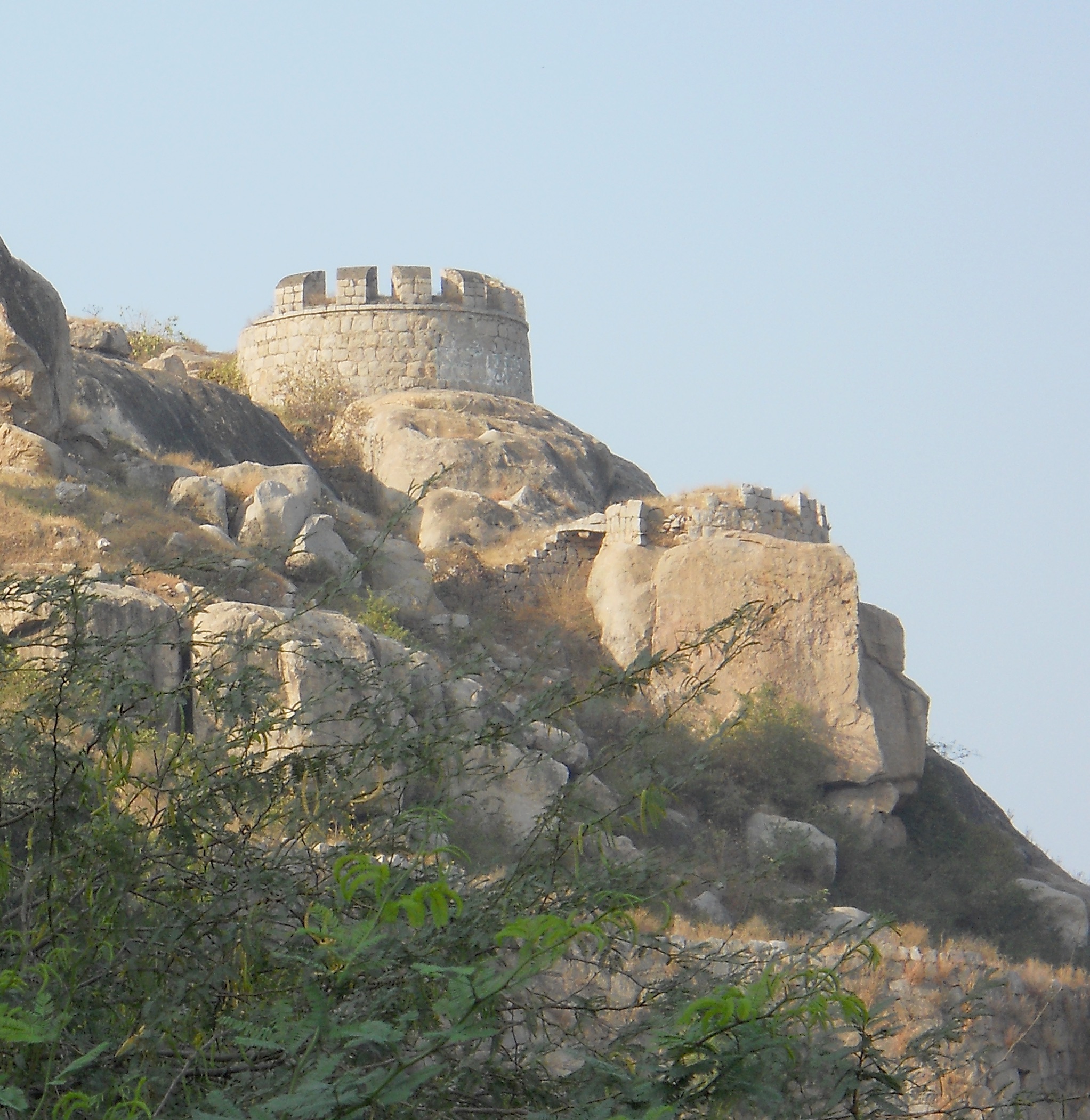
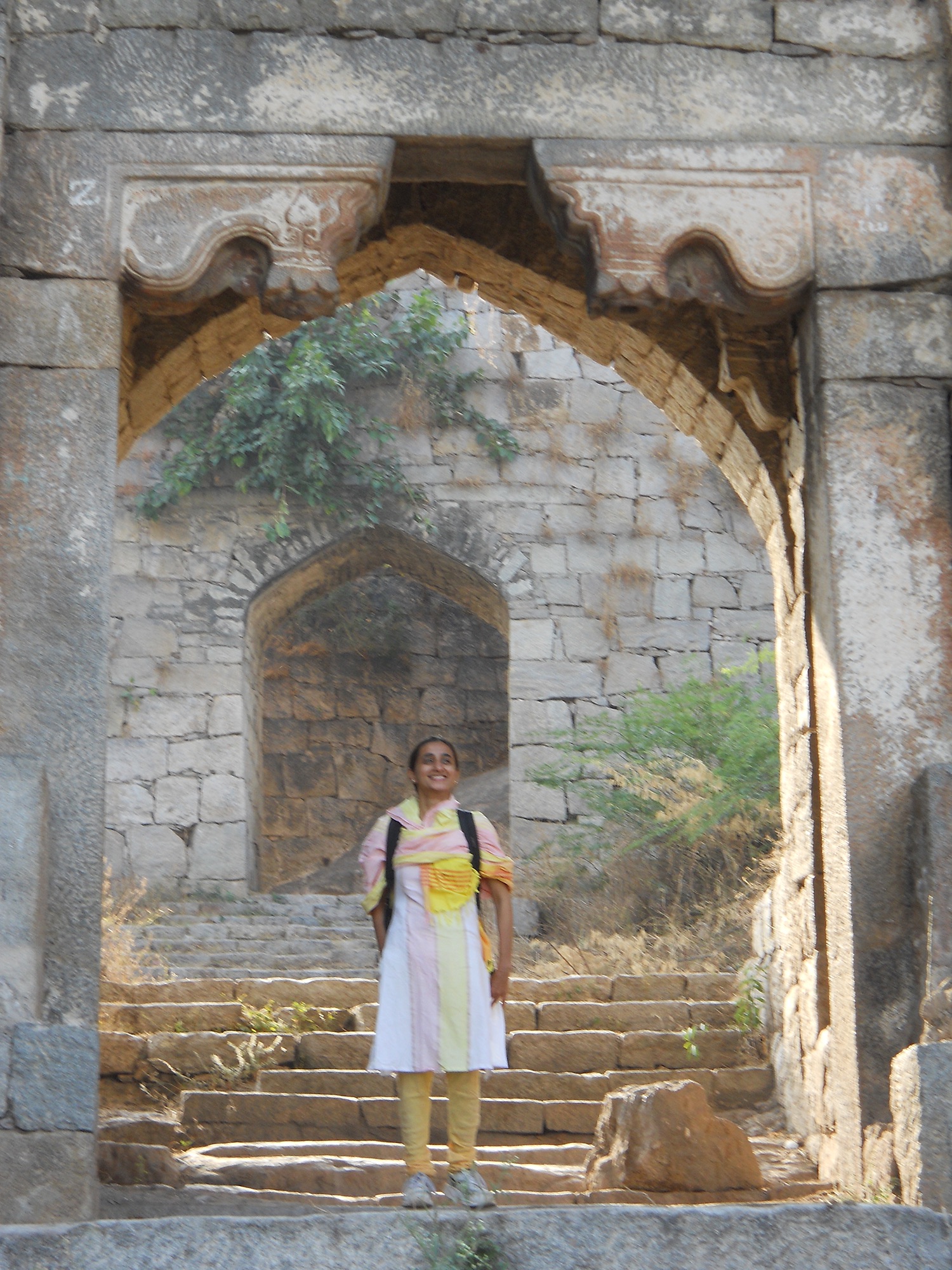
The political attitude toward warfare was considerably different in the medieval period, starting circa 900 CE, as political entities began to put their stamp in extensive rural areas to consolidate and contest territories. Cities became larger and denser, but the focus of warfare shifted to the countryside with the construction of thousands of rural forts, many of them in nearly inaccessible locations (fig. 4). The placement of these fortifications in long chains of defensive outposts meant that the arms race of the area was focused on pinnacles and choke points as much as on weapons. Historical texts reveal that warfare increased dramatically in scope and frequency in the medieval period, with devastating battles and sieges of civilian and military populations. The number of casualties and the incessant nature of long-term war parallel those of better-known conflicts, such as the English Wars of the Roses and the American Civil War. But strife and death were not the only outcomes of a building program that resulted in a densely populated landscape of offense and defense. Some fortifications were used only occasionally for military engagements, as ref-uges and forward bases; some fortifications were started and never used; some fortifications became anchors of repeated rebuilding and remain on the landscape as points of reference (fig. 5). Some of the most dramatic forts have been reclaimed as heritage properties, especially in the western state of Rajasthan, but the map of medieval fortifications shows that the entirety of the subcontinent was blanketed in military constructions.
NEW STRATEGIES FOR ARCHAEOLOGY: A BIG-DATA APPROACH
A map is one of the most basic elements of archaeological research and publications, providing a visual reference that does more than enable the reader to discern locations. As geographers will confirm, the making of a map is as deliberate as the creation of its accompanying text. For my research project on warfare, it seemed that nothing could be simpler than creating a map! Given that I had long created maps of Early Historic sites, I could go back and create a new version on which I indicated sites that were surrounded by ramparts to communicate the impact of defensive architecture.
The medieval period was another matter altogether. I consulted my South Asian colleagues about maps of fortifications, and the answer came that there were none they knew of for the subcontinent as a whole. Fortunately, just at that moment I met an undergraduate UCLA student who had come by my office to ask about research opportunities. With a skill set in geographic information systems and an admirable tenacity for combing through publications, Connor Newton created a map of medieval fortifications that provided an illustration for the conference publication.
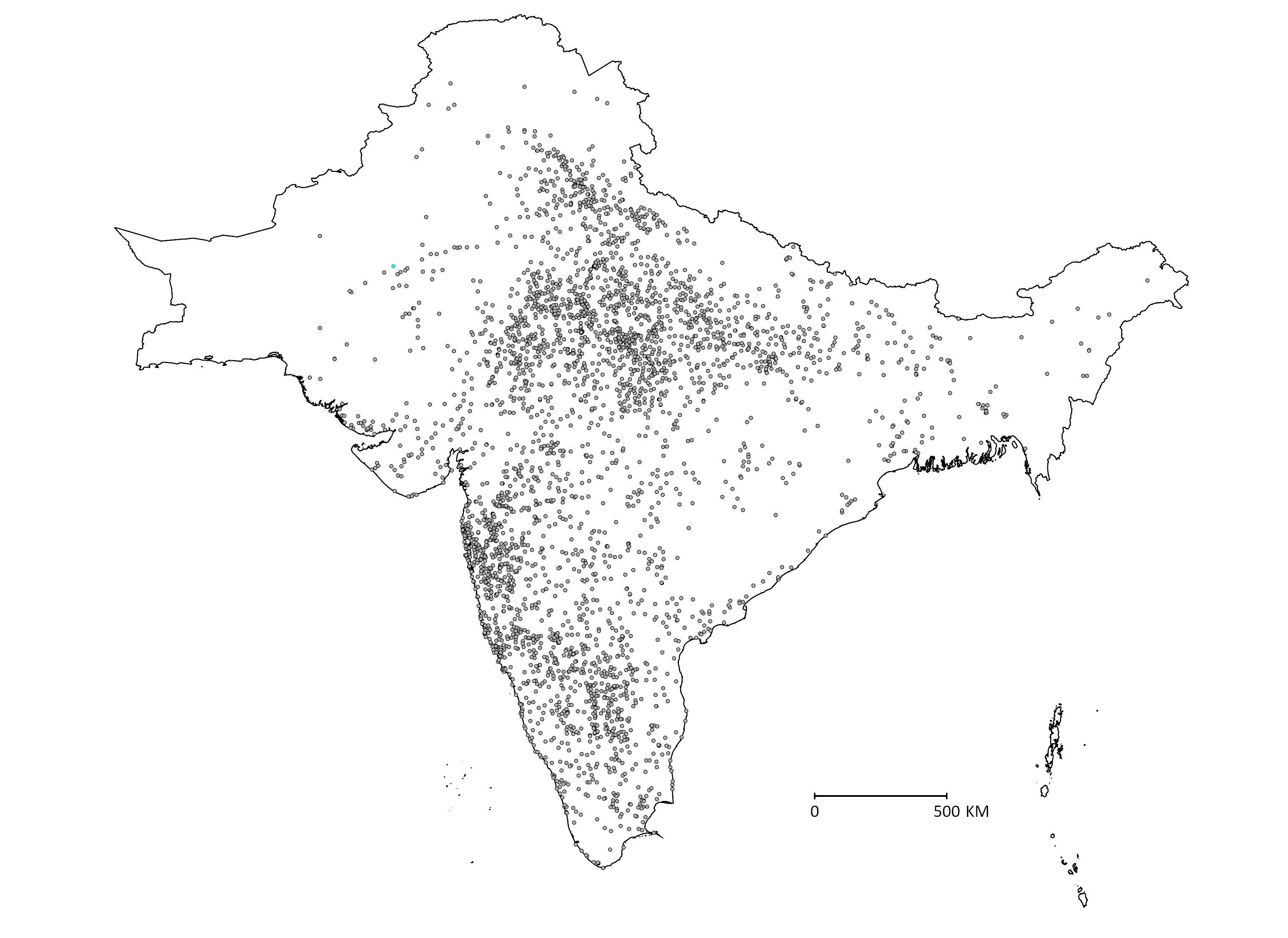
The process of making the map proved so interesting that we
sub-sequently cowrote a follow-up publication for the Journal
of Big Data describing the process and the outcome. To
construct the map, we had to consider a variety of different
types of reporting and publication. A few sites had been
excavated, and some sites had been documented in the
historical record. But many sites had yet to be visited by
researchers, and it would have taken more than a lifetime to
visit even one-tenth of the known medieval fortifications. We
turned to media sites, blogs, and pop-ular publications to
create the dataset, making use of locals’ knowledge to amass a
comprehensive depiction of sites, even if the data from some
sites were minimal. In one glance, a reader can now recognize
the tre-mendous amount of labor and materiel represented in
medieval warfare
across the subcontinent (fig. 6).
A PARTING SHOT
The outcome of my intellectual foray into warfare provided the opportu-nity to understand more about social complexity than I had anticipated. Warfare was not an aberrant or occasional activity related to the advent of states and nations but an ongoing and essential factor in political economy and statecraft. On the Indian subcontinent, warfare was an opportunity for leaders to come to terms with challenging geography and to practice converting labor into a durable show of force. Regardless of the frequency of actual warfare, the constant preparation for conflict was a political skill set that kept people organized in peacetime as well as in the punctuated moments of battle.
Here at UCLA, many of us are focused on understanding the role of heritage in contemporary communities. Living amid the physical remains of past societies provides opportunities for discovery, tourism, and a sense of identity for those who live in the regions where we are privi-leged to do our work. Components of shared knowledge and “citizen science” greatly augment what an archaeological team can accomplish on its own. New approaches to information, ranging from social media to machine learning and artificial intelligence, enable us to engage with the truly large scope of ancient cultures. But the knowledge that we gain is only as good as the questions we ask. As I learned from overcoming my own reticence to study warfare, it is sometimes the questions that we have avoided that give us the biggest picture of all.
Bibliography
Kenoyer 1998
Kenoyer, Jonathan Mark. 1998. Ancient Cities of the Indus Valley Civilization. Karachi: Oxford University Press.
Smith 2025
Smith, Monica L. 2025. From City Walls to Country Forts: Changing Landscape Intentions of Social Complexity from the Early Historic to Medieval Eras in the Indian Subcontinent. In Warfare and the Origins of Political Control, edited by Brian R. Billman, pp. 167–85. Tucson: University of Arizona Press.
Smith and Newton 2024
Smith, Monica L., and Connor Newton. 2024. Cartographies of Warfare in the Indian Subcontinent: Contextualizing Historical Analysis Through Big Data Approaches. Journal of Big Data 11:1–20.