It was another busy academic year for the Experimental and Archaeological Sciences Lab (EASL). The lab was filled with stu-dents conducting research and learning how to use various analytical techniques for the study of ancient materials and technology. We continued to provide research support for graduate students in the Interdepartmental Archaeology Program and affiliated departments. The EASL participated in several open house events organized by the Cotsen Institute as part of its growing outreach efforts. The lab created volunteer opportunities for undergraduate students, introducing them to the fields of archaeological science and cultural heritage preservation.
OPEN HOUSES
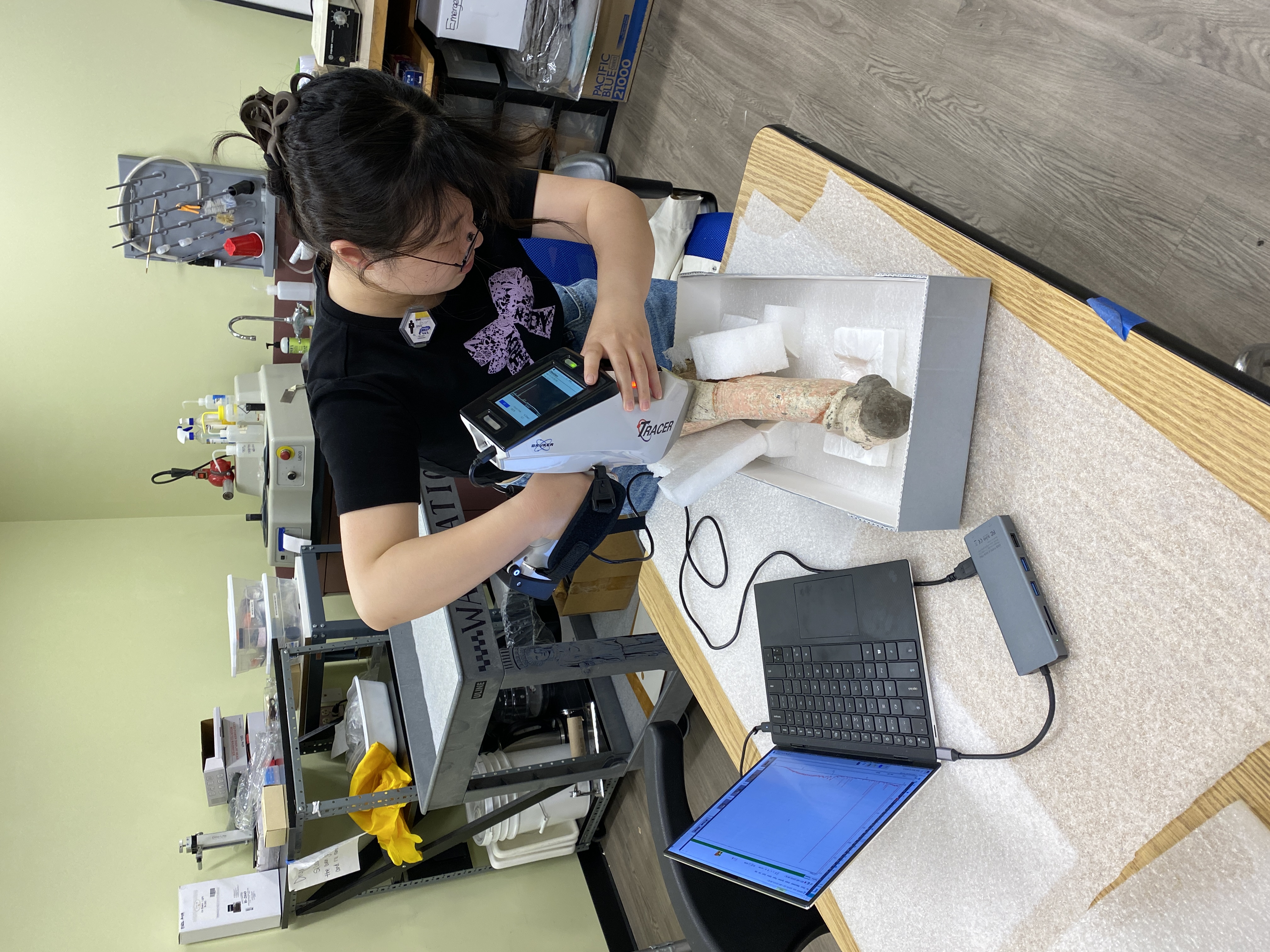
The Cotsen Institute held three open house events during the last aca-demic year, and the EASL was open for each of them. The events varied in their focus, with different programs geared toward K–12 students, community college and transfer students, UCLA undergraduates, and the public. We highlighted different types of archaeological research that can be conducted in the lab and set up different stations for vis-itors. One station focused on experiments we conducted to reproduce Egyptian faience. Others showed visitors what type of information can be obtained using microscopy or portable X-ray fluorescence (pXRF) spectroscopy to analyze archaeological materials. For a K-12 student event, visitors were able to make vessels using modeling clay and could even try out the pottery kick wheel.
TRAINING OPPORTUNITIES
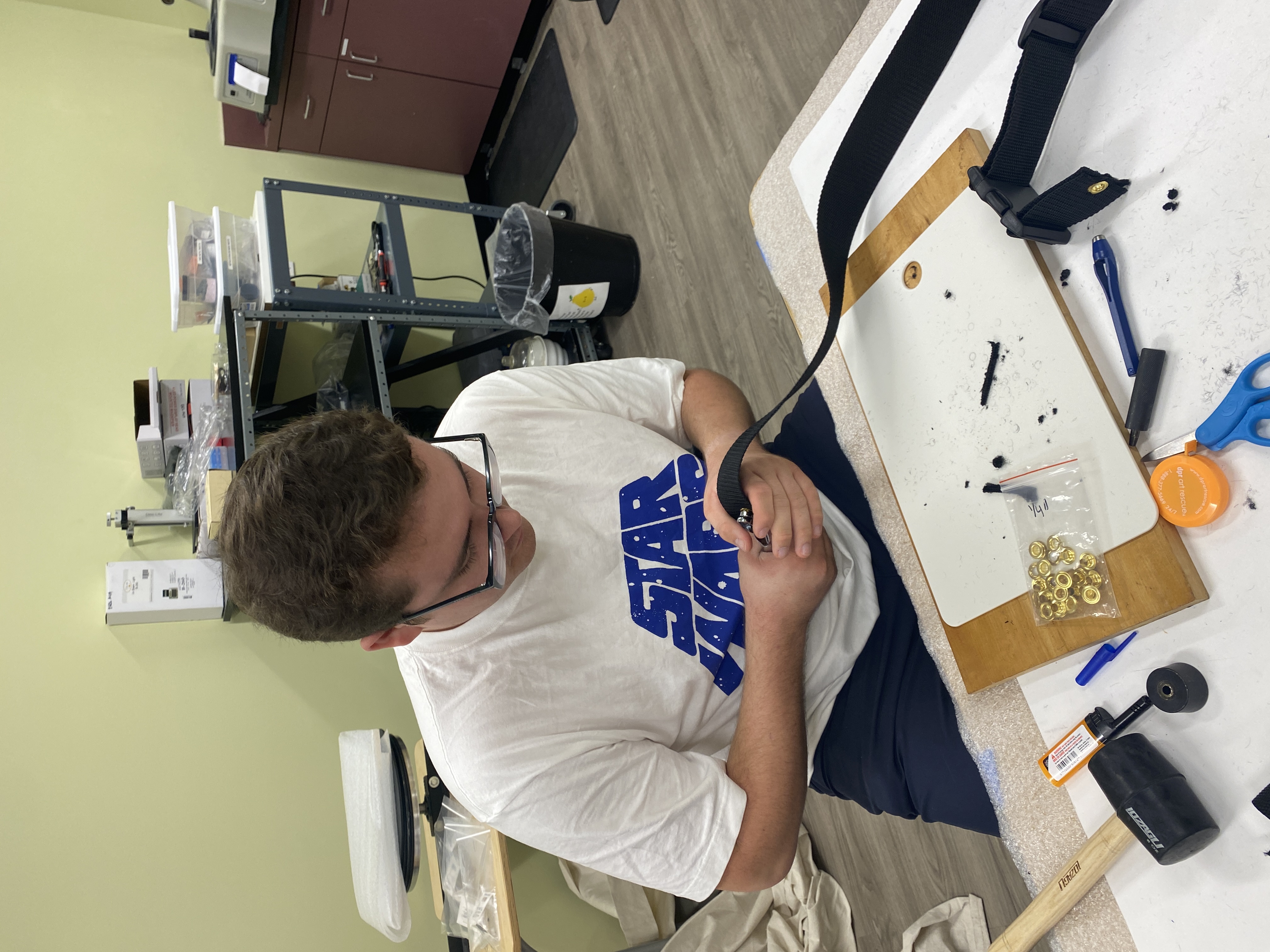
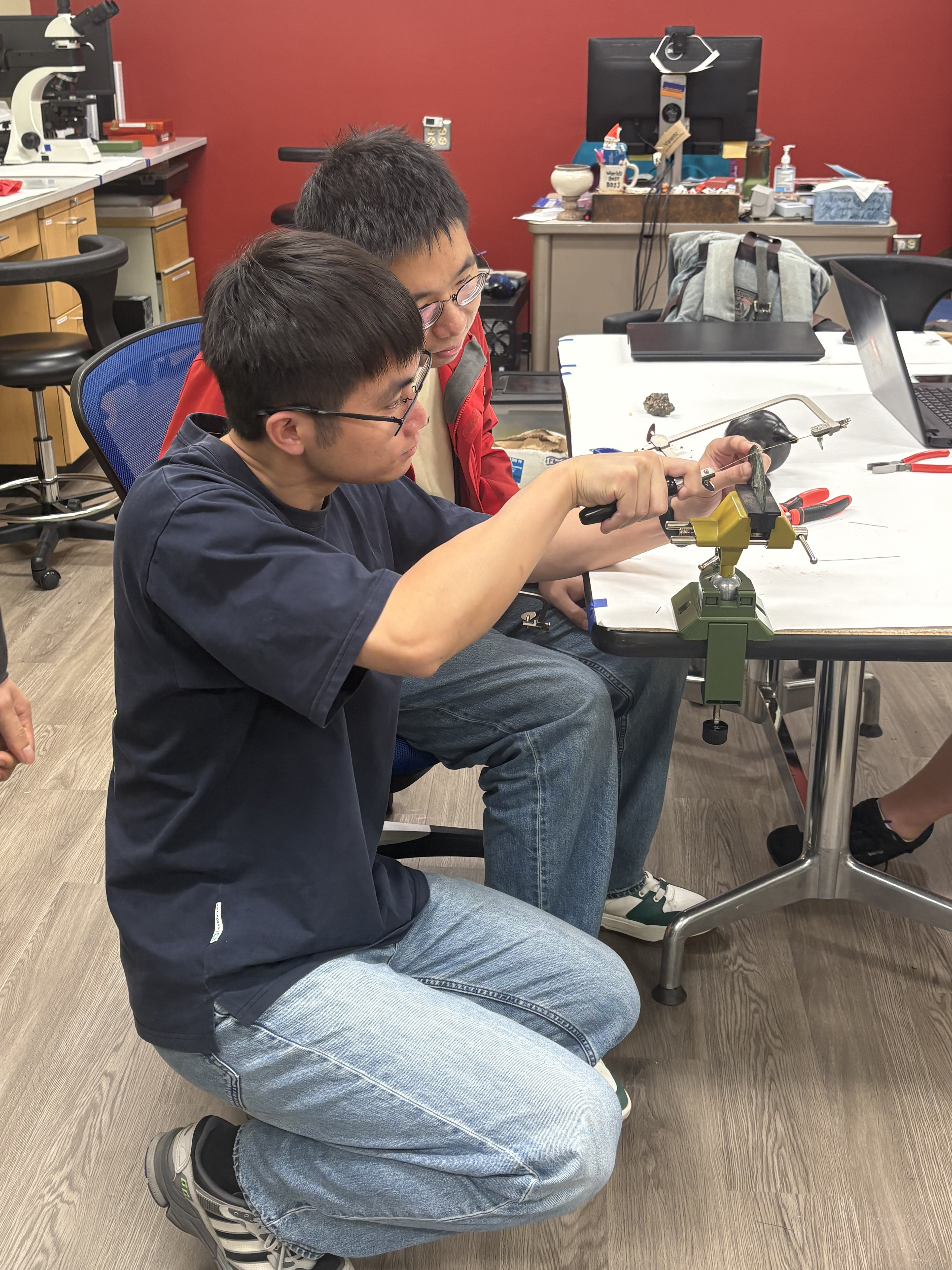
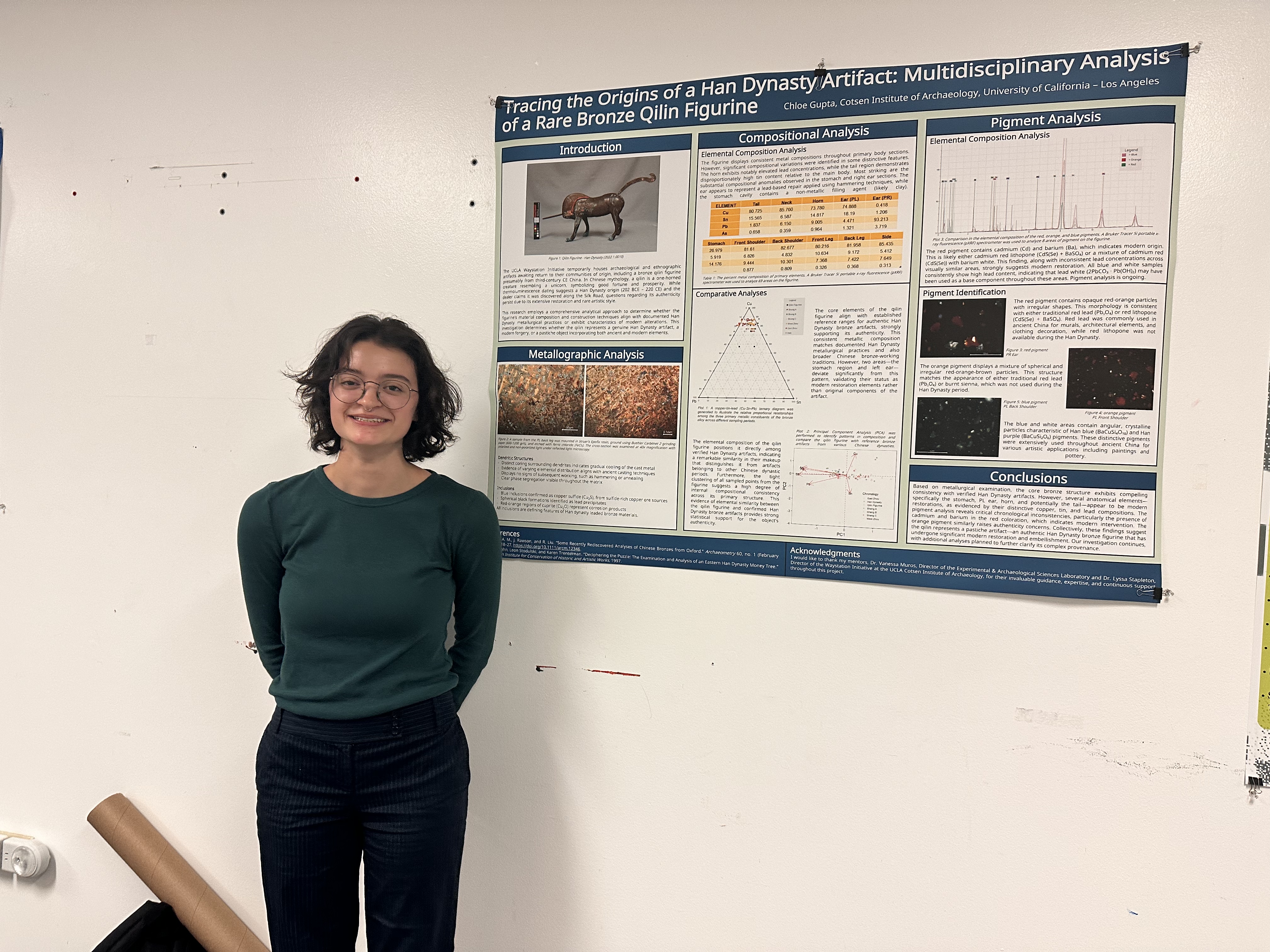
For two years, the EASL has been offering volunteer and internship oppor-tunities for undergraduate students and recent graduates interested in gaining experience in archaeological science or art conservation. Some vol-unteers have helped create a slide reference set for the study of pigments. Others have participated in research related to the Waystation Initiative. This work mainly focuses on the preservation of artifacts the Cotsen Institute is temporarily stewarding prior to their voluntary return. Volunteers have also helped with artifact photography, condition reporting, making archival storage supports, data entry, environmental monitoring, and emergency preparedness activities. They have conducted technical studies on objects to answer questions about materials and their manufacture, provenance, and authenticity. Through these outreach efforts, we introduce students to different aspects of archaeological research and work undertaken at the Cotsen Institute with which they may not be familiar. We are also able to offer unique training opportunities to students, providing lab-based skills that can be used in their future graduate studies or careers.
COURSES
In the winter of 2024, lab director Vanessa Muros began teaching a course for those seeking a graduate certificate in cultural heritage research, stewardship, and restitution, part of the Waystation Initiative. The lab-based course (M205A, Laboratory Topics in Archaeology: Provenance Research) introduces students to various scientific methods used to examine and analyze archaeological objects. Over the course of the quarter, students conduct a technical study on an assigned artifact using equipment available at the Cotsen Institute. They learn how to create a sampling and analysis methodology, take and prepare samples, conduct analysis, and interpret data to identify materials and manufacturing methods and to determine provenance and authenticity. Though most of the students are in the Waystation certificate program, students from other programs have also taken the course to apply what they learn to their own graduate research. In the future, we hope to offer the course to undergraduate students.
ONGOING PROJECTS
In collaboration with the Digital Archaeology Lab (DAL), we are develop-ing technical imaging capabilities at the Cotsen Institute to support the documentation and analysis of archaeological materials. Technical imaging encompasses a variety of specialized photographic methods to visual-ize and document features that are not detectable with the naked eye. Techniques include ultraviolet fluorescence, visible-induced infrared lumi-nescence, and infrared reflectance. While this work is primarily conducted in the lab, certain components of our imaging systems can be taken to the field when on-site documentation is required.
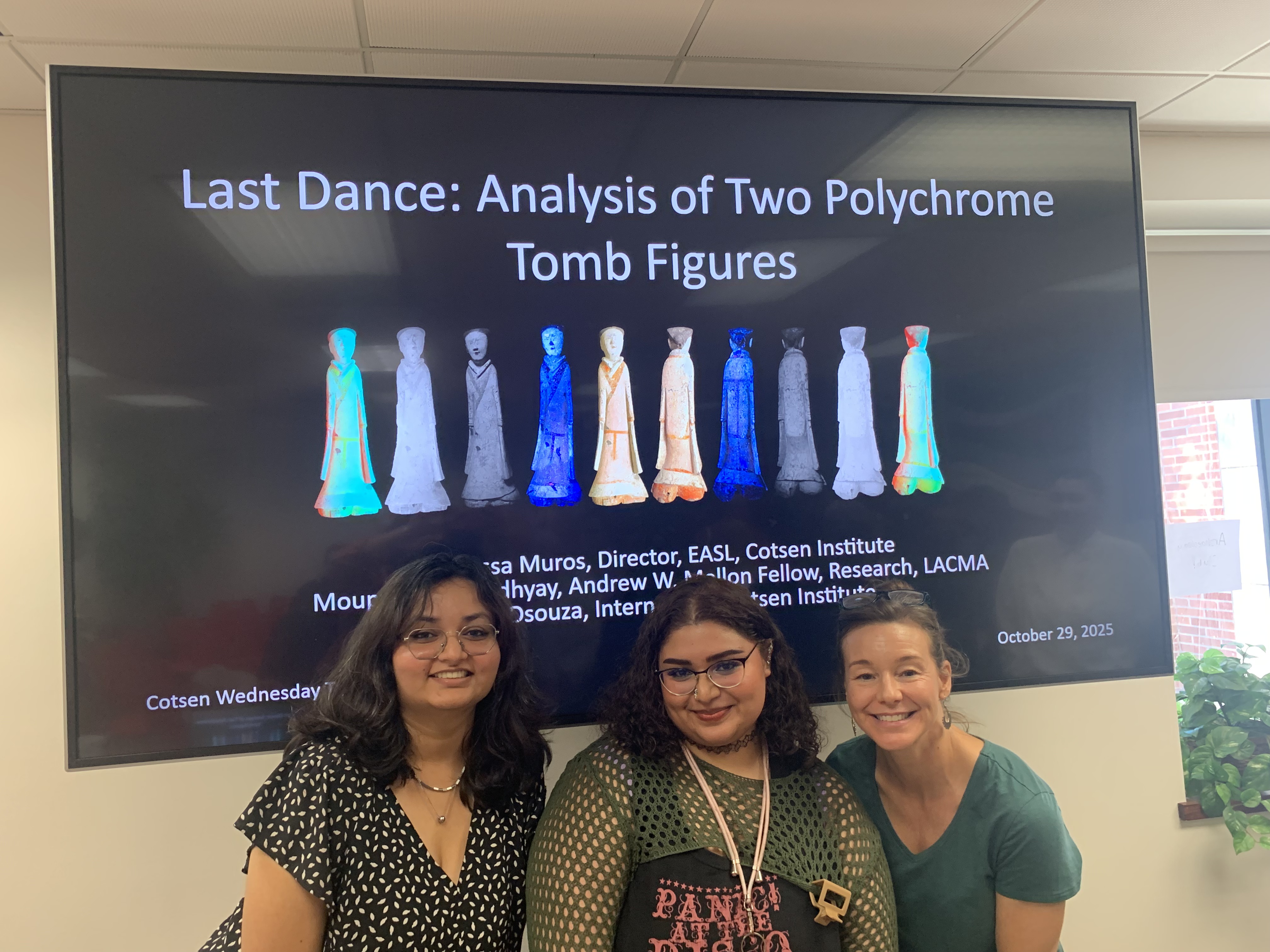
The techniques were recently applied to the study of pigments on two Han Dynasty ceramic tomb figures that were voluntarily returned to China in June 2025. Initial analysis focused on non-imaging techniques, includ-ing pXRF, polarized light microscopy, and X-ray diffraction, to identify pigment composition. After equipment setup and the testing of protocols on mockups, imaging was carried out on the tomb figures to confirm the initial pigment identifications and to gain additional insight into pigment application, including layering and mixing practices. The combined results of this work were presented as part of the Cotsen’s Wednesday talk series in fall 2025, highlighting the value of integrating technical imaging with other analytical methods in archaeological research. Work on finalizing workflows and protocols continues, and we hope to have the system fully up and running by the end of the current academic year. To keep up with our progress on the technical imaging setup and other projects in the lab, check out our website1 or follow us on Instagram @easl_ucla.