Two years ago we moved from the United States to Italy—but never left the Cotsen Institute of Archaeology behind. In this brief update we indicate how we remain involved in sev-eral projects housed at UCLA. Willeke continues as editor in chief of the UCLA Encyclopedia for Egyptology, administered through the Department of Near Eastern Languages and Cultures (NELC). This project comprises a series of peer-reviewed online articles on specific subjects within Egyptology, with abstracts in Arabic, made available through eScholarship.1 Each article, varying in length from 5,000 to 25,000 words, is written by one or more experts in a specific field and often richly illustrated. There are now around 200 entries, of which the most recent are “Metaphor” by Camilla di Biase-Dyson (2025), “Medieval Arabic Reception of Egyptian Hieroglyphs” by Okasha el-Daly (2025), “Royal Inscriptions” by Shih-Wei Hsu (2025), and the second edition of “Survivals of Pharaonic Religious Practices in Contemporary Coptic Christianity” by Saphinaz-Amal Naguib (2025).
Another project in which Willeke remains involved is the Waystation Initiative,2 housed at the Cotsen Institute and directed by Lyssa Stapleton. This project aims to facilitate the ethical return of archaeological and ethnographic objects to their nations or communities of origin. It com-prises a suite of programs and resources, including a broad stakeholder network, community engagement workshops, the development and dis-semination of new standards for the voluntary return of cultural objects, and a certificate program for UCLA graduate students.
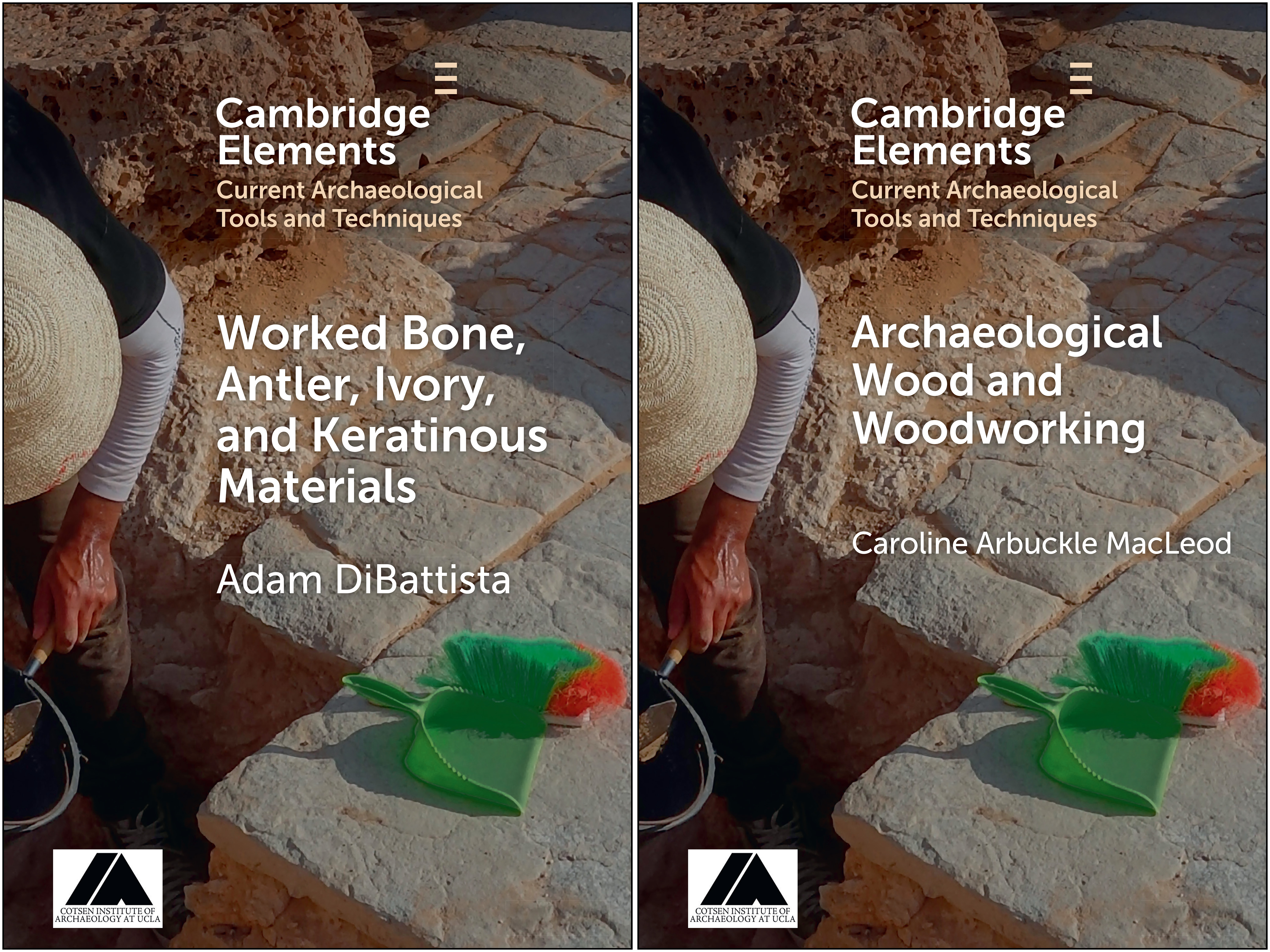
Hans is editor in chief of the series Cambridge Elements: Current Archaeological Tools and Techniques,3 published by Cambridge University Press in collaboration with the Cotsen Institute (fig. 1). This series pro-vides introductions to specific techniques used by archaeologists in the field or the laboratory. Each Element provides readers with a basic understanding of a selected technique, followed by clear instructions on its implementation, how to collect samples to be analyzed by a third party, and how to approach interpretation of the results. Elements are published as full-color digital documents, freely available for a two-week period after publication, and as grayscale volumes printed on demand. This hybrid format allows texts to be complemented with a variety of digital-only files, including videos, animated imagery, spreadsheets, databases, and software code. Titles currently in various stages of production include:
- Archaeological Mapping and Planning*
- Mobile Landscapes and Their Enduring Places**
- Cultural Burning
- Knowledge Discovery from Archaeological Materials
- Machine Learning for Archaeological Applications in R
- Worked Bone, Antler, Ivory and Keratinous Materials
- Infrared Spectroscopy of Archaeological Sediments
- Retrospective and Prospective for Provenance Studies in Archaeology
- Archaeological Wood and Woodworking
- Bioarchaeology of Infants and Children
- Ceramic Analysis: Laboratory Methods
- Archaeoastronomy: Data Collection and Analysis
- Determining Provenance from Compositional Data
- A Spatial Analysis Model for Exploring Human–Environment Interactions
- GIS and Predictive Modelling
- The Archaeology of Bird Bones and Eggs
Industria
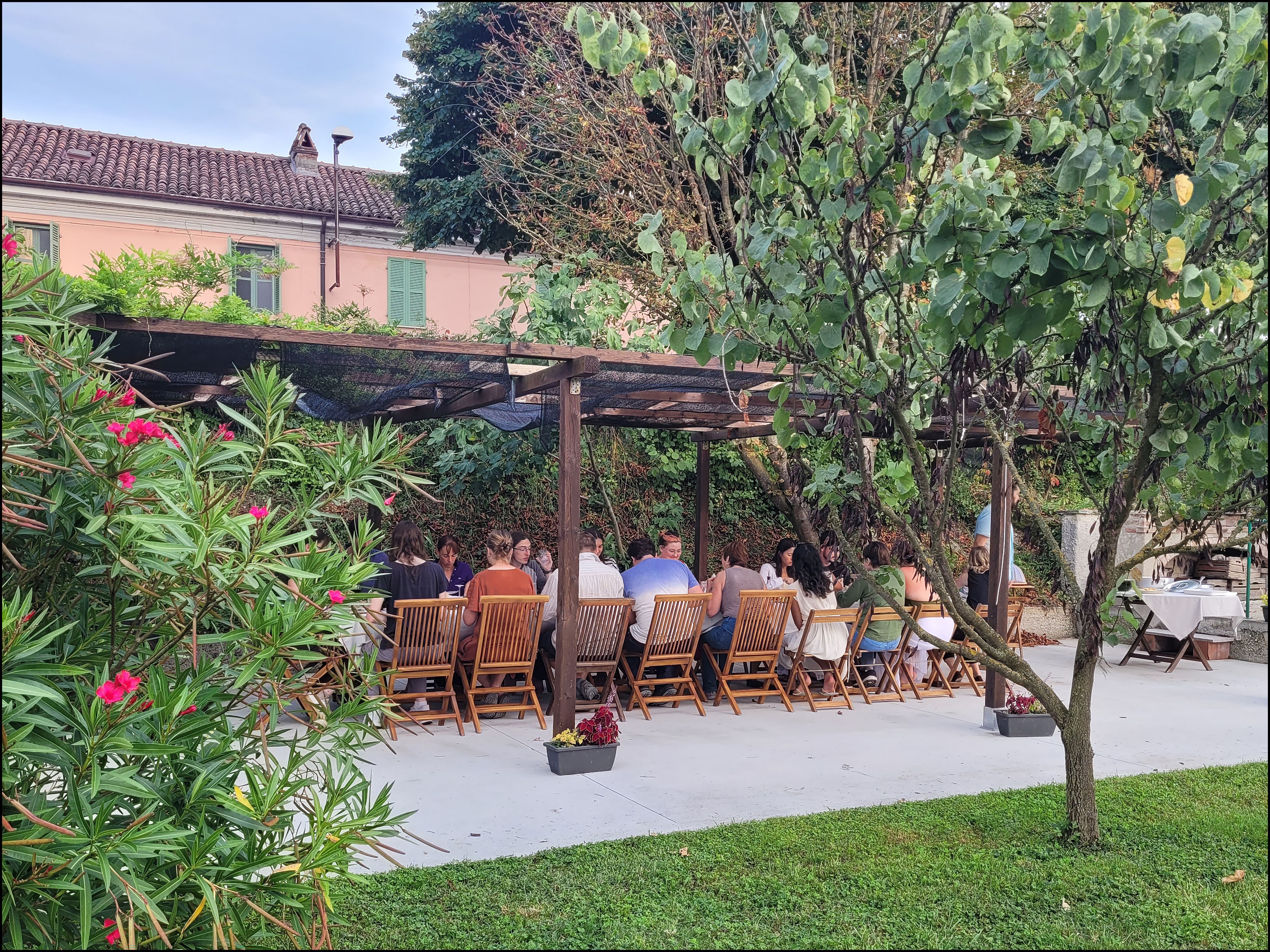
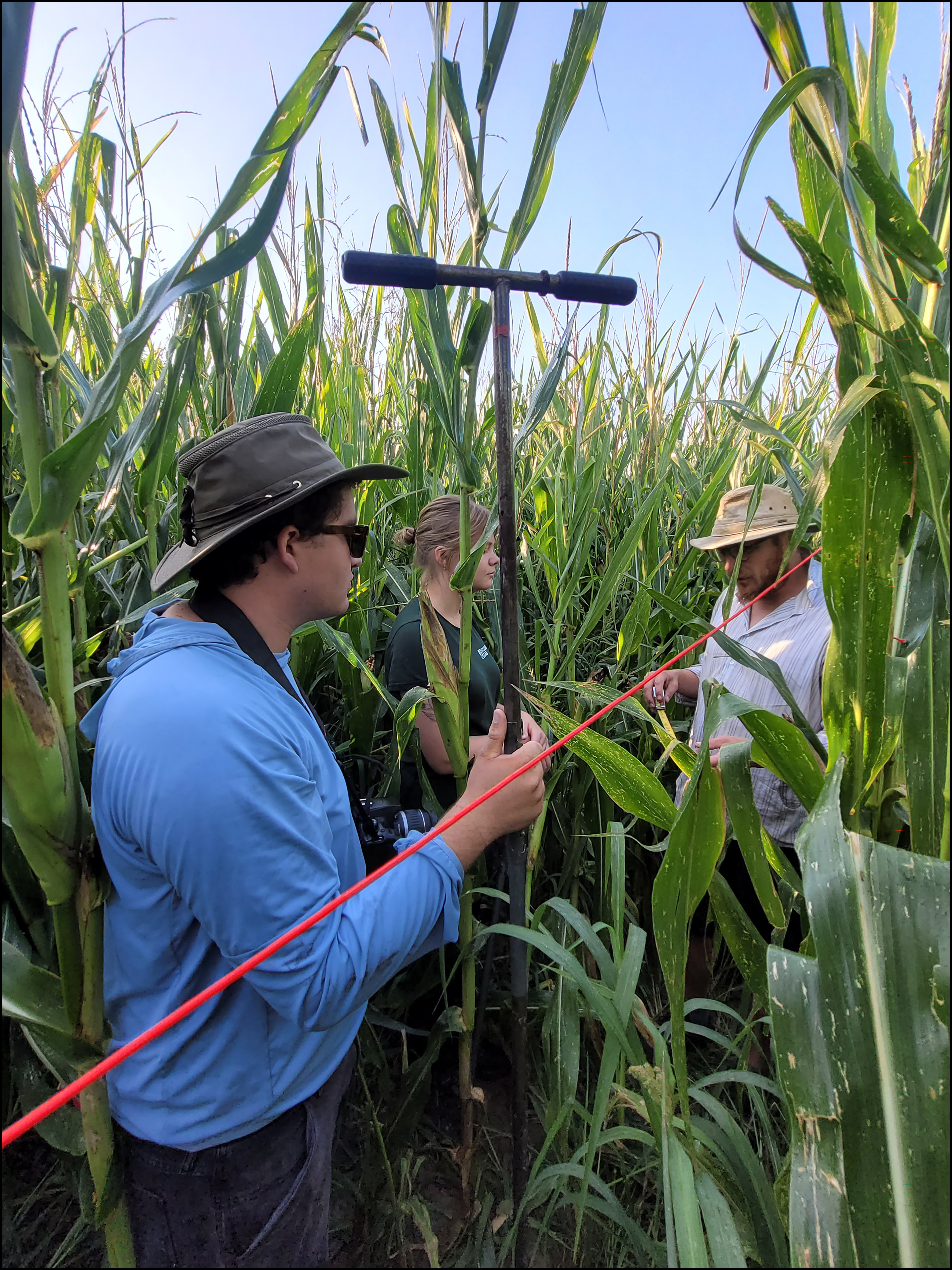
In the summers of 2024 and 2025, we continued our fieldwork at the Roman site of Industria,4 just east of Turin (Barello 2012; Barnard and Wendrich 2022, 2023; Fabretti 1881; Mercando and Zanda 1998; Zanda 2011). This project takes place under auspices of the Cotsen Institute in collaboration with the Politecnico di Torino, Groningen University (the Netherlands), the Institute for Field Research, the Direzione Regionale Musei Piemonte, and the Soprintendenza Archeologia, Belle Arti e Paesaggio di Torino, with permission from the Italian Ministry of Culture. In 2024 we were joined by Cotsen Institute graduate student Luís Rodríguez-Pérez and UCLA undergraduate students Eric Large and Mia Lucier, both through the Institute for Field Research. In 2025 Eric returned and was joined by, among others, UCLA graduate student Collen Cramer (NELC) and undergraduate student Isabella Thompson, both through the Institute for Field Research, and Sarah Beckmann, UCLA assistant pro-fessor of classics (fig. 2).
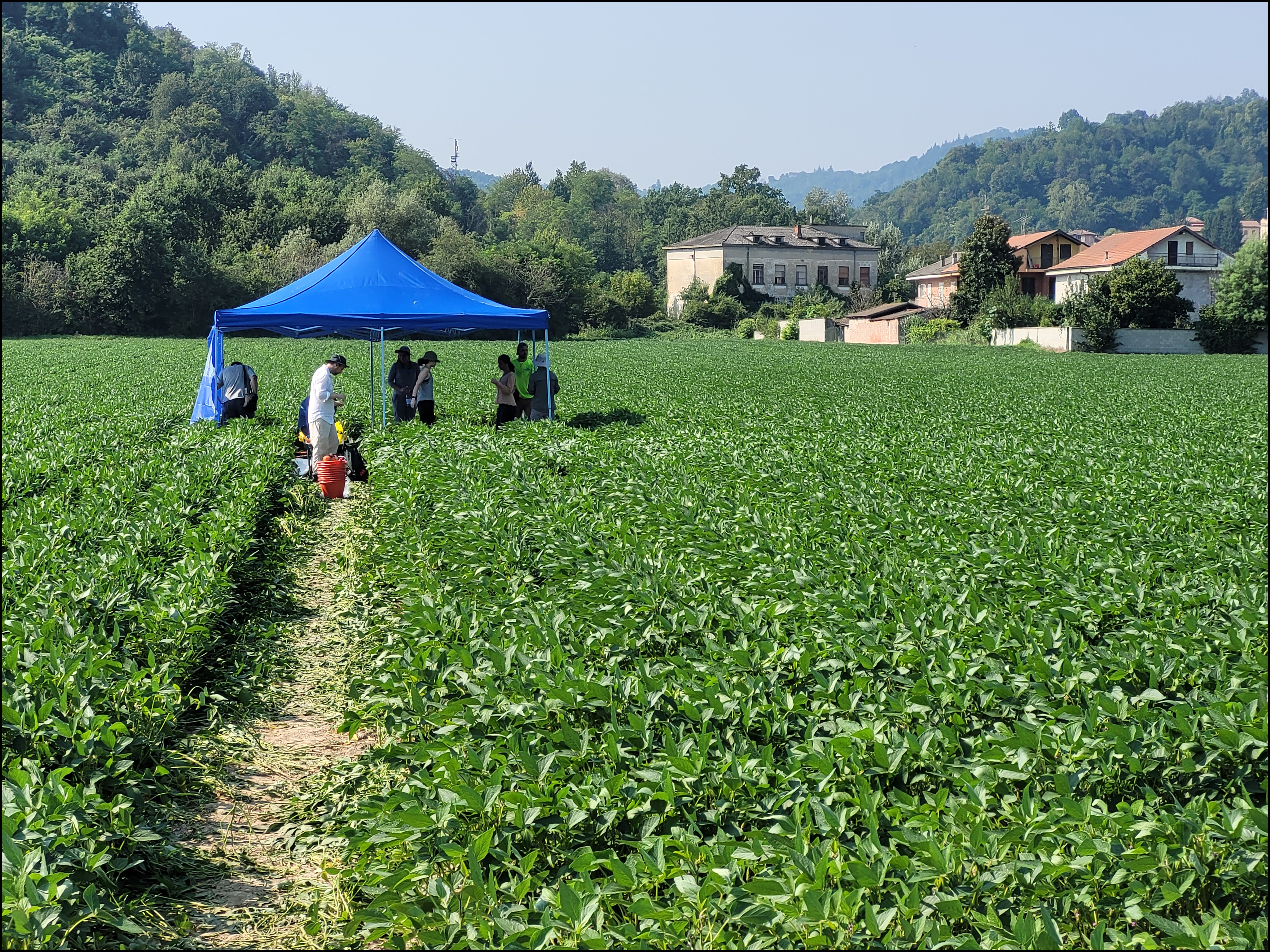
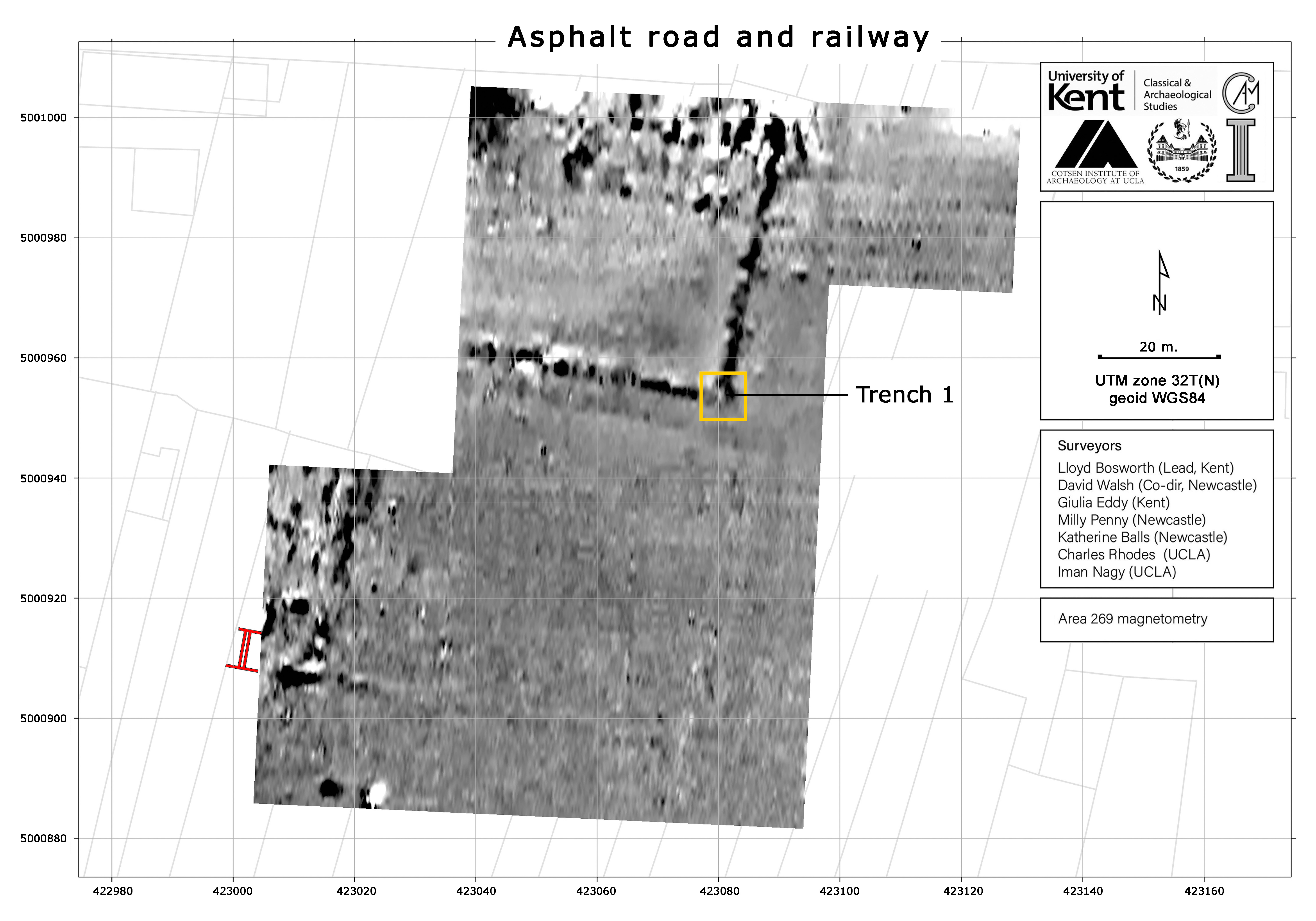
The geophysical survey of the environs of the site, which was started in the summer of 2022 (Barnard and Wendrich 2022, 2023), continued in 2023, 2024, and 2025.5 Based on the results of this survey, two exca-vation trenches were opened in 2024,6 primarily to ground-truth our geophysical observations. Trench 1 was about 250 m southeast of the center of the ancient city, in an agricultural field with no visible remains on the surface (fig. 3) but with strong rectilinear geophysical anomalies (fig. 4). Trench 2 was just west of the exposed center of the ancient city (fig. 5), within an area now owned by the Italian government (fig. 6).
With the ancient remains farther below the surface than expected, the first Roman layers were reached only toward the end of the 2024 season. These were covered with geotextile and the exca-vated soil was put back, with the help of a mechanical digger, for the work to con-tinue in the summer of 2025.
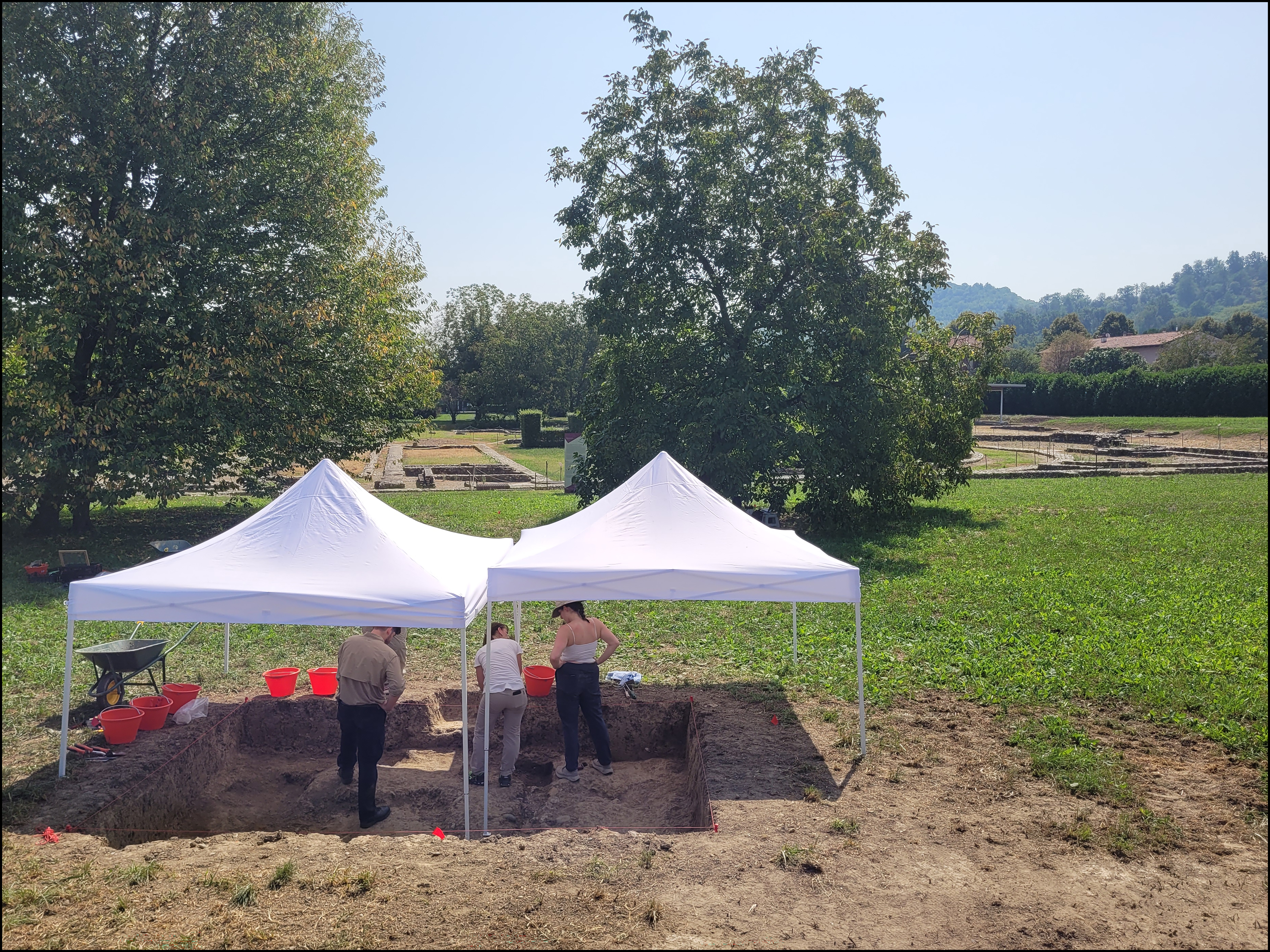
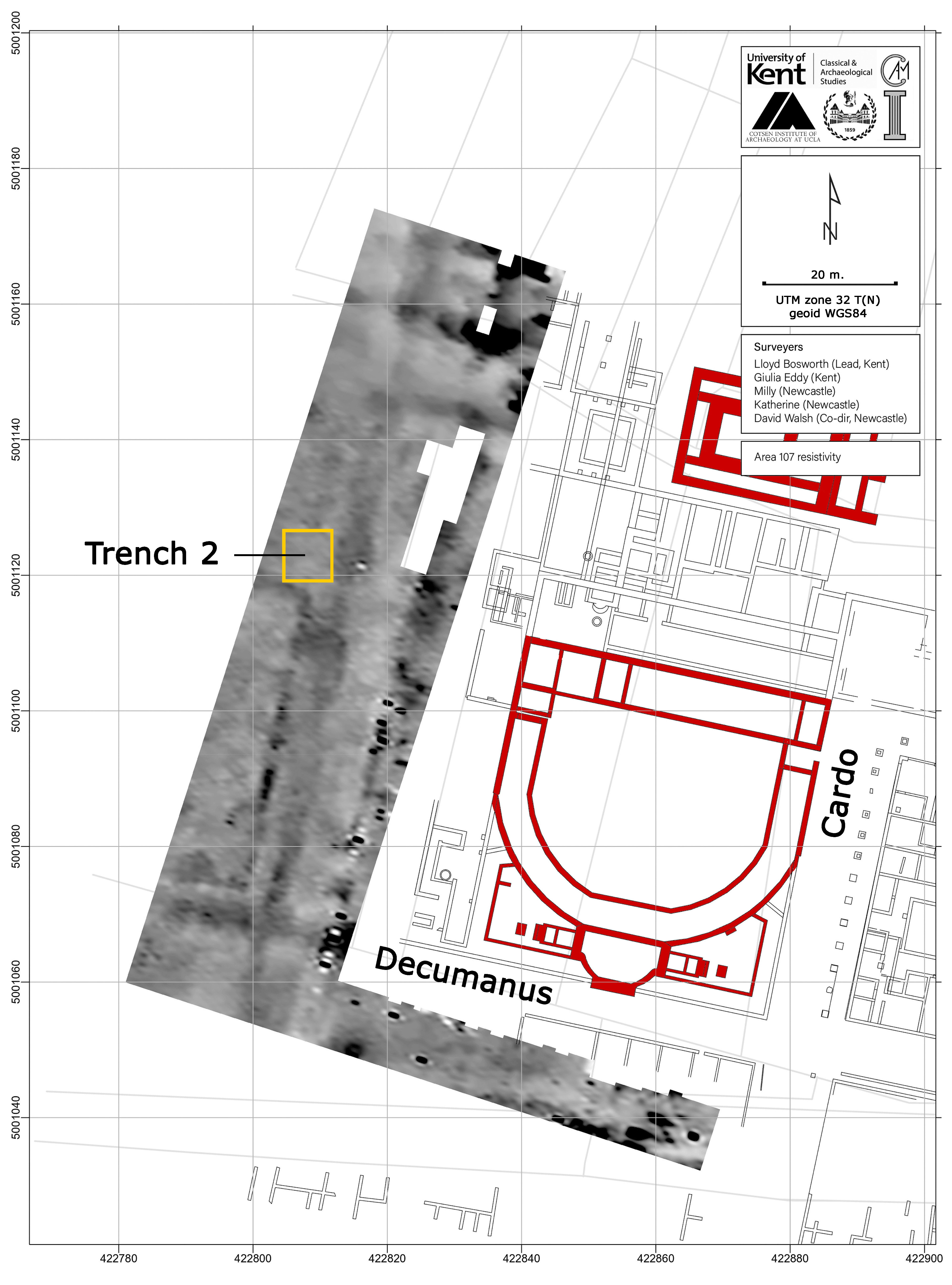
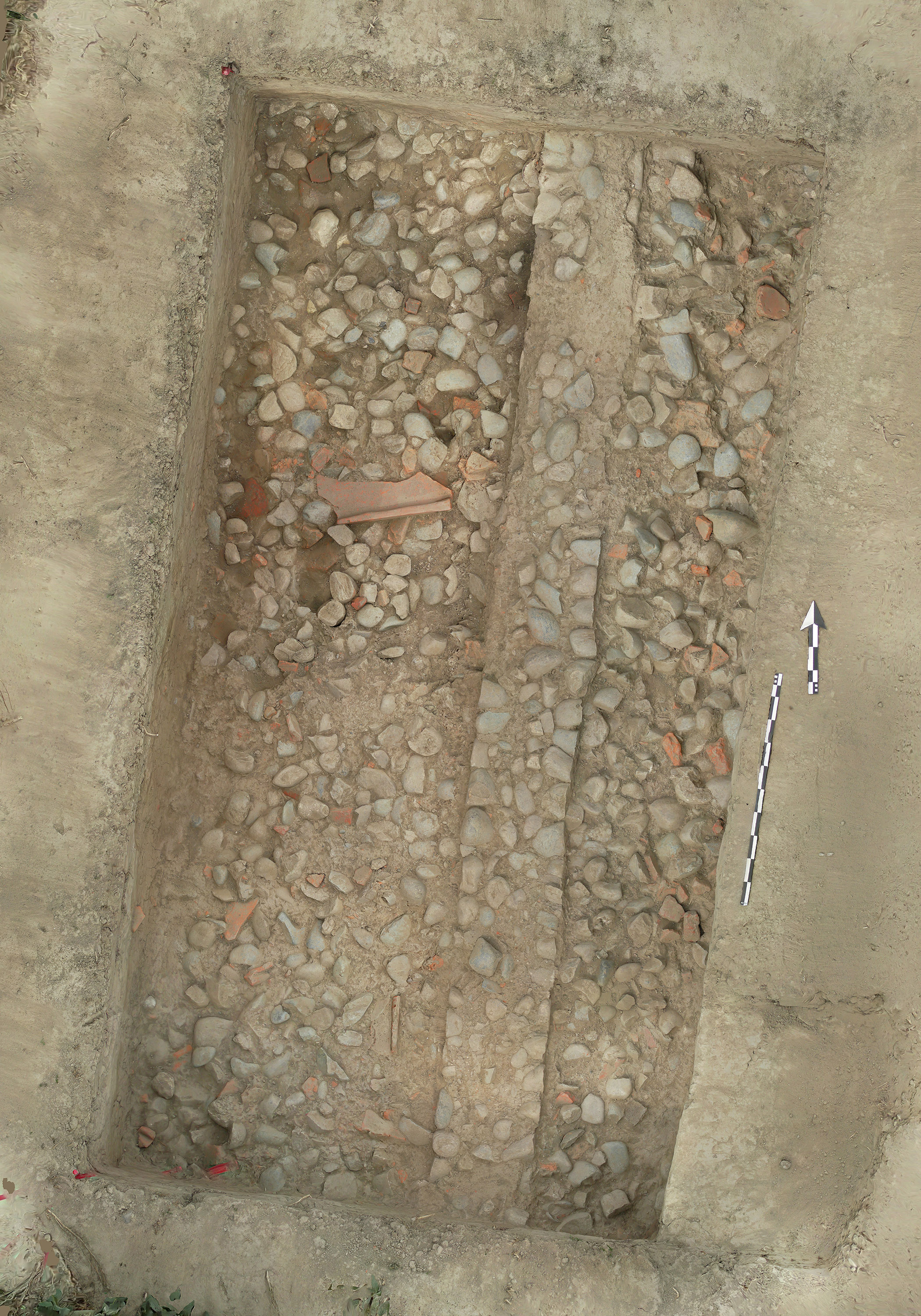
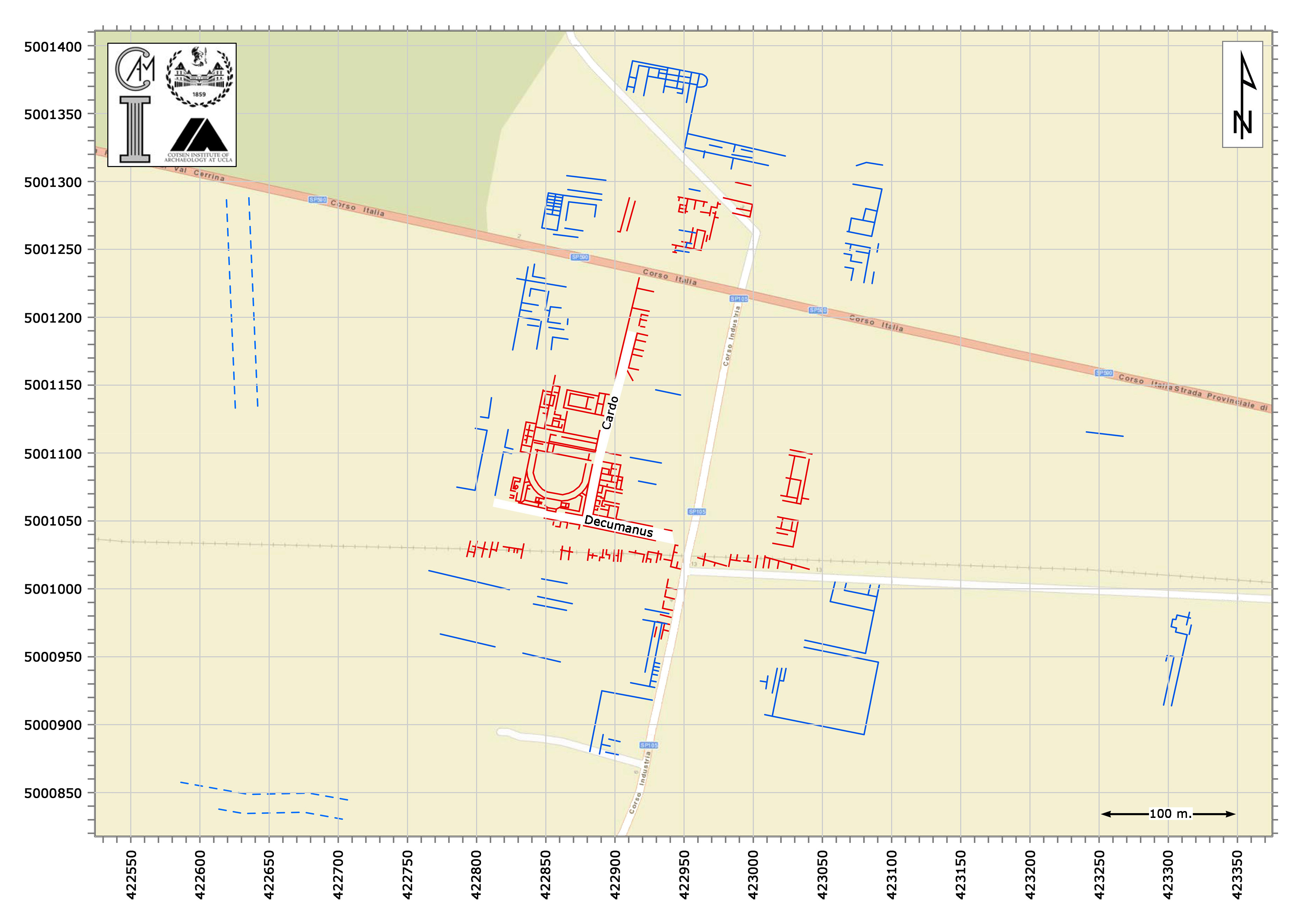
The summer of 2025 at Industria was impacted by several Atlantic storms making their way across the Alps from southern France into northern Italy. One consequence was that our trenches were flooded more than once, significantly impacting excavation. Despite such set-backs, we determined that the observed geophysical signatures corresponded to ancient remains (fig. 7), which was confirmed by radiocarbon analysis.7 In combination with the known orientation of the Roman structures (about 11° off north), we are now able to infer some of the layout of the Roman settlement, which once extended far beyond what is currently visible (fig. 8). It is thought that when the Po River slowly changed course and moved away from the settlement, a canal was constructed to facilitate the movement of goods and people. To investigate the possible position of such a canal, in 2025 a coring program was started west of the ancient city center (fig. 9).
AOSTA, BENE VAGIENNA, AND LIBARNA
Although most Roman settlements in northern Italy developed into modern towns, the province of Piemonte (ancient Gallia Cisalpina) has two sites very similar to Industria: Bene Vagienna (ancient Augusta Bagiennorum) and Libarna. With the team working in Industria, we visited them in 2024 and 2025, respectively. Bene Vagienna, near Cuneo and southwest of Industria, was the main Roman city in the region, inhabited by the Ligurian tribe of the Bagienni between the first century BCE and the seventh century CE. The site preserves the remains of an amphitheater, a basilica, an aqueduct and bath, and one of the city gates, as well as a theater that is still used today.8
Libarna (near Alessandria, southeast of Industria) was founded by the Ligurian tribe of the Dectunini and flourished after the construction of the Via Postumia, connecting Genoa on the Tyrrhenian Sea with Aquileia on the Adriatic Sea, around 150 BCE. The city became a Roman colony in the first century CE, leading to a peak in its wealth and power. After a series of wars, Libarna again declined and was abandoned around 450 CE. Although the center of the city was destroyed by railway lines and roads, many peripheral structures survive, including the amphitheater and the theater,9 as well as a mosaic floor depicting scenes from the myth of King Lycurgus and the nymph Ambrosia.
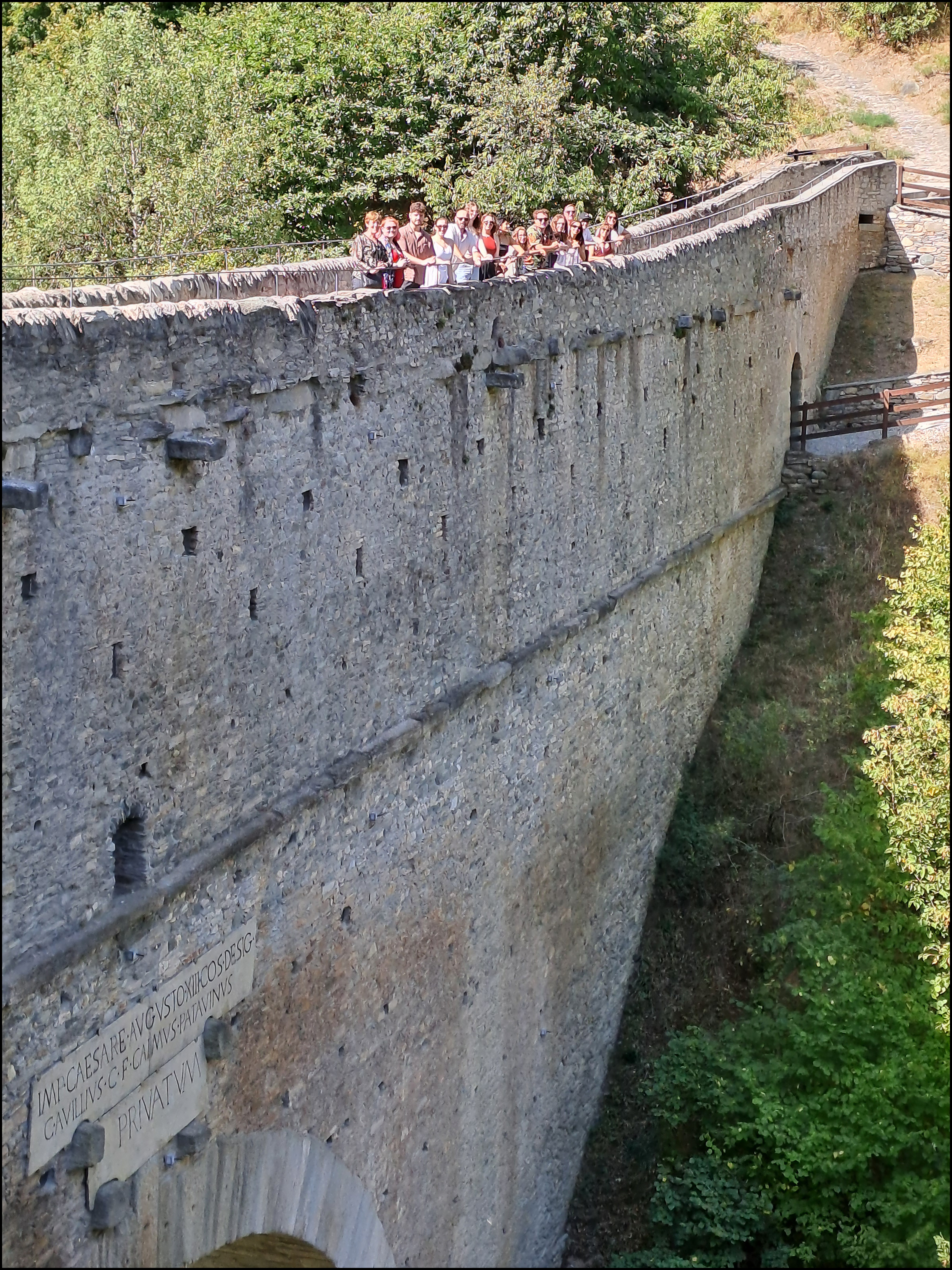
Given its direct economic links to Industria, each year we visit the Aosta Valley in the Alps north of Industria. The city of Aosta preserves impressive Roman remains, including a cryptoporticus, a theater (Barnard and Wendrich 2023:9–11), one of the city gates, and an Arch of Augustus. The connection to Industria is most apparent from Pont d’Aël, a Roman aqueduct and bridge southwest of Aosta that was financed by a member of the Avilius family, as proudly stated on a large inscription (fig. 10). The Avilius family was the principal patron family of Industria. Together with the Lolli family, they managed and financed the development of the city.
COMMUNITY INVOLVEMENT
An integral and vital part of our project is close collaboration with the local community, in the broadest sense of the word, which involves the sharing of knowledge and skills between all stakeholders. On May 11, 2024, we participated in a day of traditional bronze casting, which returned this activity to Industria, where it once was the main driving force behind the economy. Organized by the Direzione Regionale Musei Piemonte and the Politecnico di Torino, demonstrations were given by members of the L’ARC Centro Ricerche Archeologiche Sperimentali and a group of enthu-siastic volunteers from Villar San Costanzo (ancient Cannetum).10
Between April 23 and November 10, 2024, a temporary exhibition on Industria, titled La Scandalosa e la Magnifica (The Scandalous and Magnificent One),11 was on display in the Museum of Antiquities in Turin to celebrate its 300th anniversary (Panero et al. 2024). Finds from Industria, first explored by Giuseppe Rivautella and Giovanni Ricolvi in 1724, constituted the beginning of the antiquities collection of the Dukes of Savoy, which is still housed in the former Royal Palace in Turin. The focus of the exhibition was the regional worship of Isis, to whom a shrine was dedicated in Industria (Bongioanni and Grazzi 1988; Panero et al. 2024; Saragoza 2012; Zanda 1997; Zanda and Gaspani 2003). Not only did the team excavating the site visit this exhibition, but its curators and their guests returned the courtesy by paying a visit to our excavation. As part of a lecture series within the framework of the celebrations, Willeke delivered a lecture on our work (in Italian) in the ballroom of the Royal Palace on August 7, 2024.
Two more presentations on recent research at Industria were
deliv-ered by Hans (both also in Italian). The first was in
the former Abbey of Santa Maria in Cavour, southwest of Turin,
during the one-day confer-ence Nova Urbs: Updates and
Reflections on Roman Cities in Piedmont: A Workshop in Memory
of Fedora Filippi (June 15, 2024). The second, undertaken with
our friend and colleague Anna Lorenzatto on September 21,
2024, was the inaugural lecture of the Monteu da Po–Lauriano
branch of the Italian University of the Third Age (UNITRE).
UNITRE is part of an international community of scholars and
volunteers who aim to stimulate and educate those in the third
stage of life, with a focus on culture and the humanities.
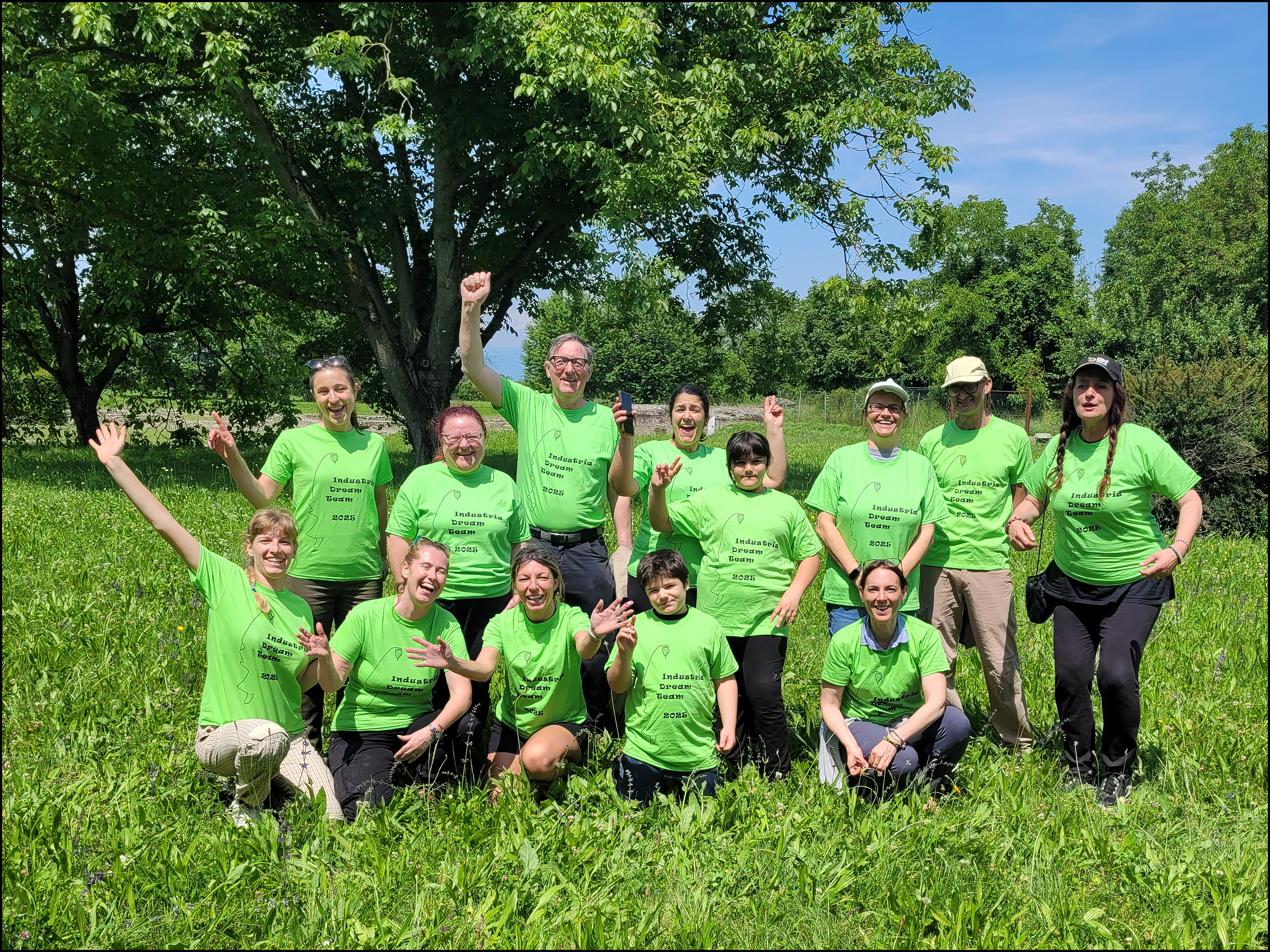
By far the most disastrous of the storm systems already
mentioned hit the region on April 17–18, 2025. The heavy
rainfall resulted in several severe landslides, destroying
roads and killing one inhabitant of Monteu da Po. The
excavated parts of Industria were inundated and covered in a
layer of mud. In close collaboration with local authorities,
we set aside May 24, 2025, to clean up the site as well as
possible. For the occasion we had T-shirts printed with an
outline of one of the most famous finds from Industria, a
bronze dancer, and the text “Industria Dream Team 2025”
(fig. 11).
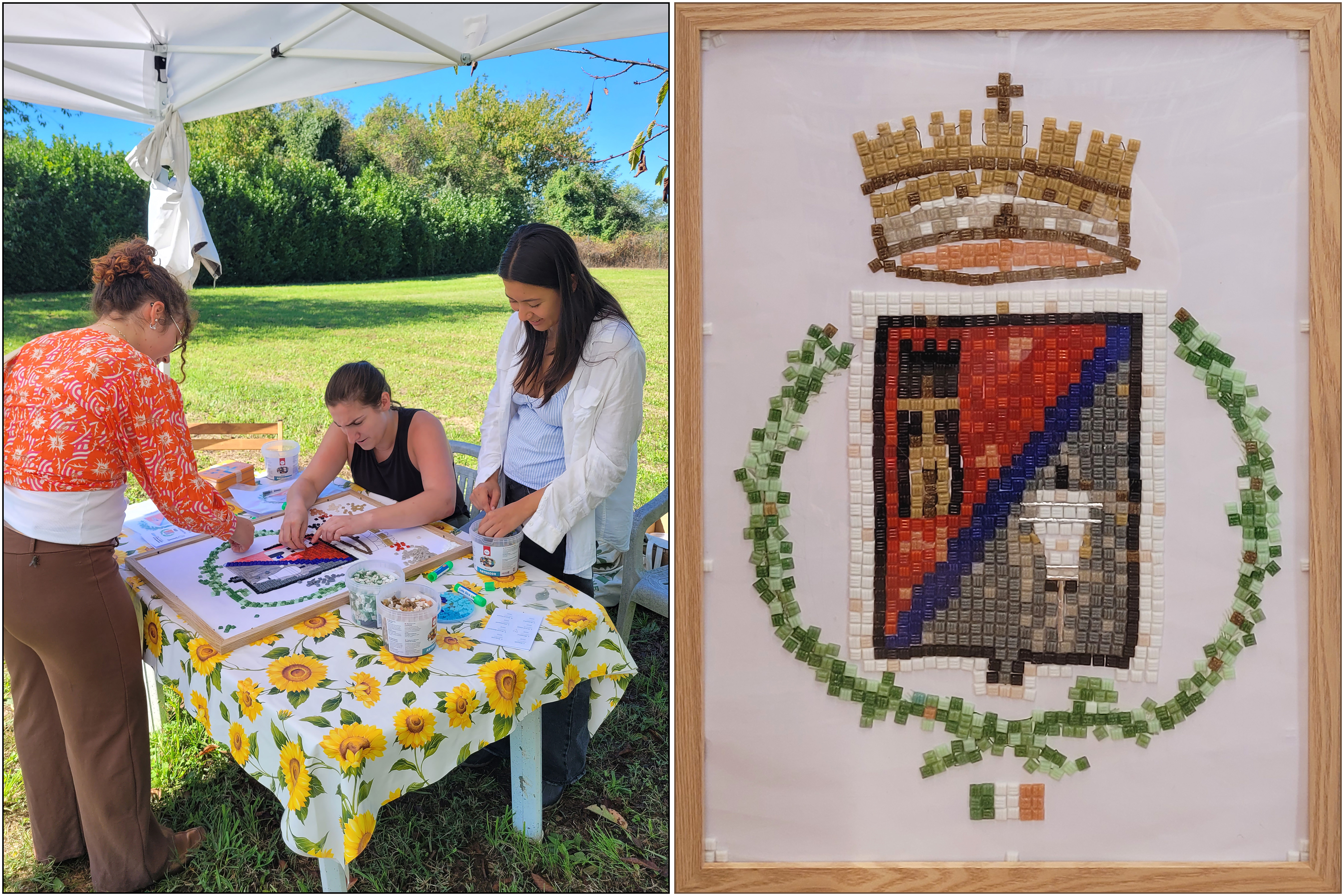
About a month later (June 30, 2025) we handed similar T-shirts to 45 children who visited the site as part of their summer program. Under the overarching theme “Before Plastic,” we offered a number of activi-ties, including storytelling, a mock excavation, basic basket and pottery making, reconstructing pottery, and writing names in Egyptian hiero-glyphs. We took a similar approach during an open house on August 30, 2025, near the end of our excavation season. Visitors were offered a guided tour, including our open excavation trenches; a mock excavation; and detailed information on our archaeobotanical research, excavated building materials, and survey instruments. One special project was the creation of a mosaic of the new coat of arms of Monteu da Po (fig. 12). This was donated to the municipality on September 20, 2025, during its official presentation, which was endorsed by the president and prime minister of Italy. In attendance were Congressman Giglio Vigna, a rep-resentative of the national gendarmerie (the Carabinieri), the mayors of the neighboring municipalities, the mayor of the Romanian twin town of Monteu da Po, and the marching band La Fenice.
MUSEO EGIZIO
After a hiatus because of the pandemic, the five-week field school of the Cotsen Institute at Museo Egizio (the world-renowned Egyptian museum in Turin), which was facilitated by the Institute for Field Research (Arbuckle MacLeod 2019; Newman 2018: Rondano 2017), is now in the capable hands of Caroline Arbuckle MacLeod of St. Thomas More College, University of Saskatchewan, and Danielle Candelora of the College of the Holy Cross (Worcester, Massachusetts). Both obtained a PhD in archaeology at UCLA. With Willeke on its scientific board, Museo Egizio celebrated its bicentenary on November 20, 2024, in the presence of Sergio Mattarella, president of the Italian Republic.
From the above it will be clear that the Cotsen Institute remains an important and appreciated presence in northern Italy, a connection that offers great opportunities for UCLA undergraduate and graduate stu-dents. To secure this connection in the foreseeable future, in the summer of 2025 the Industria project was visited by Sarah Beckmann, assistant professor in the Department of Classics at UCLA. She has been associ-ated with the project from its inception, and the time seems right for her to take on a more prominent role.
ACKNOWLEDGMENTS
Thanks are due to many people, in particular Mara Baccolla, Valentina Barberis, Federico Barello, Lloyd Bosworth, Matilde Casa, Roberto Elia, Elisa Ghion, Sara Inzerra, Elisa Lanza, Anna Lorenzatto, Manuela Rebaudengo, Alessandro Quercia, Sofia Uggè, David Walsh, and Emanuela Zanda. We are furthermore grateful to the owners and staff of Agriturismo Casa Matilde and the restaurant Mencagli, as well as the Associazione Culturale Athena, the Direzione Regionale Musei Piemonte, the Soprintendenza Archeologia, Belle Arti e Paesaggio, and the Ministro della Cultura.
References Cited
- Arbuckle MacLeod, Caroline. 2019. Museology in Turin. Backdirt, 10–15.
- Barello, Federico. 2012. Un Abile Dilettante: Il Lapidario Morra di Lauriano da Industria. Turin: Soprintendenza per i Beni Archeologici del Piemonte e del Museo Antichità Egizie.
- Barnard, Hans, and Willeke Wendrich. 2022. Industria (Monteu da Po). Backdirt, 36–41.
- Barnard, Hans, and Willeke Wendrich. 2023. Work Continues at the Roman Site of Industria (Monteu da Po, Northwestern Italy). Backdirt, 6–11.
- Bongioanni, Alessandro, and Riccardo Grazzi. 1988. Osservazioni sulla Planimetria dell’Iseo di Industria. Aegyptus 86:3–11.
- Fabretti, Ariodante. 1881. Della antica città d’Industria detta prima Bodincomago e de’ suoi monumenti. Turin: Stamperia Reale.
- Mercando, Liliana, and Emanuela Zanda. 1998. Bronzi da Industria. Rome: De Luca Editori d’Arte.
- Newman, Jeffrey. 2018. Museology and Ancient Egypt: A Summer Field School at Museo Egizio, Turin, Italy. Backdirt, 95–97.
- Panero, Elisa, Patrizia Petitti, and Silvia Giorcelli. 2024. La Scandalosa e la Magnifica: 300 Anni di Ricerche su Industria e sul Culto Iside in Piemonte. Turin: Musei Reali Torino–Museo di Antichità.
- Rondano, Vera. 2017. Museology and Egyptian Material Culture. Backdirt, 68–69.
- Saragoza, Florence. 2012. De l’Iseum au Forum d’Industria (Monteu da Po, Italie). In Le forum en Gaule et dans les régions voisines, edited by Alain Bouet, pp. 315–34. Bordeaux: Ausonius.
- Zanda, Emanuela. 1997. Il santuario Isiaco di Industria. In Iside. Il mito, il mis-tero, la magia, edited by Ermanno Arslan, pp. 352–57. Milan: Electra.
- Zanda, Emanuela. 2011. Industria: Città Romana Sacra a Iside: Scavi e Ricerche Archeologiche 1981–2003. Turin: Umberto Allemandi.
- Zanda, Emanuela, and Adriano Gaspani. 2003. Industria e la sapienza Isiaca: Osservazioni di astronomia e geometria. In Faraoni come dei Tolemei come Faraoni, edited by Nicola Bonacasa, Anna Maria Donadoni Roveri, Sergio Aiosa, and Patrizia Minà, pp. 306–32. Turin and Palermo: Museo Egizio and the University of Palermo.
Notes
-
www.cambridge.org/core/publications/elements/current-archaeological-tools-and-techniques ↩︎
-
The center of the ancient settlement is at 45°09’33.6’’ N, 08°01’07.2’’ E, equivalent to UTM Zone 32T(N)– 422870 E–50001120 N. Its elevation is around 215 masl. ↩︎
-
The instruments used were a Bartington Grad601-2 dual fluxgate gradiometer and a Geoscan RM85 Advanced resistivity meter with a parallel twin, four-probe array. ↩︎
-
The center of Trench 1 was located at 423082.53 E–5000957.95 N–216.11 masl and the center of Trench 2 was at 422807.86 E–5001117.75 N–215.28 masl, both projected onto Zone 32T(N) of the WGS84 geoid. ↩︎
-
The Centre for Isotope Research at the University of Groningen, the Netherlands, dated sample CAMI24 US1007 49(b) from Trench 1 to 430–549 CE (calibrated using OxCal 4.4, probability 95.4%). ↩︎
-
8 An interactive virtual reality rendering of this theater can be viewed at win.noreal.it/pubblica/mdd/teatro/AR.. ↩︎
-
An interactive virtual reality tour of Libarna is provided at www.libarna.al.it/virtualtour/en. ↩︎