It was an intense year at UCLA, and the UCLA/Getty Interdepartmen-tal Program in the Conservation of Cultural Heritage was not spared. On January 7, 2025, flames lapped over the mountain at the Getty Villa as the rapidly spreading Palisades Fire approached. Our students carefully put down the objects they were working on and fled down the Pacific Coast Highway. We were displaced from our research and training labs for the next nine months. Fortunately, our friends at the Fowler Museum offered us their textile lab, where we taught courses for the remaining academic year—thank you Chris de Brer! Even more fortunately, the Getty Villa was spared and we moved back into our beautiful labs this fall. Then there was the termination of two NEH grants, their refunding, and the current appeal by the federal government to reinstate the termination. Oh, and three ladder faculty recruitments that we had been working on for years were all frozen in the spring due to a state budget crisis.
We kept good spirits despite these temporary setbacks. We also doubled down on fundraising, and donors stepped up. Andrea Morse Straus made a generous gift to support student research and travel over a three-year period. Alumna Casey Mallinckrodt followed with another annual pledge for student research and travel. Jeff Cunard is now supporting our Distinguished Speaker Series. We also obtained substantial support for a new student endowment that will require matched gifts from additional donors. Perhaps most touching, Casey Mallinckrodt organized an alumni giving campaign to support our recent graduates. She raised $1,600 in small gifts, which our graduates appreciated not just for the financial help but as a symbolic gesture welcoming them into our growing alumni network. We also received small gifts from those who attended our annual reception hosted by the Getty Conservation Institute and other events. All these donations are particularly mean-ingful during stressful times. People we speak with about their support comment on our program’s increased visibility in areas of sustainability, community engagement, and social justice within cultural heritage con-servation. The hard work of our program members is paying off.
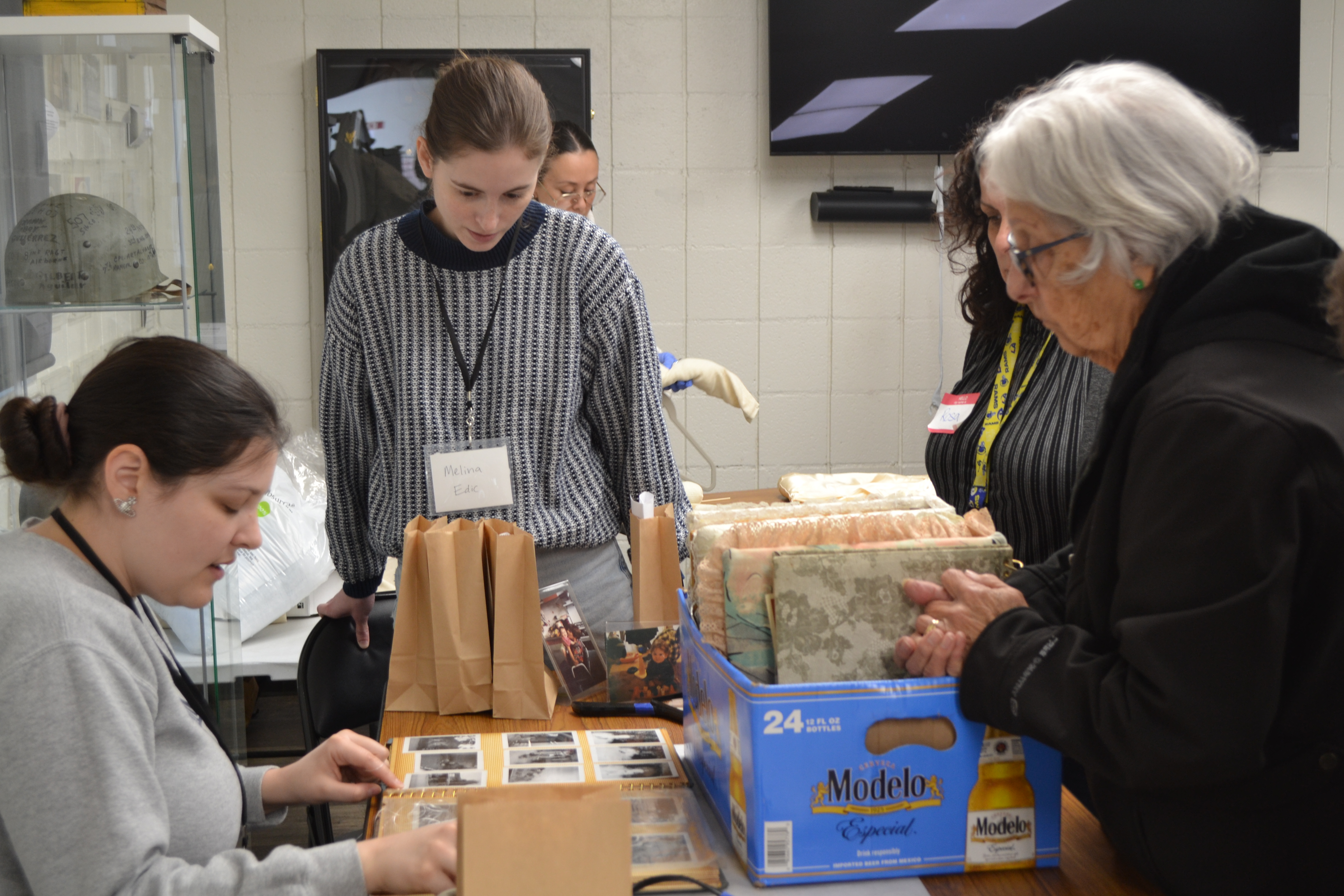
Another type of support comes from our community partner organi-zations. Anya Dani, our director of community engagement and inclusive practice, organizes collaborative projects with our partners. In recent communications, staff from La Historia Historical Society Museum expressed heartfelt thanks to Anya, Nicole Passerotti, and students who conducted workshops within a course titled Conservation & Community. Community members told stories about their family heirlooms while learning about their technical history and how to care for them. La Historia aims to make lasting contributions to the cultural identity of Mexican American lives in El Monte and South El Monte by preserving the legacy of these communities. Participants share stories that have shaped community identity through artifact displays and community events. Clearly our aims are aligned. Anya develops similar programs with other partner community organizations.
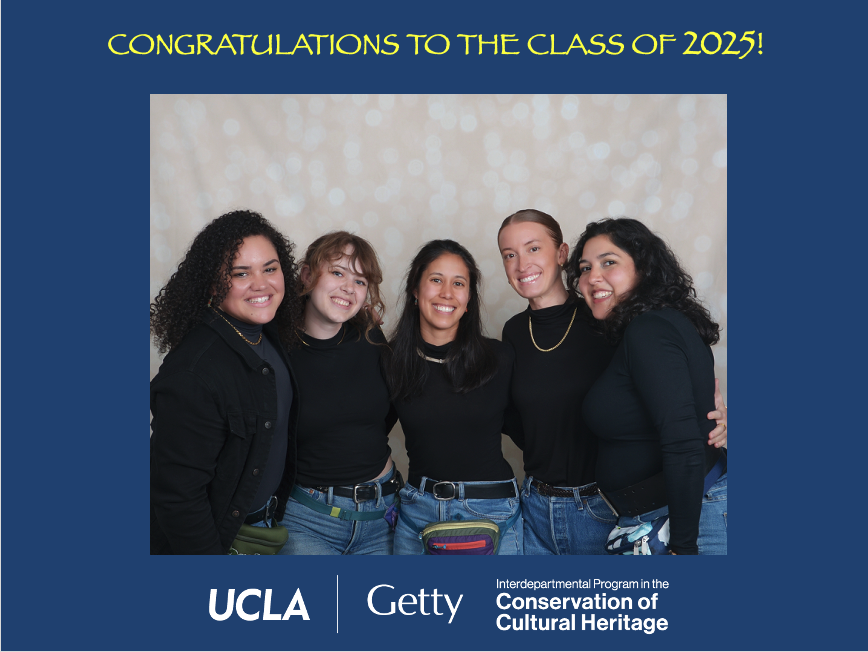
We also build pride from the success of our students and alumni. Seven students graduated from our program over the past year. The following are their current placements and thesis/dissertation titles:
- Taylor Brehm (MA), conservator, RLA Conservation, Los Angeles. Thesis: “Removal of Overpaint from a Cherokee Mask in Collaboration with the Museum of the Cherokee People”
- Chris de Brer (PhD), director of conservation, Fowler Museum, UCLA. Dissertation: “The Wild, Wild West: Materiality and Provenance of Ancient West Mexican Ceramics and the Future of Museum-Based Collections”
- Cheyenne Caraway (MA), conservator, Williamstown + Atlanta Art Conservation Centers, Atlanta. Thesis: “Light Aging Analysis: Lightfast Qualities of Natural Dyes on River Cane and Commercial Reed Substrates Used in Choctaw Basketry”
- Rachel Moore (MA; now a PhD student). Thesis: “Hopi Wicker Basketry: A Look at the State of Tangible and Intangible Preservation”
- Moupi Mukhopadhyay (PhD), Andrew W. Mellon fellow in conservation science, Los Angeles County Museum of Art, Los Angeles. Dissertation: “Technical Study of the Kerala Wall Paintings”
- Kathryn Peneyra (MA), conservator, Williamstown + Atlanta Art Conservation Centers, Atlanta. Thesis: “Propolis for the Sustainable Treatment of Bronze Disease on Remote Archaeological Sites”
- Makayla Rawlins (MA), program assistant, Your Neighborhood Museum, Los Angeles. Thesis: “The Properties of Juncus: Implementing Indigenous Knowledge into Conservation Repairs”
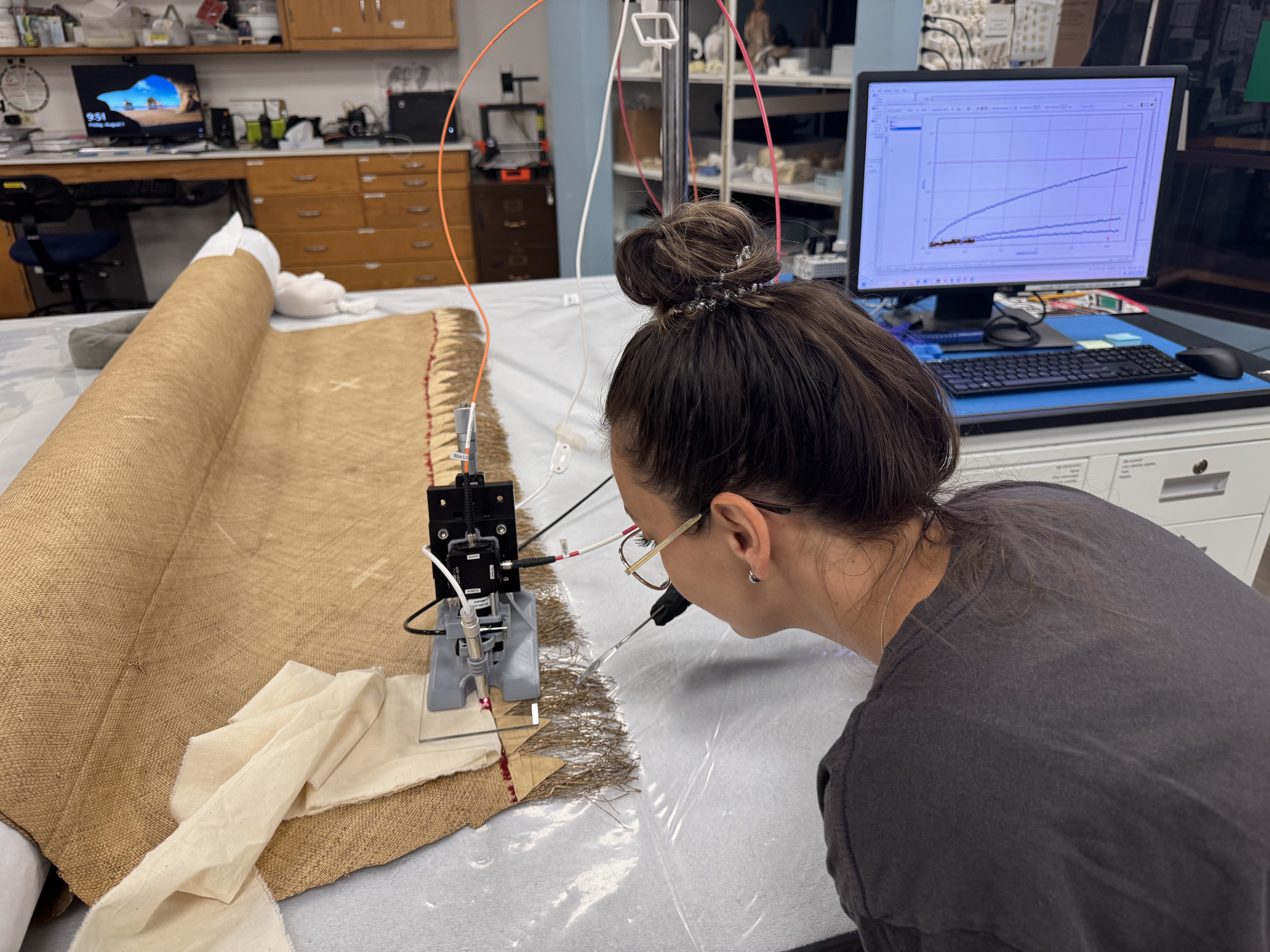
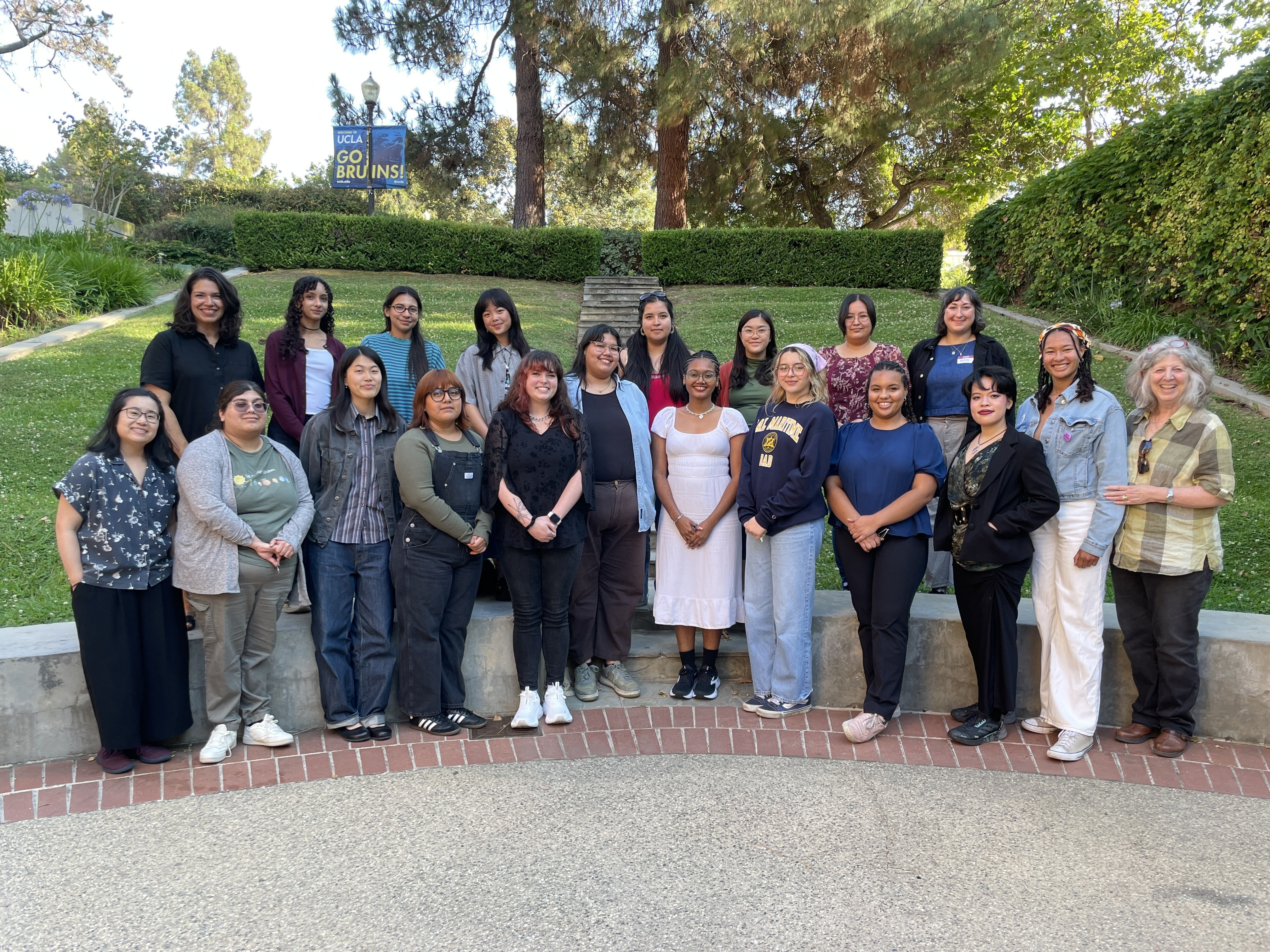
Our current MA students are in their second year of the program. They spread out over the globe last summer for their internships and returned to start their thesis research. Maria Fernanda Martin del Campo Lorenzin interned at the Field Museum of Natural History in Chicago. This fall she began her thesis research on colorant identification on Tikuna masks from the Amazon in Brazil. Pilar Brooks interned at the Museum of Fine Arts, Houston. Her thesis project will be on emerging models for collaboration between conservators in Western museums and community representatives in Africa. Melina Edic interned with Caitlin O’Grady at Kaymakçı Archaeological Project in Manisa, Turkey. She is conducting laboratory analysis for her thesis to understand the formation of pseudomorphs in copper corrosion. Hattie Hāpai interned at the British Museum in London. Extending her internship research on display methods for ‘ahu ‘ula, traditional Hawaiian feather capes, she will conduct archival and ethnographic analysis for her thesis to understand historic display methods and current Native Hawaiian concerns about their exhibition. Paige Hilman interned at the Fowler Museum at UCLA. In her thesis she will investigate colorant identification and gel removal of insoluble calcareous accretions from painted low-fired archaeological pottery.
Our current PhD students are at various stages of coursework, research, and writing. Saiful Bakhri is in his fourth year, currently performing archival and ethnographic research at Borobudur and at two different programs that teach the conservation of traditional Indonesian cultural heritage. His dissertation research aims to bridge the gap between teaching traditional preservation practices and modern cultural heritage conservation. Chongwen Liu, also in his fourth year, is taking a deep dive into the medical field to adapt emerging models of knowledge graph–driven artificial intelligence for cultural heritage knowledge conservation management. The working title for his dissertation is “Advancing Knowledge Access and Decision Making in Cultural Heritage Conservation with Knowledge Graph (KG)–Driven Artificial Intelligence (AI).” Rachel Moore was admit-ted to our PhD program during her third year as an MA student. She will obtain both degrees. She completed her master’s thesis on tangible and intangible preservation of Hopi wicker basketry. She will extend this research for her doctoral studies by conducting extensive ethnographic and technical research on Hopi basket production. She will take her knowledge back to Hopi in honor of her grandmother, who was a basket weaver. Naomi Rosenkrantz, a second-year student, is investigating the cultural, material, and technological exchange of color making between Europe and the Americas in the sixteenth century, with a focus on colonial Mexico. She plans to conduct pigment and dye analysis as evidence of Indigenous knowledge, combined with research on colonial codices that describe color making practices.
Anya Dani wears many hats in our program. In addition to serving as our director of community engagement and inclusive practice, she is the chair of our DEIA committee. She also serves on our Mellon Opportunity for Diversity in Conservation Advisory Board and on our faculty advisory and program admissions committees. She develops partnerships at UCLA and with institutions that collect materials related to African American and other communities in Los Angeles. Last summer she taught the first-ever course on conserving black cultural heritage, titled Caring for Black History: The Preservation of African American Cultural Heritage. This past winter she cotaught our Conservation & Community course with Nicole Passerotti, which included the workshop at La Historia mentioned above. Nicole and Anya collaborated with Ronel Namde, associate conservator of photographs at the Getty Research Institute (GRI), on the workshop. The GRI generously provided supplies for the event. Another recent workshop also involved Ronel Namde, along with students Pilar Brooks and Maria Fernanda Martin del Campo Lorenzin and the special collections staff at the Los Angeles Central Library. This workshop also taught community members to protect family heirlooms. Anya is also finishing a coproduced podcast series titled Preservation for the People with Justin Dunnavant and the Black Art Conservators group.
Assistant Professor Caitlin O’Grady continues her research on the history of conservation and archaeology with a specific focus on expertise as international currency. She participated in two international workshops: Archives and Archaeology in Paris and Antiquities in the Modern Laboratory: World Fairs and Anchoring Innovation in Antiquity in Nijmegen, the Netherlands. Last summer, she conducted fieldwork in Turkey at the site of Kaymakçı, a Bronze Age citadel site, where she serves as director of conservation for the Kaymakçı Archaeological Project. She supervised MA student Melina Edic’s internship at the site, where she conserved recently excavated materials. Her own research at the site includes interpretation of raw material processing and ancient pottery repairs. She was also invited to join the board of the National Center for Preservation Training and Technology, a branch of the National Park Service located in Natchitoches, Louisianna.
Assistant Professor Thiago Puglieri was on sabbatical last year as a visiting scholar at the Getty Research Institute, focusing on Indigenous colorants from the Amazon and the ethics of scientifically investigating Indigenous sacred and ceremonial items. He completed a book chapter on research ethics and two manuscripts on Tikuna Blue, an understudied pigment developed in the Amazon. His research has since been featured in the media and presented at national and international events. He also co-organized a key workshop on intercultural education in Benjamin Constant, a city in the Brazilian Amazon, exploring the use of his scientific results in a community of need. He further participated as a member of the local scientific committee for the 2025 Synchrotron Radiation and Neutrons in Art and Archaeology Conference (SR2A). In his research, he has worked with professionals from institutions such as UCLA, LACMA, the Getty, the University of São Paulo, and the Federal University of Amazonas, in addition to members of the Tikuna community.
In addition to teaching and serving as chair of the Conservation Program, I am co-principal investigator with Professor Emerita Ellen Pearlstein on the two NEH-funded grants referenced above. The first, funded in 2023 with $350,000 for three years, is the second phase of the Sustainability in Conservation Education initiative. Working with Justine Wuebold as research facilitator, in the first phase we learned that regardless of whether respondents want to incorporate sustainability into their work, many face opposition or institutional resistance. We also found systematic exclusion of sustainability in our own teaching and in other conservation graduate programs internationally. The work is informed by intellectual and scientific research on integrating sustainability into the curricula of other fields across the sciences, social sciences, and humanities. We are currently developing our third publication from this initiative. The second NEH-funded initiative is titled Community, Collaboration, and Cultural Heritage Conservation. Activities include support for master’s thesis research of three students, who are engaging with basketry materials of their own communities and collaborating with an Indigenous American museum on establishing complex treatment protocols to reverse previously disfiguring interventions on a sacred mask.
Our staff members have also been busy over the past year. Shaharoh Chism has served as student affairs adviser for the Conservation Program since 2017, playing a key role in navigating the complexities of student budgeting, financial support, and academic scheduling. Over the past year, she contributed to the 2025 admissions cycle and co-planned the 2025 graduation. In addition to overseeing day-to-day advising responsibilities, Shaharoh collaborates closely with both the department chair and the chief administrative officer to ensure that student needs are met and departmental goals are achieved. She also serves as a liaison to the Division of Graduate Education, helping to communicate and implement broader UCLA academic policies within the program. Her work reflects a strong commitment to the academic and personal success of the pro-gram’s students.
William Shelley has served as our laboratory manager since 2020. In this capacity, he works with our faculty to borrow objects from local collecting institutions for courses and manages the purchase and maintenance of our analytical equipment. He works with work study student Fiona Dunlap on our program’s online collections database, reorganization of our study collection storage, and inventory of our laboratory supplies. He also continues to work with the Getty Conservation Institute’s Managing Collection Environments Initiative to develop sustainable and cost-effec-tive methods to improve the climate in our labs at the Getty Villa.
Nicole Passerotti has taken over from Ellen Pearlstein as principle investigator/director of the Andrew W. Mellon–funded Opportunity for Diversity in Conservation Initiative. Bianca Garcia Martinez serves as asso-ciate director. During the summer of 2025, 15 participants attended the annual workshop, designed for people from underrepresented communities who are interested in conservation careers. Since the program was inaugurated in 2017, 85 people have participated in the workshops and 13 have been accepted to conservation graduate programs. The initiative is truly changing the demographics of our field. During the past year, Ellen Pearlstein conducted an analysis of the impact of the program for a report funded by the Mellon Foundation.
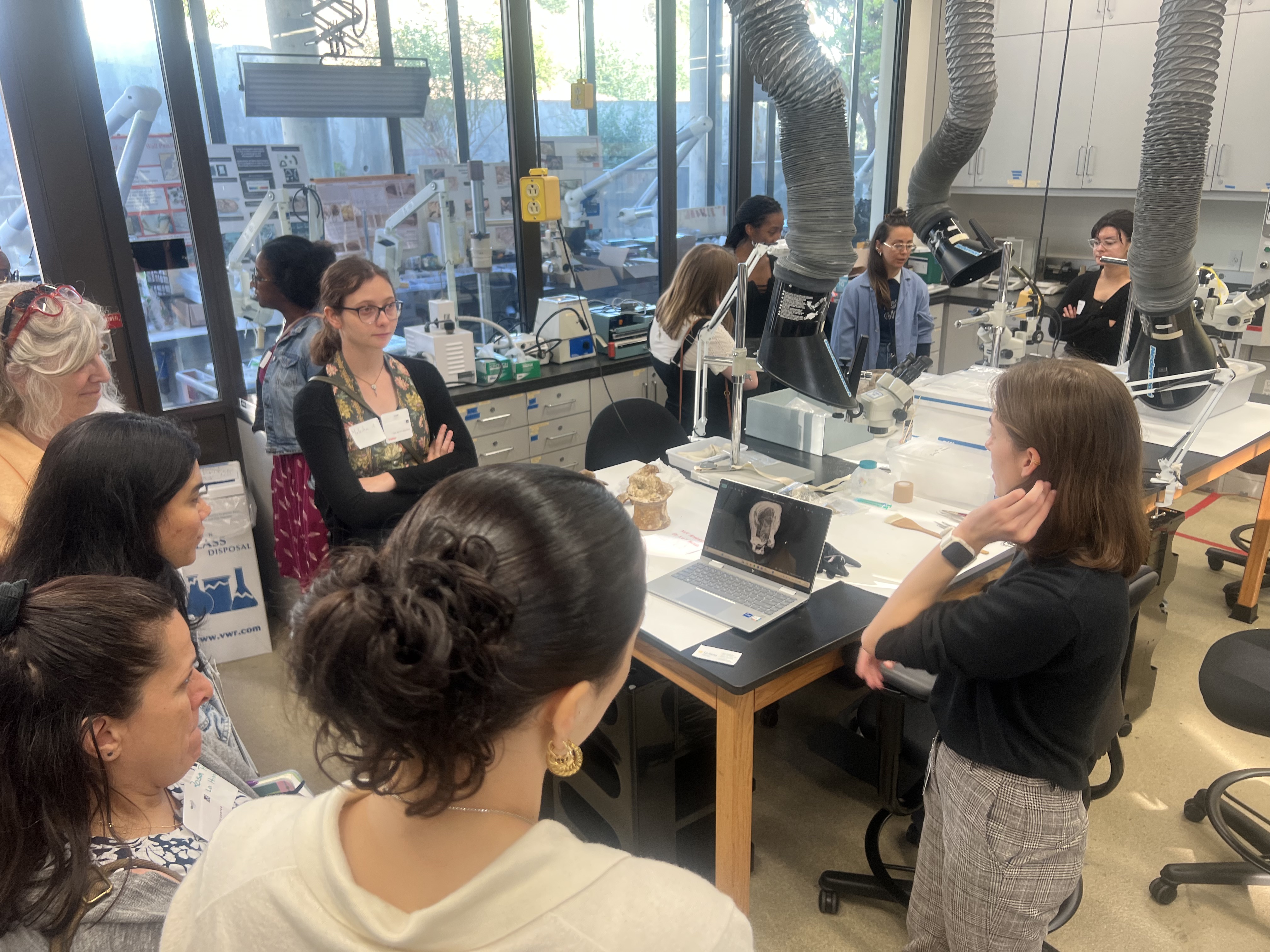
We have been fortunate in hiring lecturers over the past year. Elizabeth Drolet, a program alumna who directs Art and Archaeological Conservation Services in Los Angeles, taught courses on organic materials conservation. Jennifer Kim, of Los Angeles Art Conservation and Your Neighborhood Museum, taught a metals laboratory course. Laura Maccarelli, head conservation scientist at LACMA, taught a course titled Science of Conservation of Materials and Methods. Flavia Ravaioli, a research associate and senior objects conservator at the Fitzwilliam Museum, and Branden Cesare Rizzuto, a PhD student at the University of Toronto, taught courses on structure, properties and deterioration of materials. We also hosted a visiting graduate researcher, Anauene Dias Soares from Brazil, supervised by Thiago Puglieri.
The program continues its ongoing activities, including its Distinguished Speaker and Conservation Conversation lecture series. During the past year, speakers included:
- Damon Crocket, lead scientist at the Lens Media Lab in the Institute for the Preservation of Cultural Heritage at Yale University
- Hector Manuel Meneses Lozano, director, Museo Textil de Oaxaca
- Xiao Ma, professor, School of History of Science and Scientific Archaeology at the University of Science and Technology of China
- Julianne Polanco, California state historic preservation officer
- Heidi Swierenga, senior conservator, and Karen Duffek, curator of contemporary visual arts and Pacific Northwest at the Museum of Anthropology, University of British Columbia
- Luis Armando Muro Ynoñán, curator at the Field Museum of Chicago
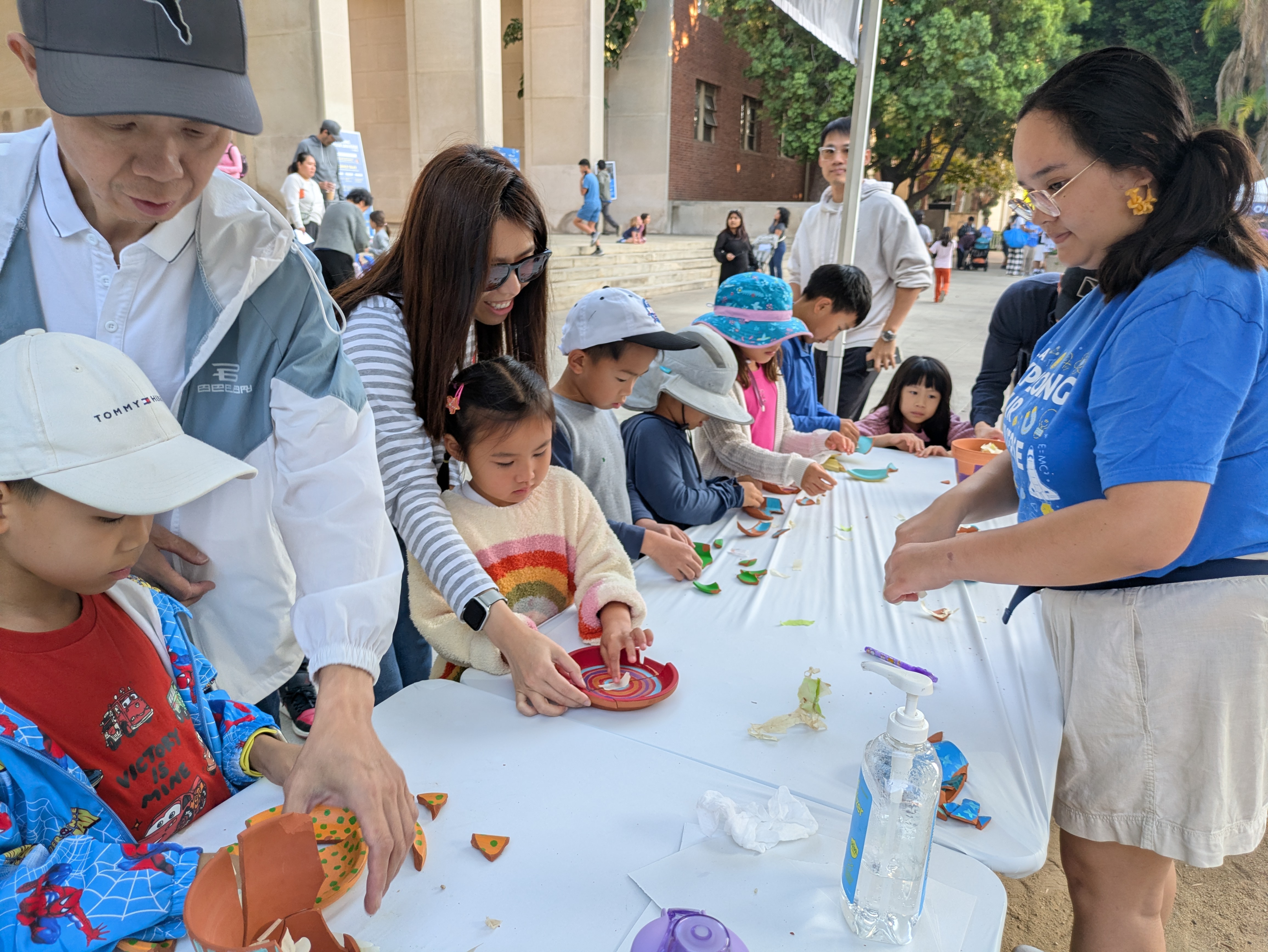
Hosted by the Getty Conservation Institute, our annual reception was held at the Getty Center in April. It attracted a full audience, including students, colleagues, and donors interested in learning more about our program. We held an animated student-led open house after returning to our Getty Villa lab in October. Guests included undergraduates interested in the field of conservation, as well as community partners, colleagues, and donors. Our students also participated in UCLA’s Exploring Your Universe science fair for children in November, introducing them to fascinating careers in cultural heritage conservation. This love for our field is what drives us all.