The past year has been one of marked change at the CIoA Press. After nearly 12 years of the esteemed leadership of Randi Danforth, the reins were passed to me. I joined the Cotsen Institute in September 2024 and have learned a lot about the institute in my first year as publications director. In this time, we’ve been working on a host of new initiatives. With the help of Cotsen director Jason De León, we’ve upped our presence at conferences popular in the field—SAA, AIA, and SHA—and also made appearances at events like the Culver City Book Festival. It’s a pleasure to meet people interested in archaeology here in Los Angeles, regardless of their involvement in the field, and we hope to engage in our local community more in the coming years.
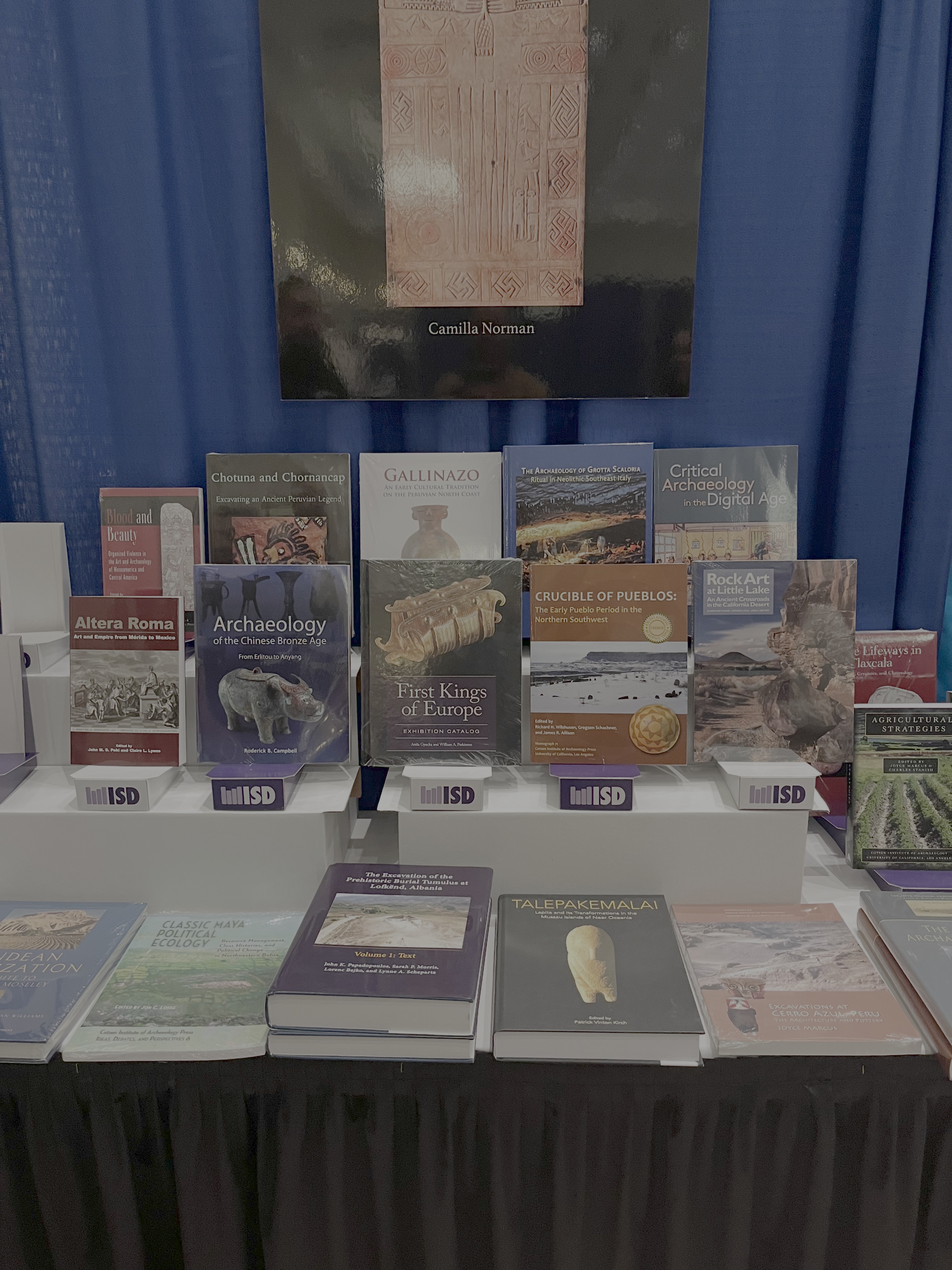
We continue our series of Author Spotlights throughout the year, cel-ebrating authors and their recent publications. We welcomed Camilla Norman, author of People of Ancient Daunia: Voicing the Statue-Stelae, in December 2024.
RECENT PUBLICATIONS
We are excited to announce our recent publications at the press, which include additions to our Monumenta Archaeologica; Monographs; and Ideas, Debates, and Perspectives series.
Animals, Ancestors, and Ritual in Early Bronze Age Syria: An Elite Mortuary Complex from Umm el-Marra by Glenn Schwartz (February 2024)
Winner of the G. Ernest Wright Award at ASOR’s 2024 annual meeting
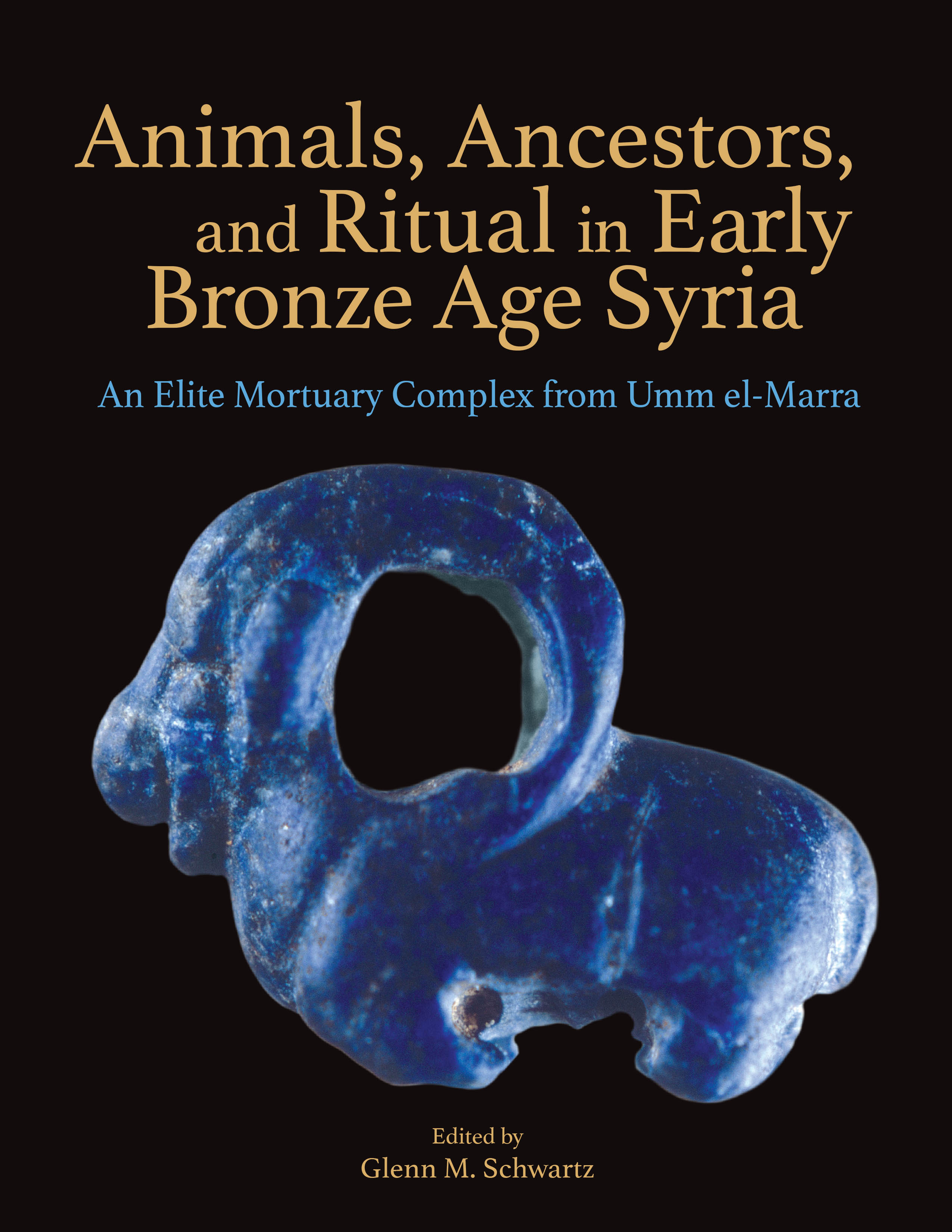
This book is a final report of the excavation of Early Bronze Age remains at Tell Umm el-Marra (perhaps ancient Tuba) on the Jabbul plain of northern Syria, conducted 1994–2010. In the Early Bronze Age, urban, complex societies first emerged in Syria. By focusing on a “second tier” urban center, the work at Umm el-Marra complements results from larger, better-known early cities such as Ebla, Mari, and Brak. Especially significant at Umm el-Marra is the large elite mortuary complex raised up in the center of the community. In this complex, tombs with human remains and objects of gold, silver, and lapis lazuli were accompanied by the burials of high-prestige animals (donkey/wild ass hybrids known as kungas). Unique in the archaeology of third millennium BC Syria, the Umm el-Marra necropolis of elite humans and animals allows for the reconstruction of funerary practices in detail and illuminates the importance of ancestor veneration, social memory, and animal agency in the development of Syria’s first urban civilization.
Village Potters of the Troodos Mountains: Ceramic Production in Agios Demetrios, Cyprus, 1891–2002 by Gloria London (May 2024)
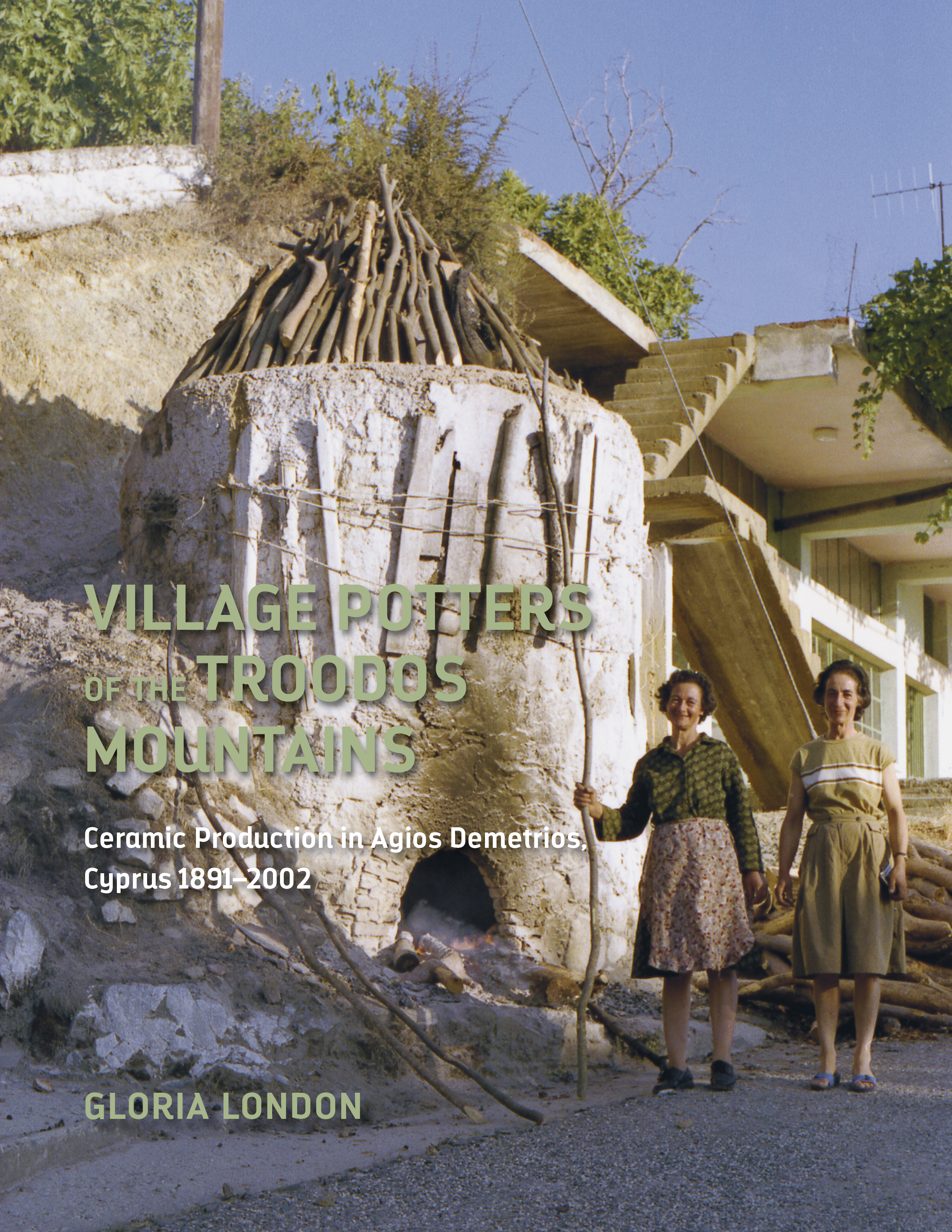
In this volume, Gloria London offers an ethnoar-chaeological study of four generations of female potters working in a remote Cypriot mountain village. Their coil-built jars, jugs, cookware, beehives, ovens, and decorative pots provide quantitative data on pot dimensions, production rates, firing times, and rate of loss. The material evidence of potting practice is informed by 40 years of ongoing observation and conversations with the potters and their families. The history of production encapsulates the rich diversity of the responses to economic and social challenges by individual potters, their extended families, and social networks within and between the mountain villages of the recent past. This addition to the archaeology of rural landscapes and the preservation of the intangible cultural heritage of the Troodos serves archaeologists worldwide concerned with craft specialization and standardization, learning frameworks, markings on pots, identifying production locations, and modeling the potential micro-histories of potters that can be postulated from settlement evidence.
People of Ancient Daunia: Voicing the Statue-Stelae by Camilla Norman (June 2024)
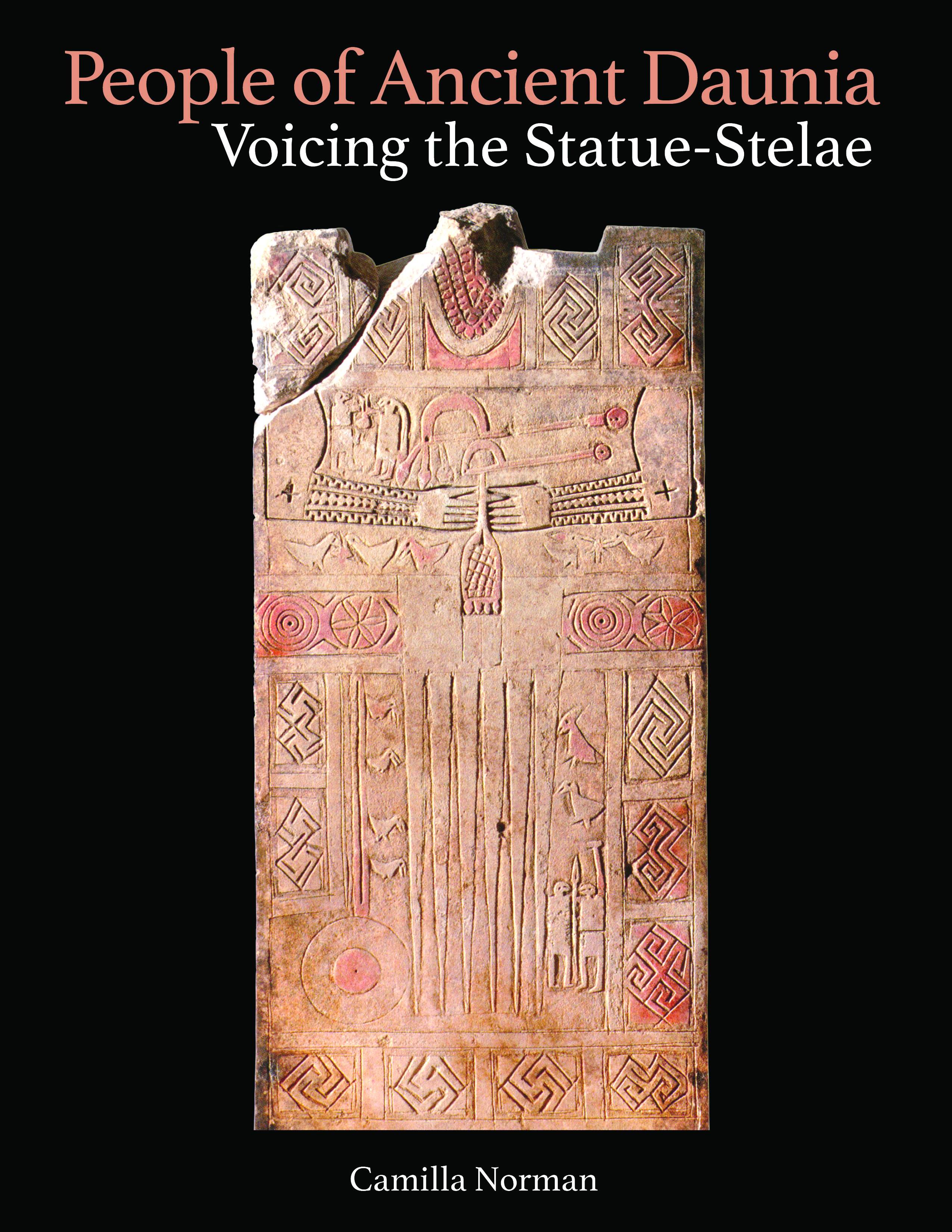
Norman provides an in-depth analysis of the statue-stelae of Early Iron Age Daunia (northern Apulia, Italy), a group of stone slabs, each incised to represent the garb and accou-trements of a person. Many have additional figurative images drawn on their robes showing ritual practices, everyday activities, and scenes of local legend. Beyond the funerary record, the material culture of Daunians is relatively poorly known. The stelae, however, are rich sources of self-representation, offer-ing an unparalleled window into the lives of a proto-historic people. This is the first time a holistic study of the stelae has been undertaken and the first presentation of the material in English.
The Kahramanmaraş Valley Survey: A Cross-roads Along the Syro-Anatolian Frontier, edited by Elizabeth Carter (March 2025)
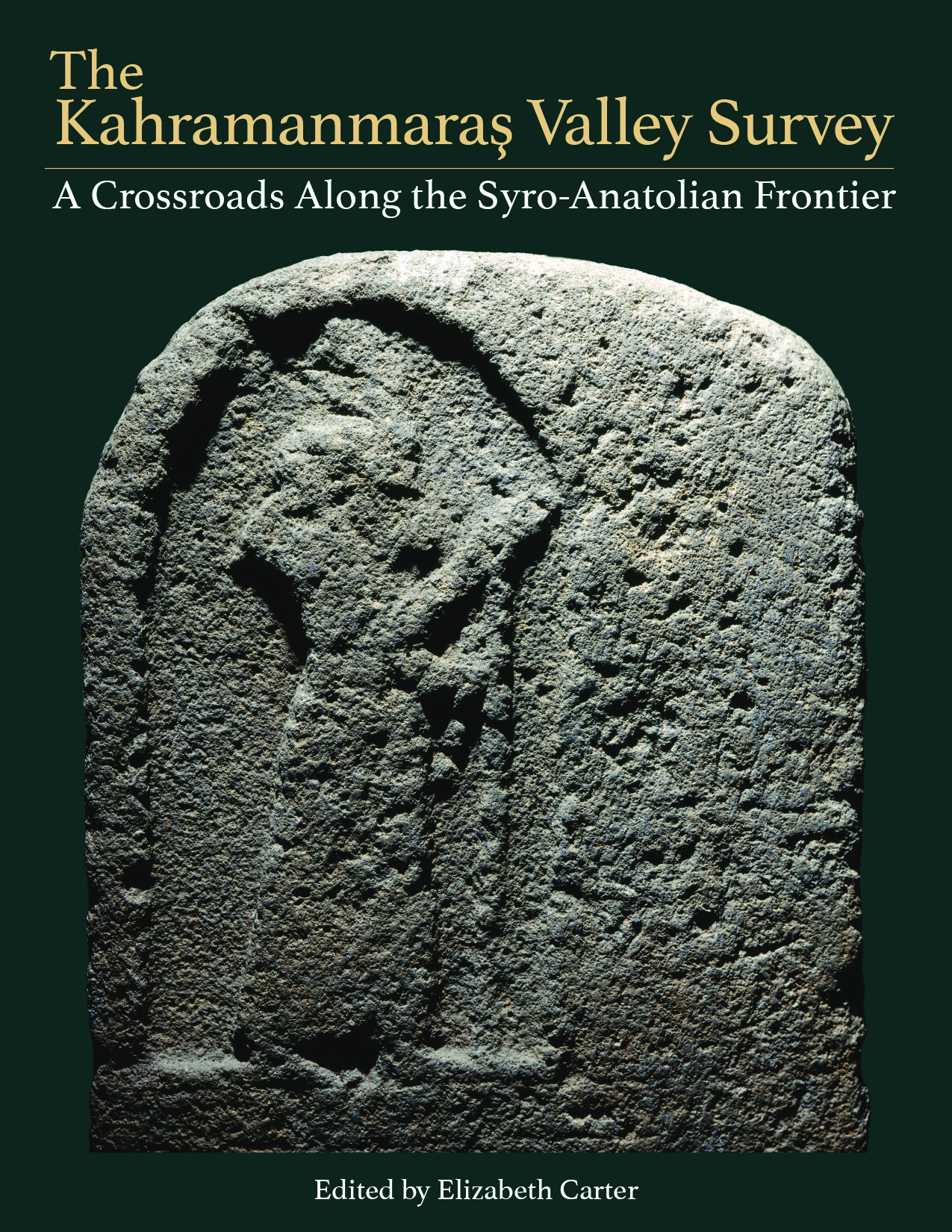
This volume presents a study of local landscape histories in the Kahramanmaraş Valley—a previ-ously understudied but pivotal crossroads along the Syro-Anatolian frontier. The area’s Holocene vegetation history is explored in relation to climatic changes and human impact through the pollen analytical results of a deep core obtained from a former Sağlık (Gavur) lakebed. Extensive surface surveys carried out in the region between 1993 and 2000 form the basis of settlement pattern studies, beginning with the first permanent settlement of the valley in the Neolithic and ending with the Islamic era. Analyses of a long historical record, diverse physical environments, and a significant number of archaeological sites—along with the results of a series of intensive full-coverage and transect surveys around Domuztepe—are used to outline the myriad ways the ancient residents of this region between Syria and Anatolia made it their home for more than 7,000 years.