A surprising number of people became familiar with the spectacular finds of the Sutton Hoo excavation through the 2021 film The Dig, starring Ralph Fiennes as Suffolk archaeologist Basil Brown and Carey Mulligan as landowner and Brown’s patron, Edith Pretty. It dramatizes the events of 1938–1939 when, invited by Pretty, Brown excavated the burial beneath Mound 1, using his instinct and deep familiarity with the landscape to carefully excavate what he soon identified as a magnificent ship burial. The mound contained the splendid treasures of an obviously significant individual, their opulence and quality defining him as a person of elite status. With the guidance of king lists in the eighth-century work History of the English People, he was later tentatively identified as Raedwald, an East Anglian king who lived in the early seventh century. This, along with an analysis of the artistic style of the Saxon objects and some coins of Merovingian origin minted in the same era, supported a date of AD 625 for Mound 1 (Carver, Martin. 2017. The Sutton Hoo Story: Encounters with Early England. Woodbridge: Boydell Press.:38–41). The discovery lit up a nation, a distraction from the uneasy anxiety of what its citizens would later recognize as the distant rumblings of a world war.
The excavators saw no signs of a body, but later chemical analysis of the burial chamber suggested that one had originally been present. Although no wood survived, there were shadows of a dark deposit against the clean yellow sand of the subsoil, showing where wood of the boat and the burial chamber had disintegrated over the centuries. The form of the ship was clearly outlined by lines of rusted iron rivets, which had fastened together the nine rows of oak planks that defined the hull. The king’s most important grave goods—objects of silver, iron, bronze, gold, enamel, and garnet—had survived and are now restored and in the care of the British Museum. The Sutton Hoo site, with its 18 mounds, was given to the UK’s National Trust, and archaeological work still goes on in other parts of this lovely property in rural Suffolk, near the banks of the River Deben and the town of Woodbridge (fig. 2).
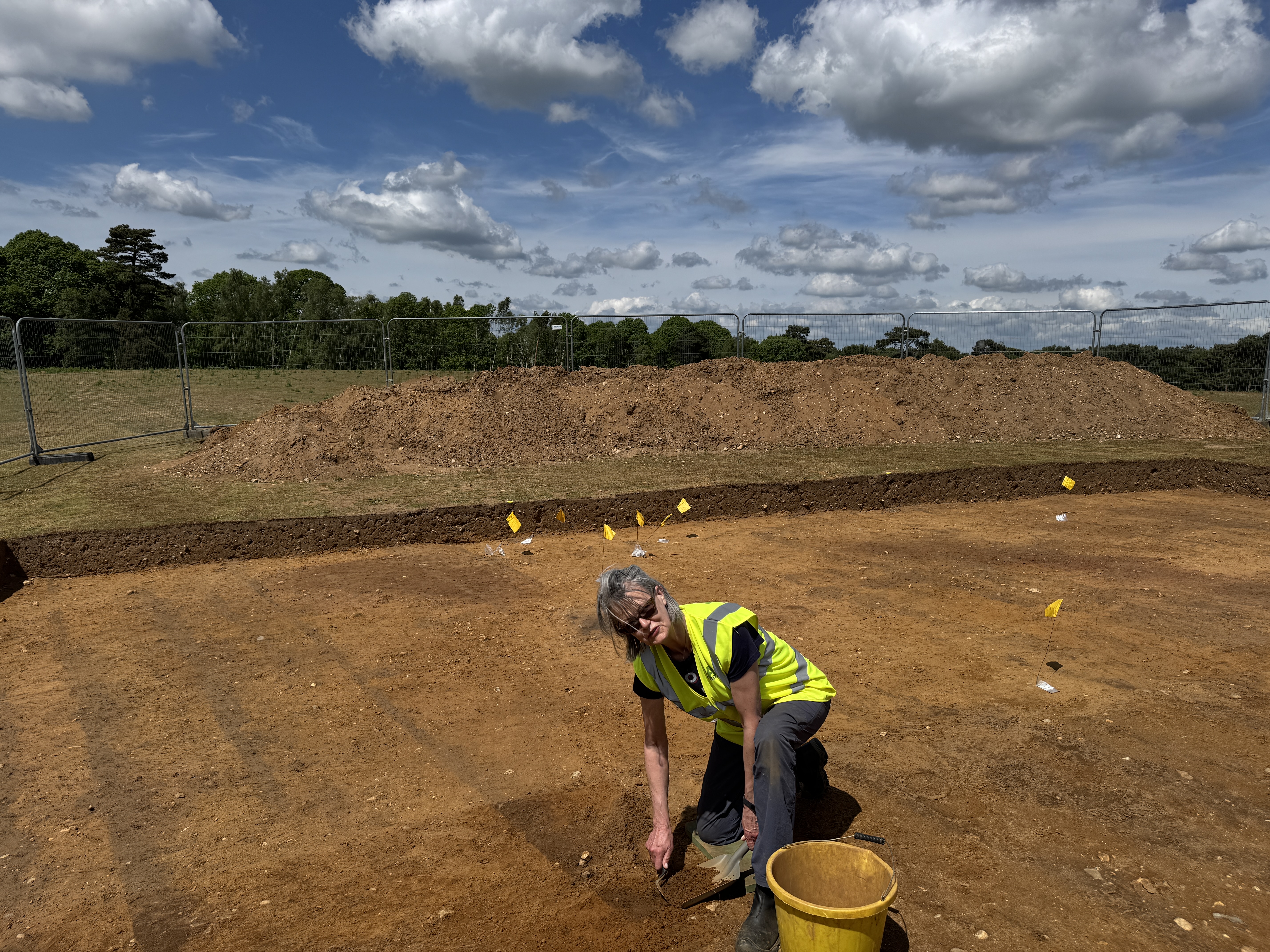
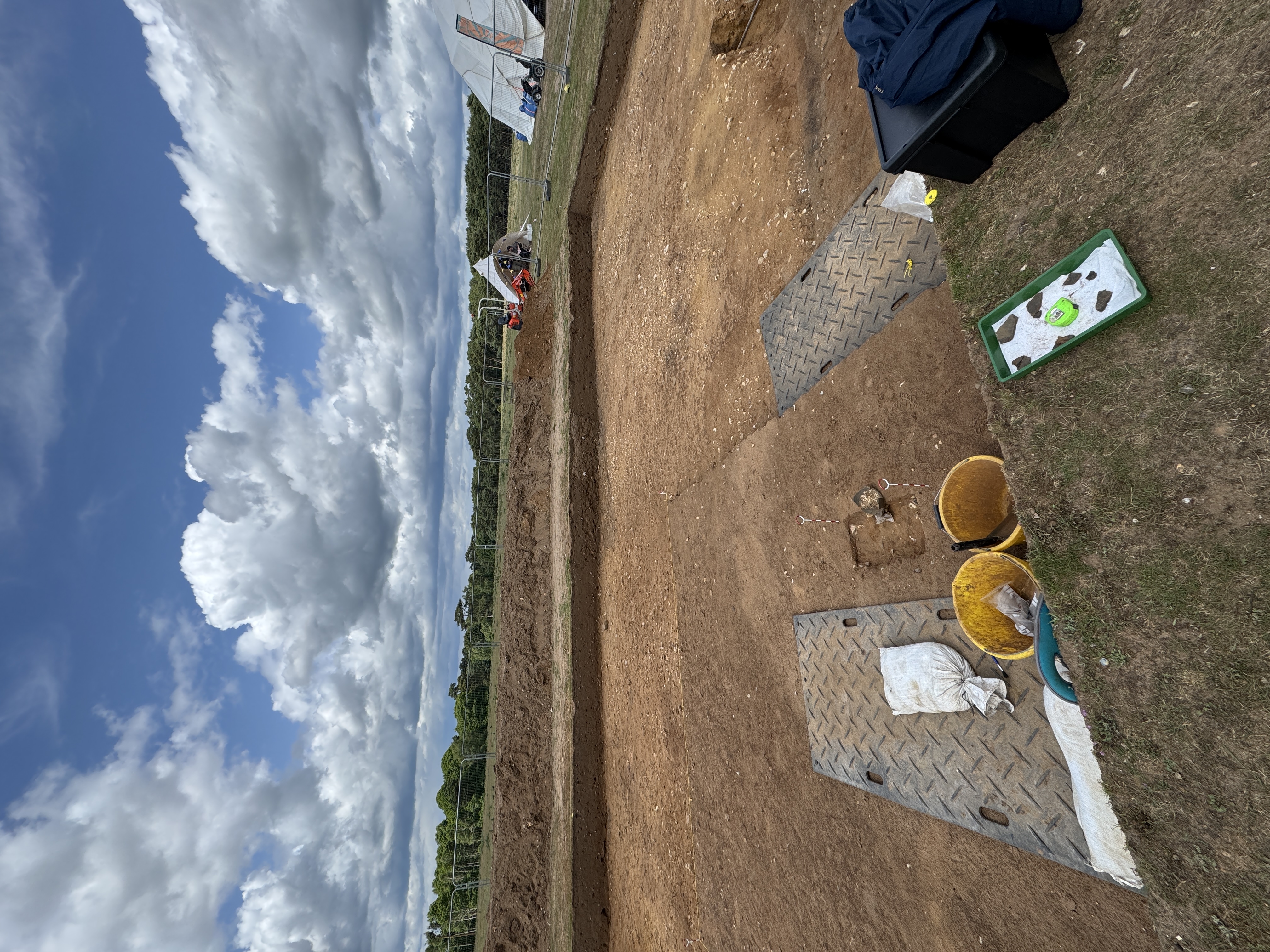
Garden Field, in an area next to the National Trust visitor center and museum, sits beyond the meadows where the royal burial mounds remain (some unexcavated). Surface and ground-penetrating surveys had identified Garden Field as an area of interest, and Anglo-Saxon inhumations and cremations in pottery vessels have been found there. They belong to an earlier cemetery of the sixth century, predating the grand seventh-century royal burials nearby. I was accepted as a volunteer to work here for two weeks in May and June 2025 (fig. 1). The project was conducted by a team from Field Archaeology Specialists Ltd. (FAS Heritage), a professional archaeology firm based in York, on behalf of Time Team (which produces archaeology video and podcast content), in partnership with the National Trust. Professionals on the team were joined by volunteers, including some from the surrounding Suffolk community, many of them experienced in archaeology, and Time Team Patreon subscribers. The progress of the four-week excava-tion seasons in 2024 and 2025 was reported on and recorded in videos, podcasts, and articles, which are available on YouTube and Time Team digital platforms. The project welcomed the general public via visits to the site, engagement with online content, and, exceptionally, participation as active volunteer members of the excavation team. This is community archaeology that fosters genuine buy-in from supporters and financial contributors, and with an extensive online presence, its reach is global. Crucial to this public engagement with Sutton Hoo’s past is the National Trust, owner of the site, with work led by its regional archaeologist Angus Wainwright and Sutton Hoo specialist Laura Howarth.
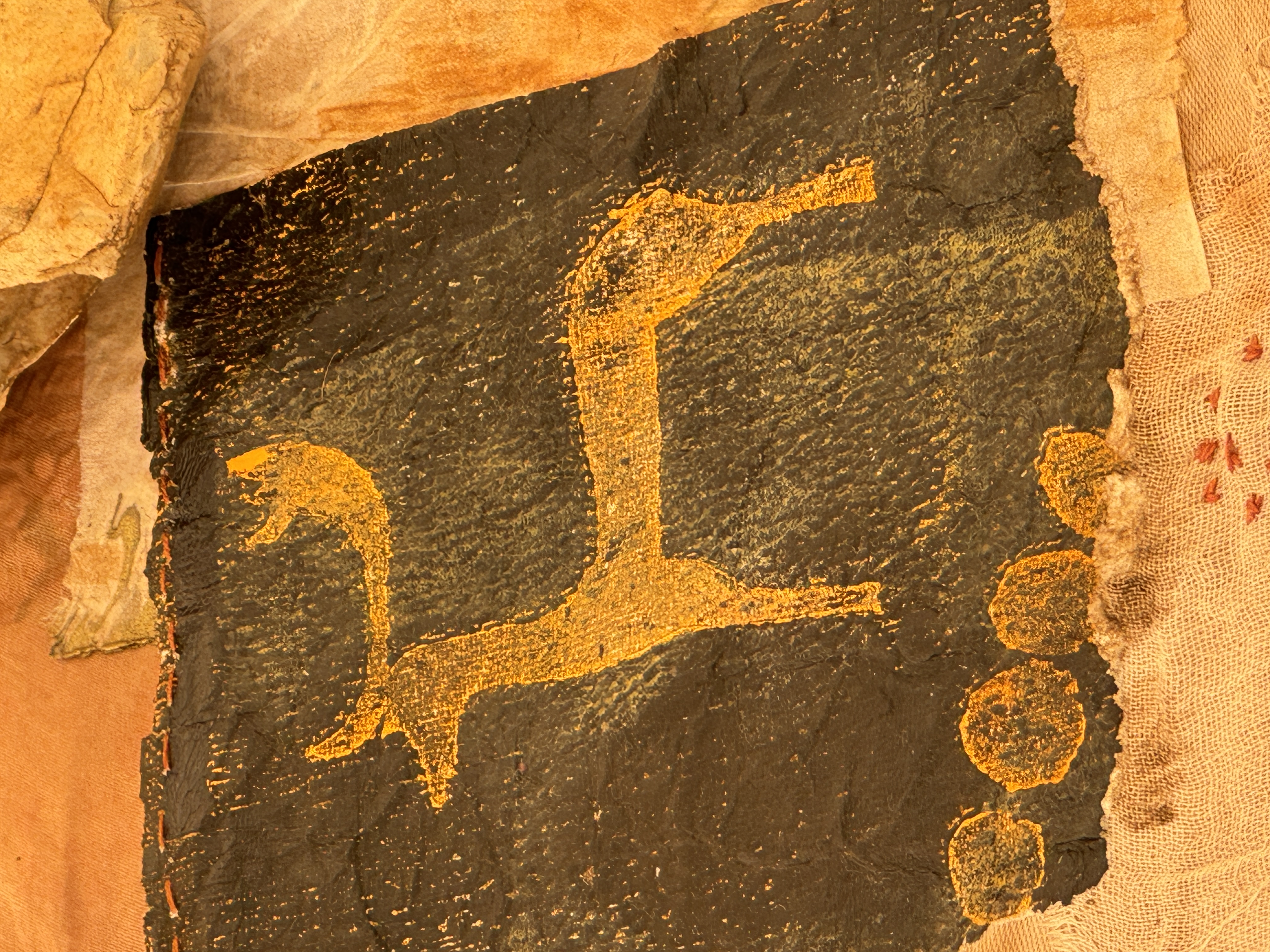
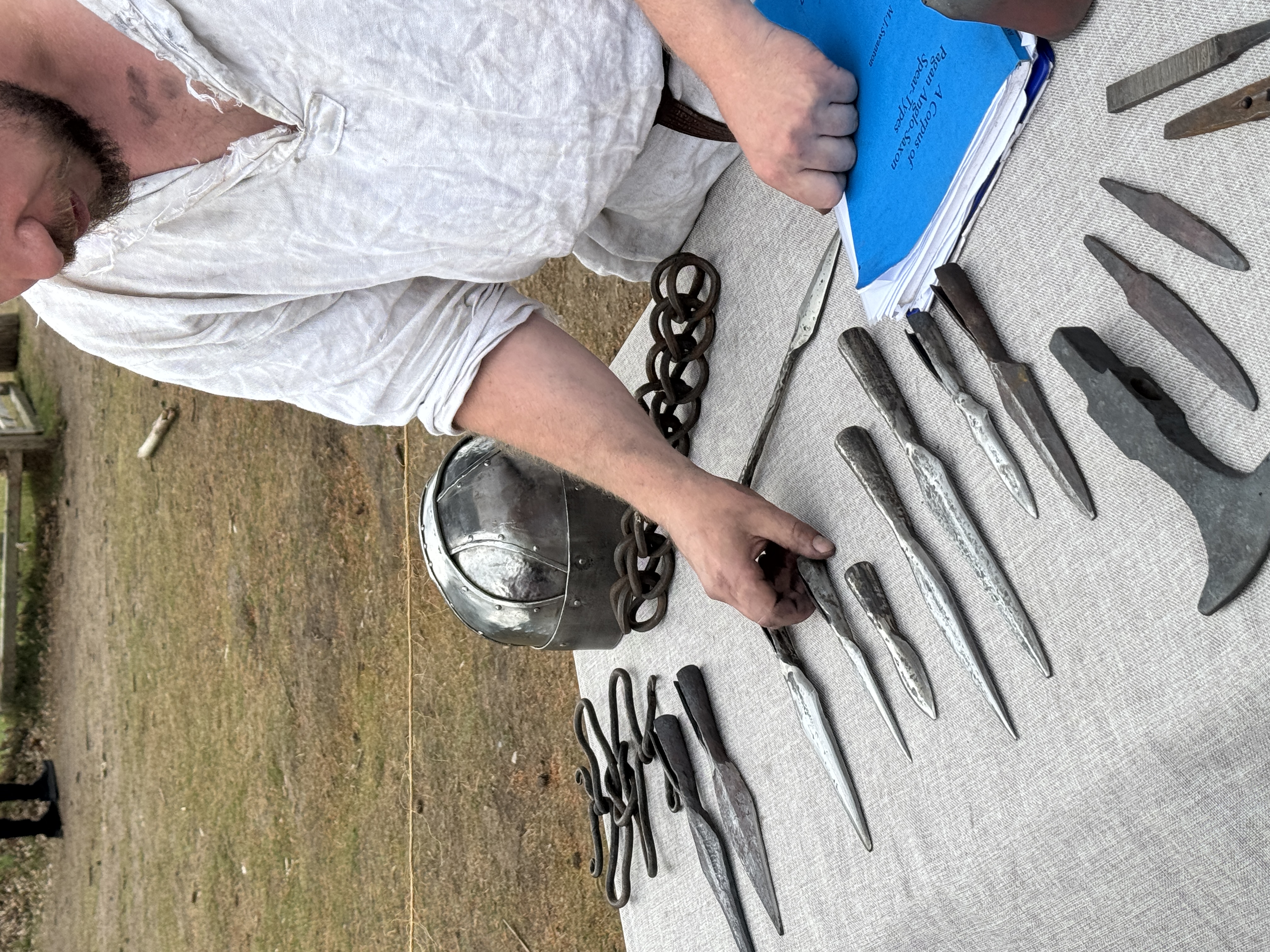
The 270-acre Sutton Hoo property offers the varied activities of a park, and for the four-week periods of the two field seasons, the excitement of an archaeological excavation was added to the pleasant and varied natural environment, attracting many visitors. Besides watching archaeologists at work, they could check out exhibits in the Time Team tent, where interactive archaeology activities were aimed at families; engage with the artists in residence, who created artworks with early medieval themes (fig. 3); watch weavers demonstrating historic textile techniques; and watch a pair of blacksmiths forge Anglo-Saxon-style blades (fig. 4). The Time Team crews were constantly filming, interviewing, and recording audio for their digital content. Their own professional archaeologists did the presenting and interpreting, mostly aimed at a general audience. Work on site was directed by Justin-Garner Lahire (who liked to double as the digger driver) and Madeleine Hummler, who advised the volunteers and steered their work.
A campaign in the 1980s had surveyed the whole area and excavated a large part of the royal burial ground, examining eight mounds, including the burial of a young man and his horse. Among the most significant finds at the time were bronze fragments of the Bromeswell Bucket, plowed up in Garden Field and dated to the sixth century. The bucket carries an incised scene from classical mythology that relates it to similar vessels from the Byzantine world. After the original discovery of the battered bucket in 1986, more fragments were found in 2000. During the 2024 season, its base was found. This added pieces to its reconstruction to reveal an artifact that perhaps found its way to an Anglo-Saxon burial via a warrior returning from duty in the eastern Mediterranean (Carver, Martin. 2017. The Sutton Hoo Story: Encounters with Early England. Woodbridge: Boydell Press.:45). Analysis revealed that it had contained a cremation. The metal finds and the discovery of Anglo-Saxon graves dictated the location of two trenches in Garden Field for the 2025 excavation, where investigators hoped to learn more about the context of the bucket as well as the prehistory of the Sutton Hoo site and its Anglo-Saxon inhabitants.
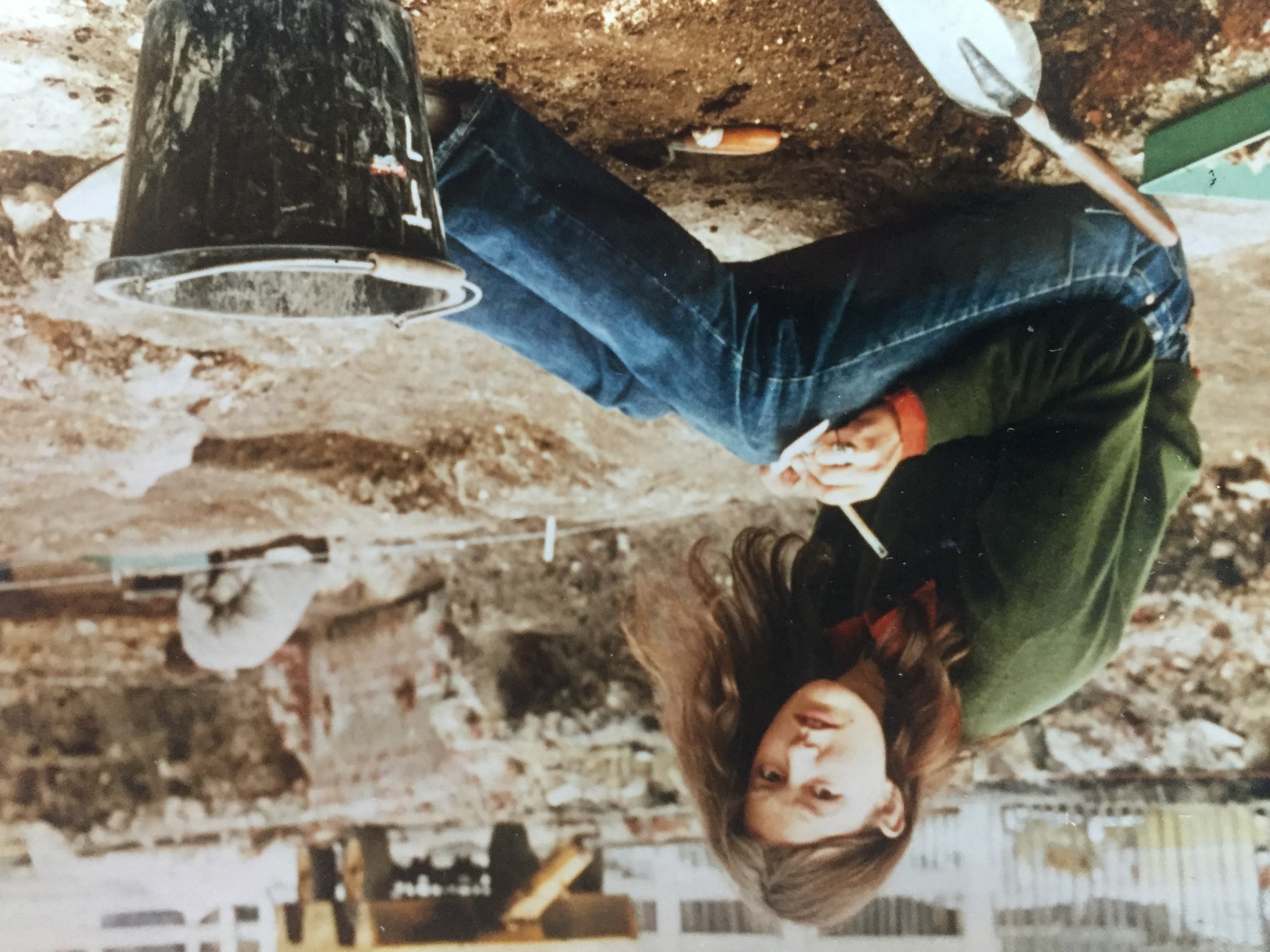
Martin Carver, emeritus professor of archaeology at the University of York, led the excavations at Sutton Hoo from 1983 to 1992. He and other archaeologists who did this early work returned to Sutton Hoo in 2024 and 2025, providing continuity, invaluable institutional memory, and expertise for the new seasons of investigation. For me, it was a fantastic reunion with Martin, with whom I had volunteered in 1973 (fig. 5) in the city of York in a rescue archaeology program to collect and preserve evidence from five sites before they were obliterated by urban development. The experience inspired my pursuit of an undergraduate archaeology degree, although my career eventually took a different path. I ended up full circle, working in archaeology publications at the Cotsen Institute many years later. Volunteering at Sutton Hoo brought me back to my original love for the field and this period of early English history.
WEEK ONE: EXCAVATION IN THE FIELD
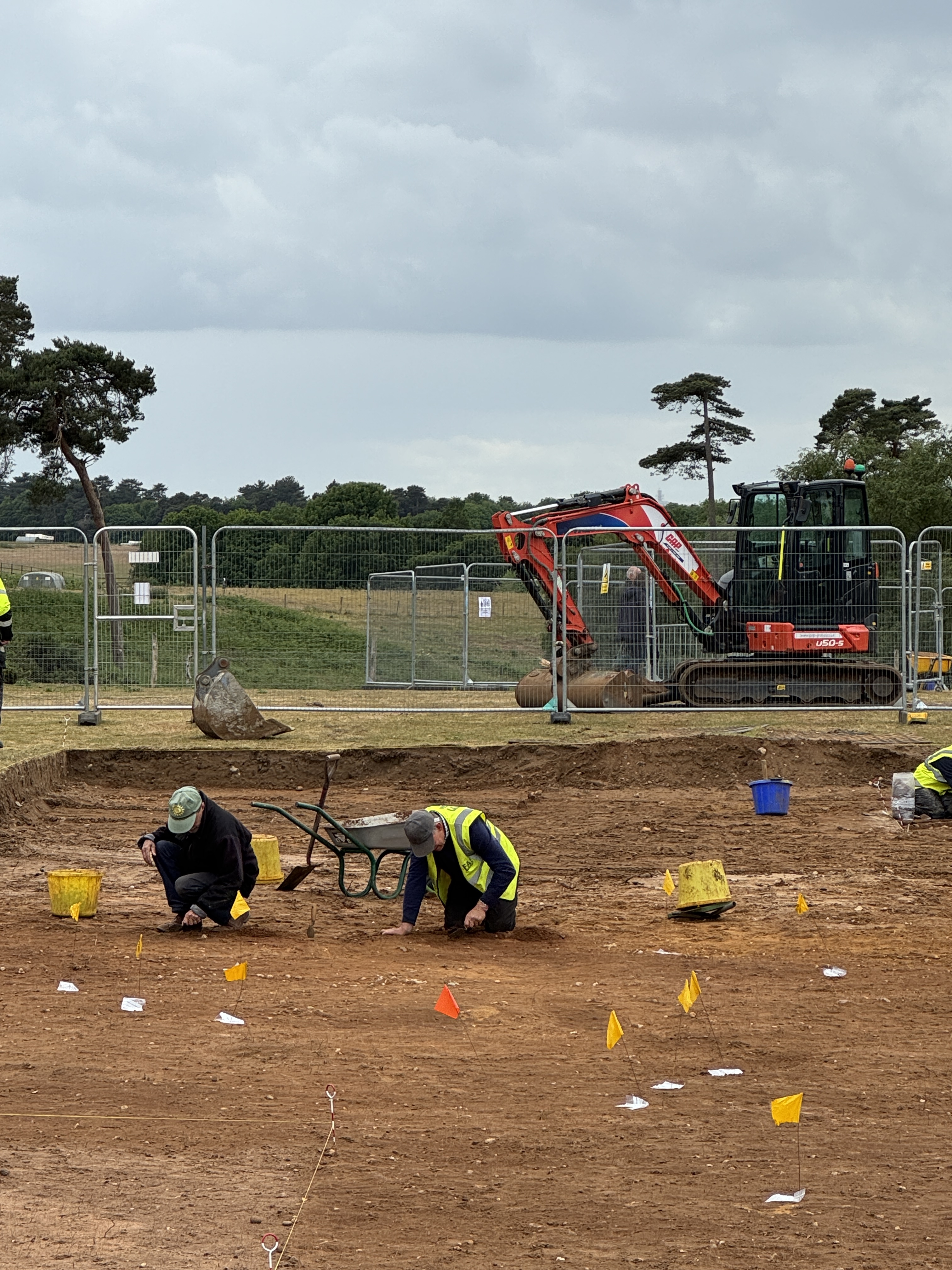
Justin Garner-Lahire, director of FAS Heritage, led the excavations in the two trenches in Garden Field. Madeleine Hummler (fig. 6), who supervised the volunteers, taught them how to conduct a field-walking survey, use a trowel, process finds, and do site recording. The recording methodology used was based on Carver’s field research procedure (Carver, Martin, and Madeleine Hummler. 2025. Archaeological Investigation. 2nd ed. Abingdon: Routledge.), a system that places data in a hierarchical organi-zation of contexts (deposits), features (sets of deposits), and structures (groups of features). The parameters of the trenches in Garden Field had been located by a range of geophysical survey techniques (photo-grammetry, magnetometry, metal detecting) that revealed the presence of early activity from prehistoric to early medieval times. The site surveys were made with a total station and tablet computer running CAD software. Documentation was also done with high-resolution digital photography and with a drone for low- and high-level aerial recording. Written descriptions and half-section drawings were routinely compiled to provide the fullest possible record.
The trenches were first machine-excavated with a toothed excavator bucket and then water-sprayed and field-walked by volunteers and scanned by a metal detectorist. All finds were flagged and then 3D-located with the total station. In my first week of work, which was the second of the four-week season, I joined a half dozen other volunteers in the walking survey of both trenches, collecting any possible worked flints (evaluated in the field by the supervisor before recording and bagging—thus minimizing overoptimistic identification by enthusiastic volunteers), debitage, metal fragments, and pottery, recording the locations with the total station, and bagging up the finds. We then proceeded to coarse-trowel the sandy soil, removing it inch by inch. We worked backward in a line, locating finds and depositing our spoil, bucket by bucket, on the growing mountain next to the trench, which would be used to backfill the excavation at the end of the season. Dry sieving was done when the finds distribution occurred in a high concentration.
Several burial urns containing cremations were found in situ in the upper site. The lower site proved to be less yielding; the disturbed earth there was mainly caused by plows, burrowing animals, and tree falls. This area was and is still agricultural, so farmers have frequently turned up artifacts in the course of their tilling work, leaving the plow marks to show where they crossed virgin soil.
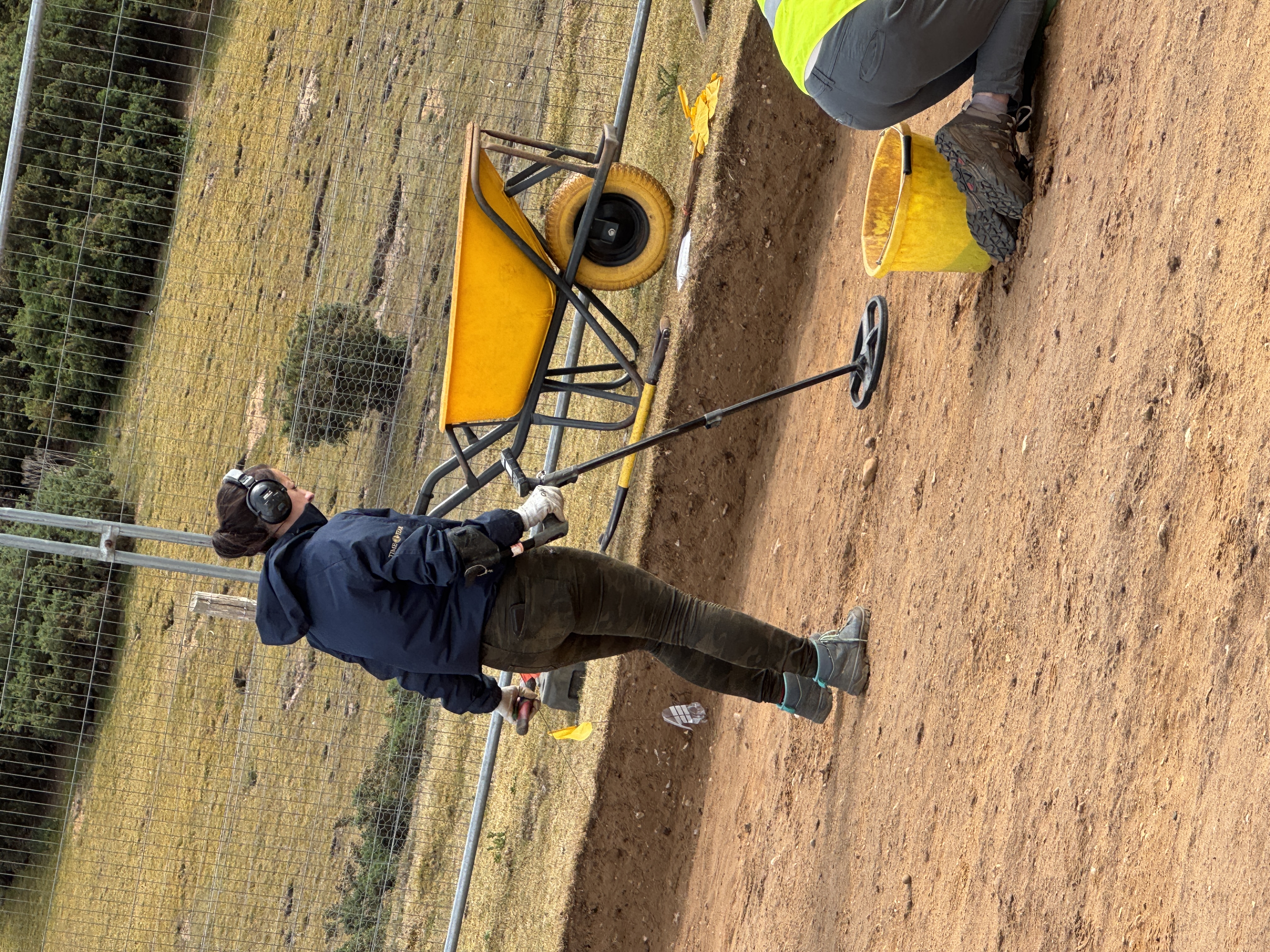
Skilled metal detectorists volunteered for the Sutton Hoo seasons (fig. 7) in collaboration with the Portable Antiquities Scheme, which encourages and facilitates the recording of finds made apart from archaeological excavations by members of the general public. Such collaboration is a relatively new aspect of professional archaeological excavation. In the past, detectorists were sometimes regarded as treasure-hunting hobbyists who undermined the work of archaeologists.1 But their expertise and devotion to archaeological procedures have gained them respect. Many are now professionals who conduct metal-detecting surveys in collaboration with other archaeologists. They report findings and geo-coordinates of the locations of metals and other materials to excavation teams, identifying areas where test pits might be fruitful.
WEEK TWO: PROCESSING FINDS IN SUTTON HOO HOUSE

During the second week, I was assigned to the finds room in Tranmer House (now Sutton Hoo House), Edith Pretty’s former residence and now a museum about the discovery and excavations at Sutton Hoo. In a room upstairs (fig. 8), supervised by archaeologist Jenny Glazebrook, we received the bagged field finds for processing. First we separated them into boxes by material: iron, nonferrous metals, pottery, and worked flint. Most of the pottery was coarse red ware, with a few sherds of earthenware and porcelain, and a negligible amount of glass. We then washed, dried, weighed, cataloged, and marked each one (fig. 9). I brushed a stripe of Paraloid (a peelable, thermoplastic resin) on the surface of each flint so the marking would be reversible. Then I used a tiny pen nib and water-soluble white ink to inscribe catalog numbers on the surfaces (fig. 10). We placed each artifact in a plastic bag cushioned with a piece of foam. As in 2024, after the 2025 season concluded, all finds were shipped to labs in York, where they will undergo analyses to date and identify them. FAS Heritage will publish the findings in its site report.
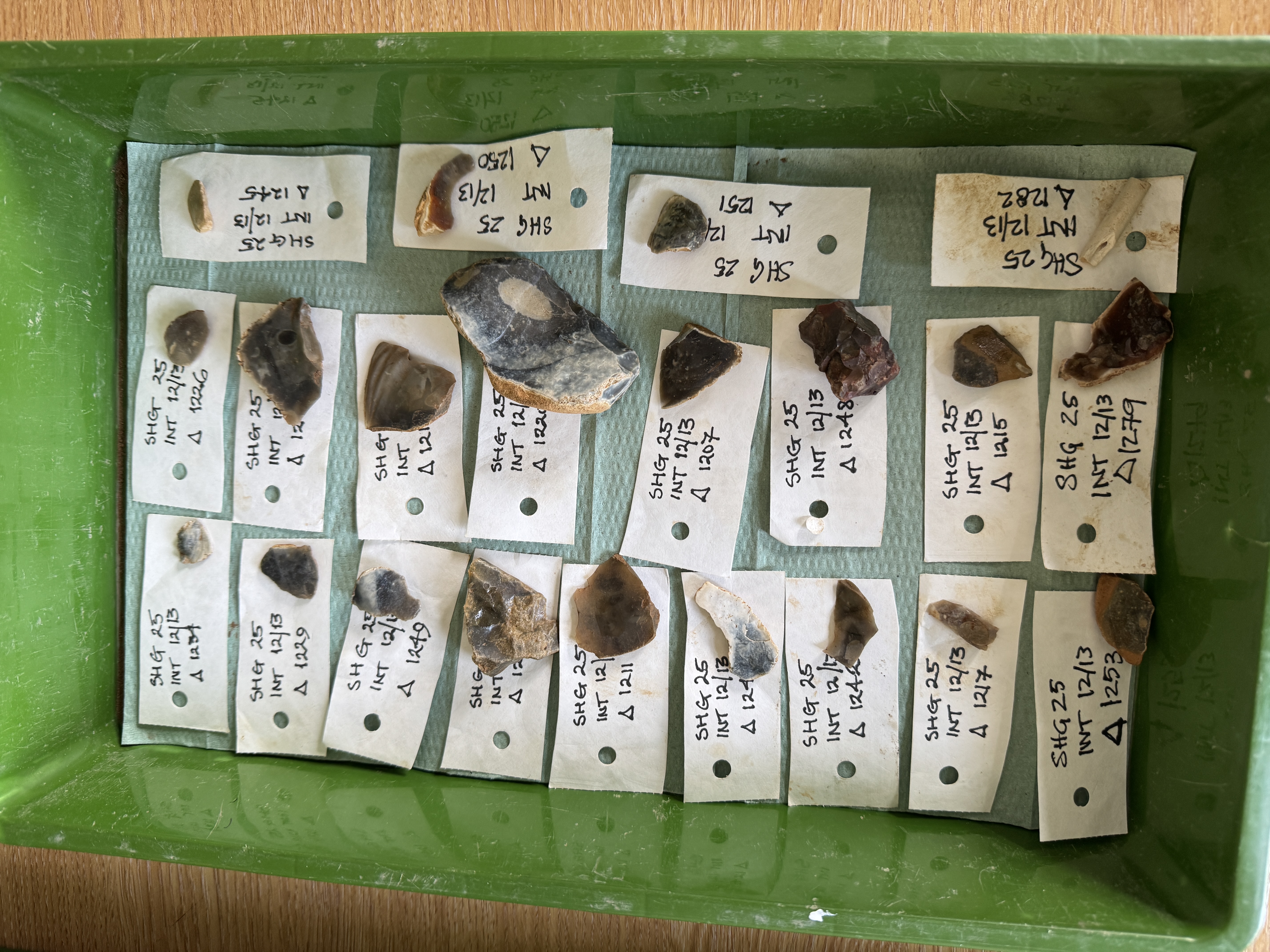
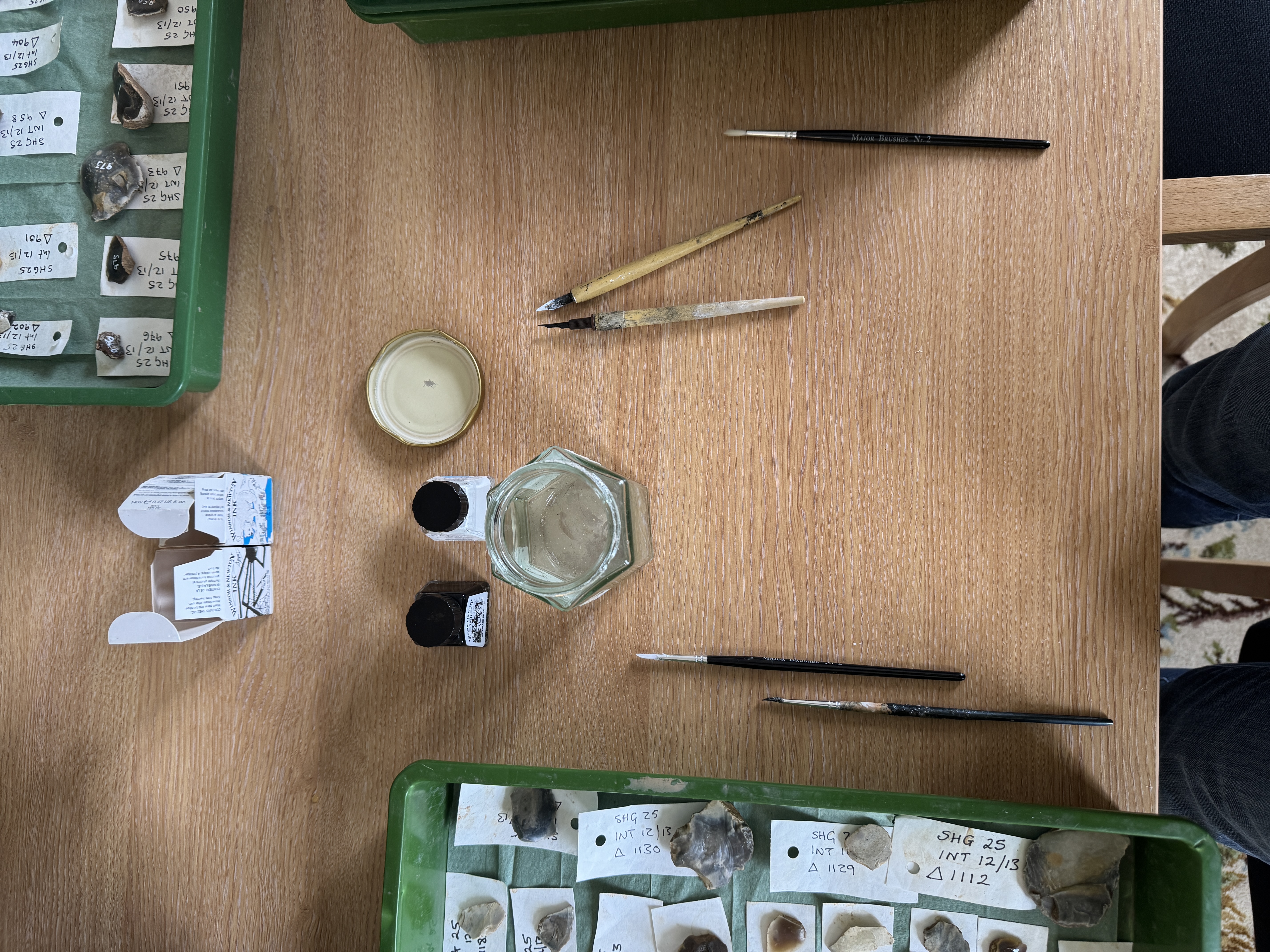
Each day we had volunteers in the finds room, including a group from the Restoration Trust, which facilitates culture therapy activities for indi-viduals living with mental health challenges. Some local volunteers had prior experience, and they brought familiarity with the type of flints and pottery sherds that turn up most frequently. One volunteer recognized several hagstones in the mix. These are not artifacts but are naturally occurring roundish stones with holes in the middle; people collect them on the beaches in Suffolk and string them together as hanging charms. They were not among the assemblage submitted for lab analysis.
BUILDING A BOAT: THE SUTTON HOO SHIP’S COMPANY
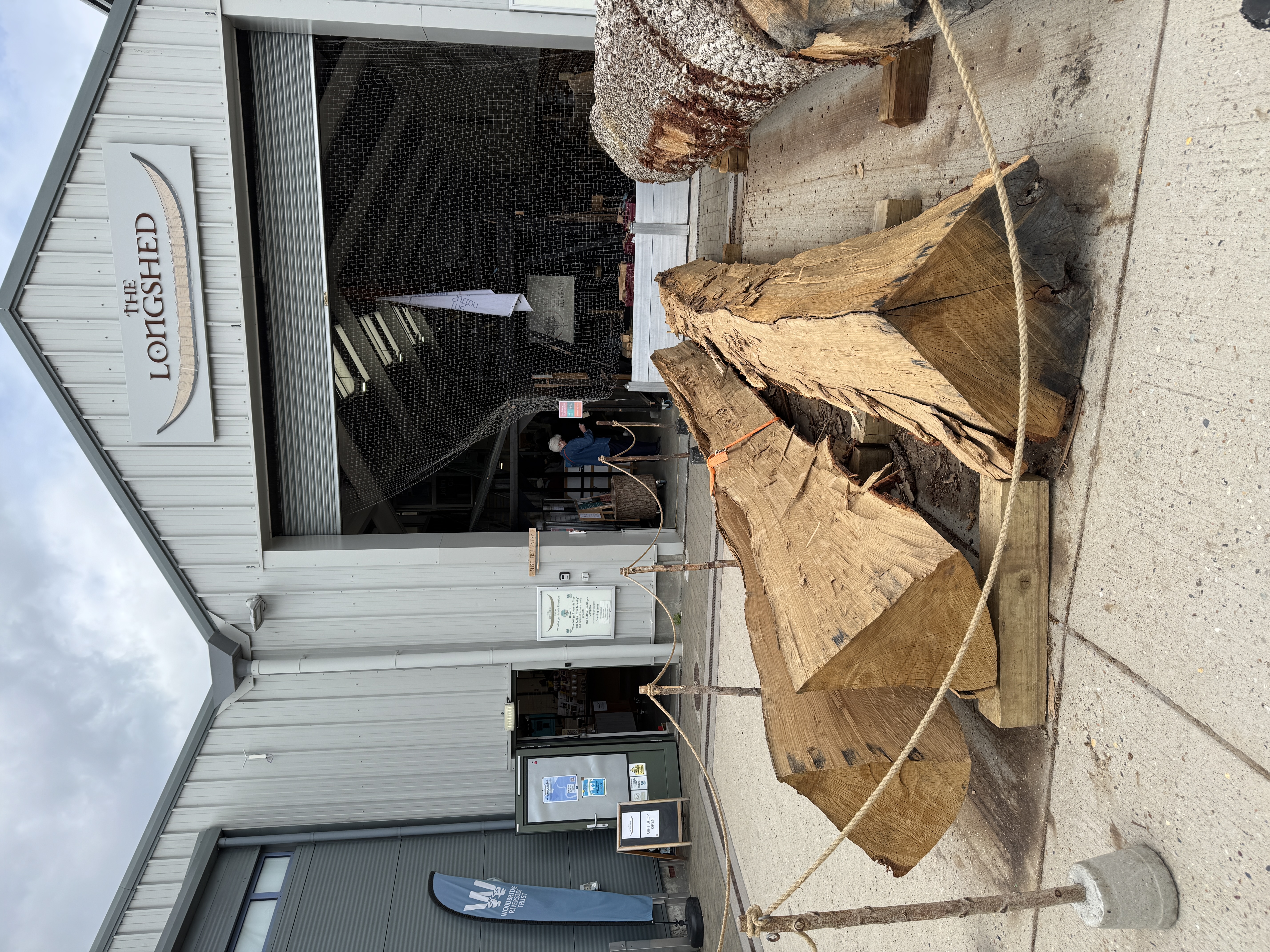
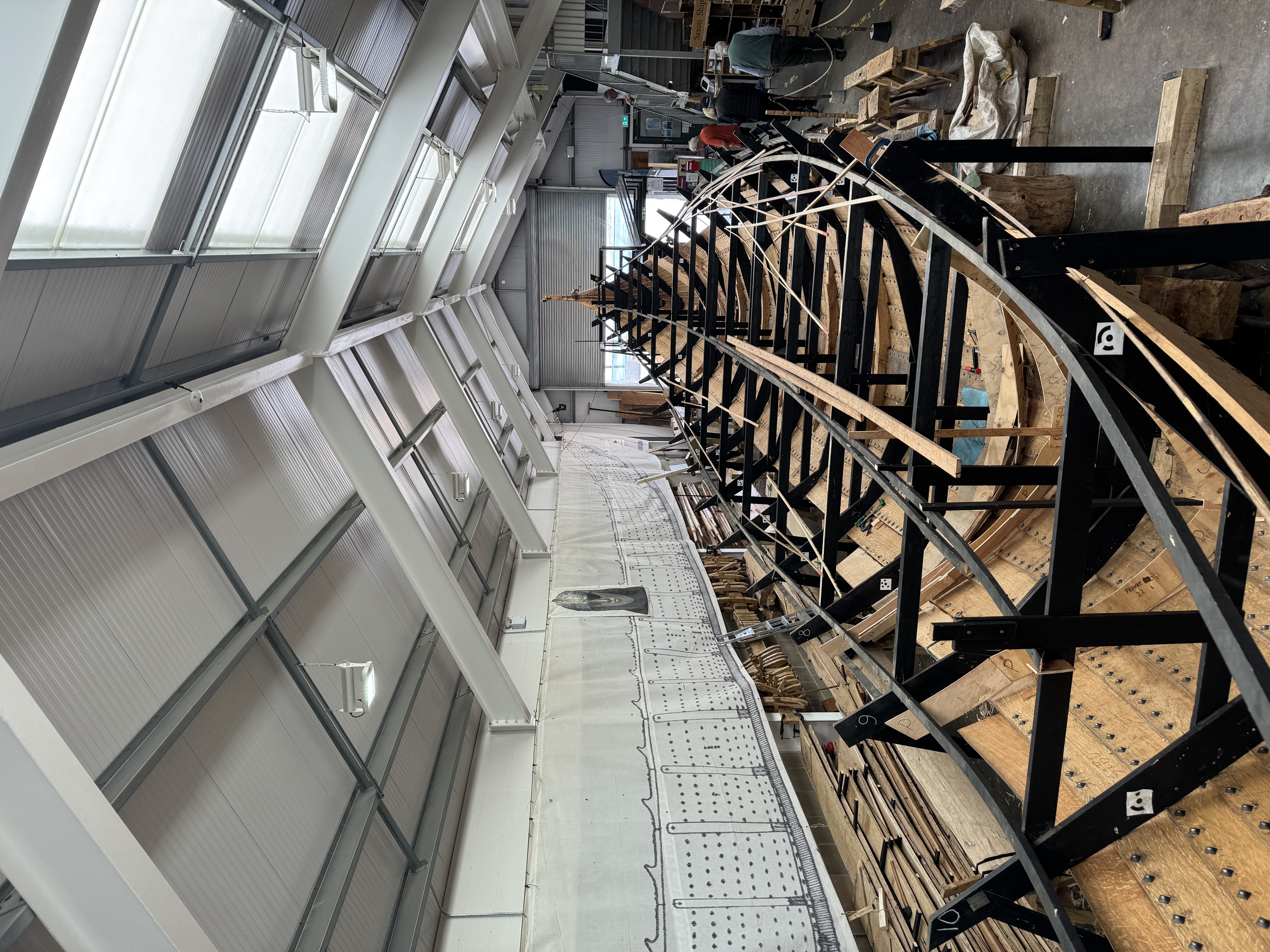
A related but separate project has been going on for a few years in a large hangar (the Longshed) across the river on the waterfront in Woodbridge.2 Here experienced volunteers and shipwrights have been constructing a full-scale reconstruction of the Anglo-Saxon ship found under Mound 1, using traditional tools, ancient techniques, and seasoned native oak donated from all over the UK (fig. 11). This massive commu-nity endeavor, “one of the largest single focus archaeological projects so far seen in Britain” (Carver, Martin. 2026. The Experimental Sutton Hoo Ship: Context and Design.Woodbridge: Sutton Hoo Ship’s Company.:133), explores not only the context of early English history at Sutton Hoo but also the maritime history of Woodbridge. Everyone involved in or visiting the Sutton Hoo excavations makes a stop at the Longshed to experience an aspect of early medieval archaeology come to life. It is a truly fascinating and authentic window into the past (fig. 12).
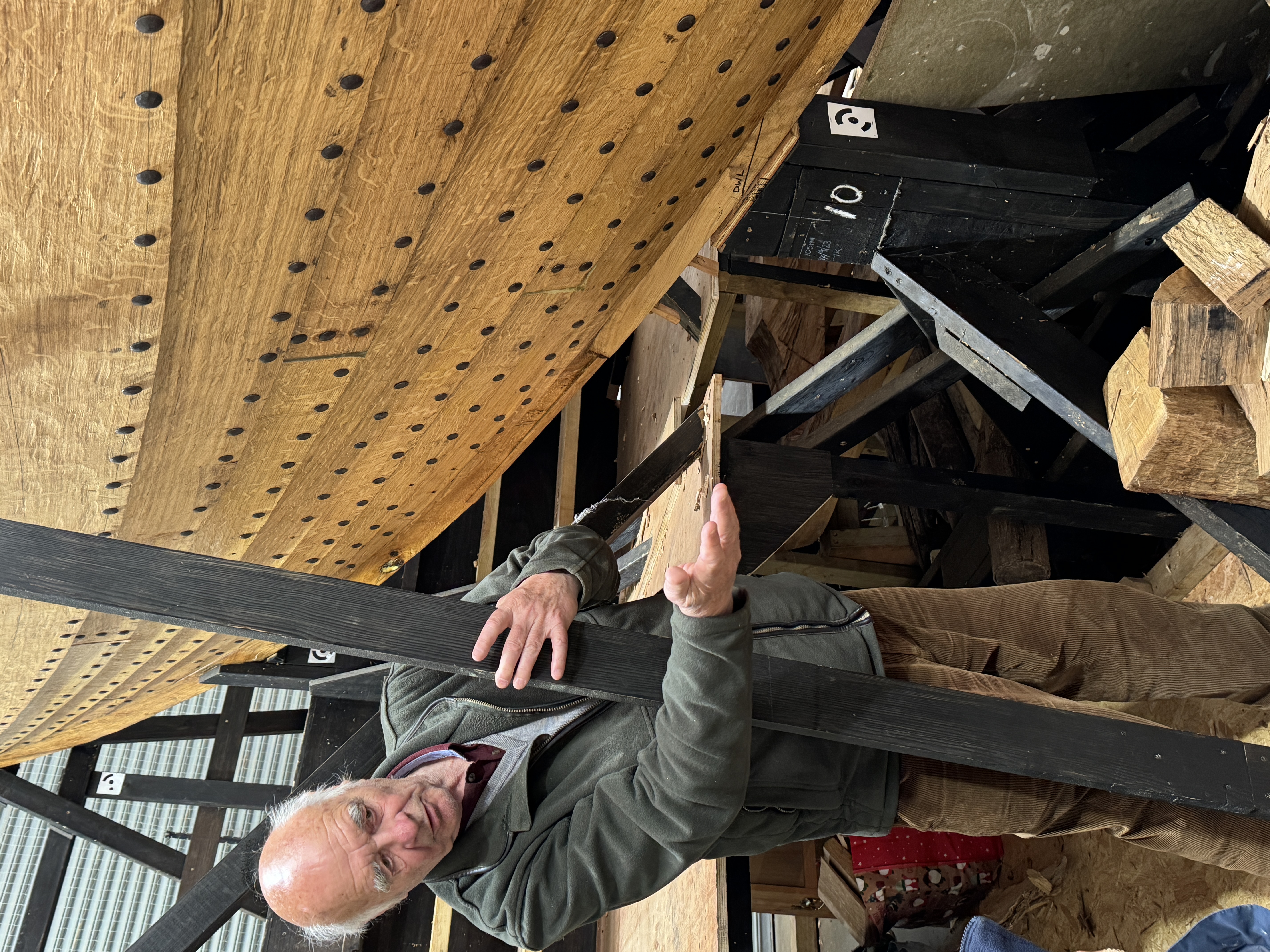
Co-founded by Carver (fig. 13), the Sutton Hoo Ship’s Company, an independent charity for which he now serves as trustee, supports this work. The first in a series of three books on the project authored by Carver (Carver, Martin. 2026. The Experimental Sutton Hoo Ship: Context and Design.Woodbridge: Sutton Hoo Ship’s Company.) has just been published. Organizers will launch the 90-foot boat sometime after its projected completion in 2027, putting 40 oars to water to explore how the Anglo-Saxons powered and navigated their giant craft, which predated the famous Viking longships by some 200 years. The progress has been well documented in film and all manner of media; there is already enormous interest in this experimental endeavor. The launch of the vessel into the Deben River will attract global attention and allow us to better understand transportation, trade, craft, social cooperation, and international exchange in early Britain.
Notes
-
See the fictional BBC series Detectorists for a poignant and pastorally set look at the sometimes comedic adventures of a couple of extremely keen metal detectorist hobbyists in Essex. Their discoveries consist mainly of enough aluminum can pop tops to provide a very comprehensive typology seriation, but they never give up hope that one day they’ll find the greatest Anglo-Saxon hoard ever. ↩︎
-
Progress can be followed online at www.saxonship.org. ↩︎
Bibliography
- Carver 2017
- Carver, Martin. 2017. The Sutton Hoo Story: Encounters with Early England. Woodbridge: Boydell Press.
- Carver 2026
- Carver, Martin. 2026. The Experimental Sutton Hoo Ship: Context and Design.Woodbridge: Sutton Hoo Ship’s Company.
- Carver and Hummler 2025
- Carver, Martin, and Madeleine Hummler. 2025. Archaeological Investigation. 2nd ed. Abingdon: Routledge.