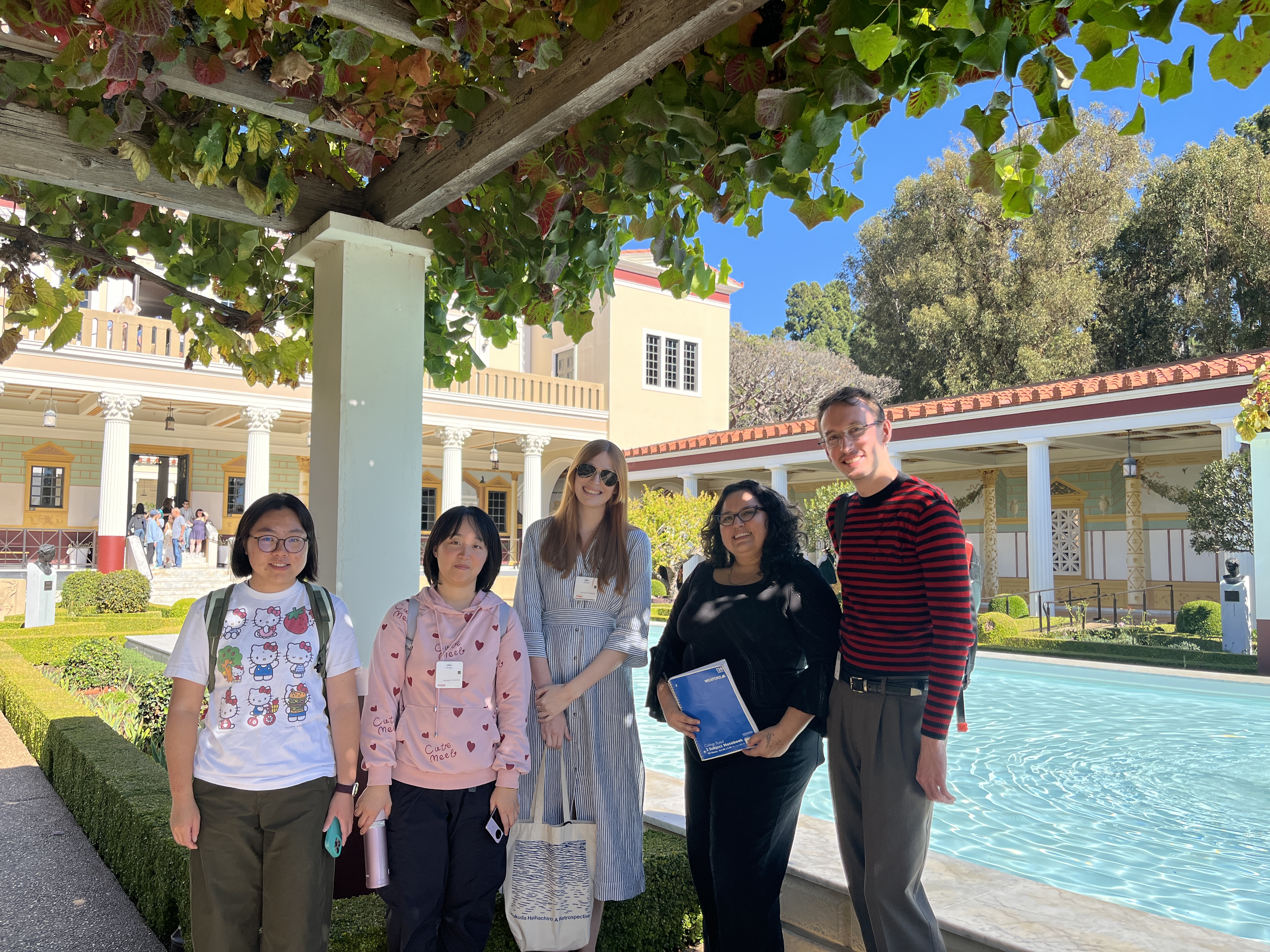
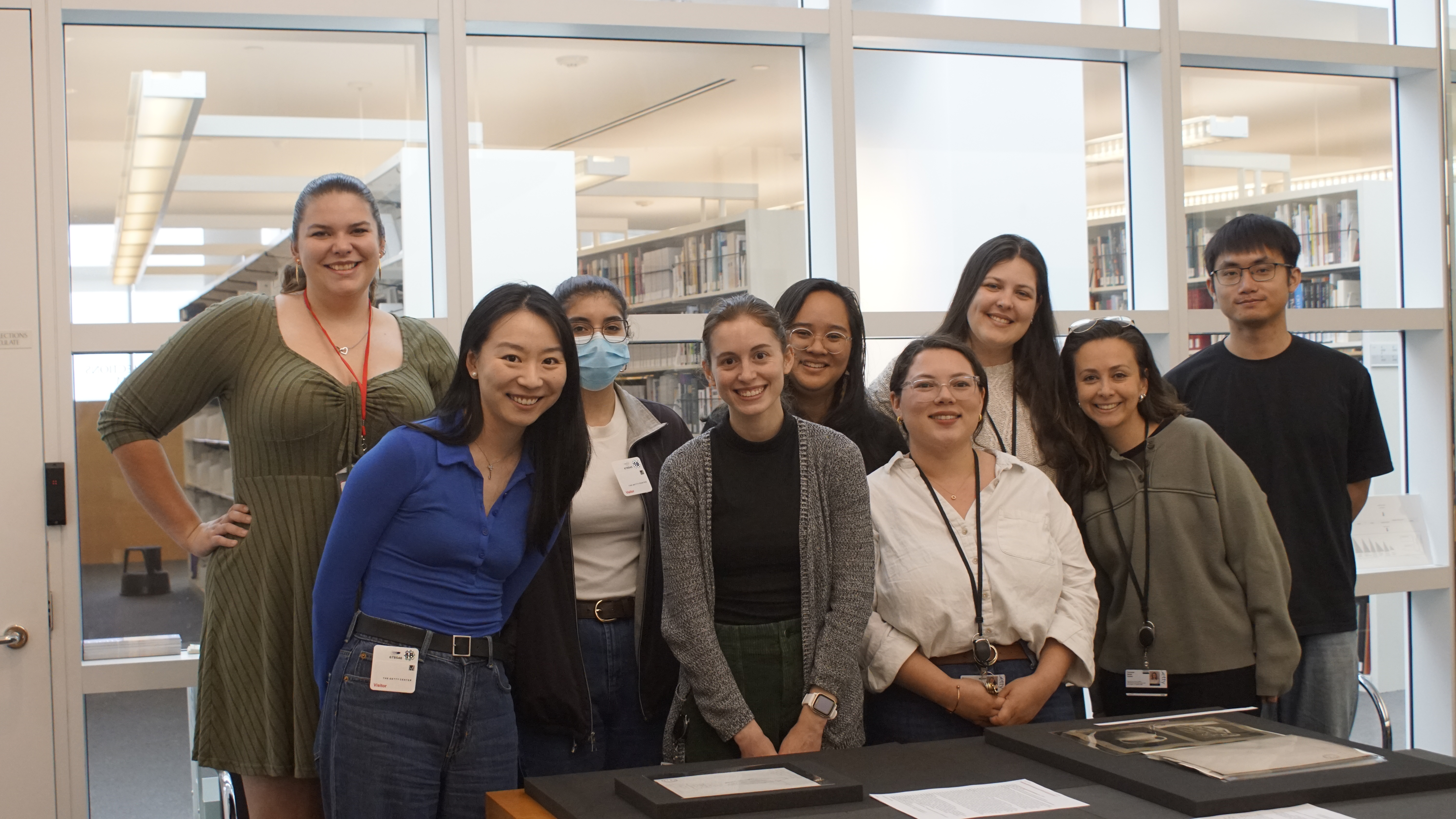
The 2025–2026 academic year marks the entry of the third cohort of students into the Waystation’s Graduate Certificate Program in Cultural Heritage Research, Stewardship, and Restitution. This year’s cohort includes six students from programs across campus: art history, history, East Asian languages and cultures, and the Master of Library and Information Science (MLIS) program (Fig. 1). The previous year’s cohort included all five incoming conservation MA students as well as students from the Archaeology IDP and the MLIS program (Fig. 2).
Our certificate program students are not the only ones working toward the Waystation’s goals. We have a dedicated crew of undergraduate and postgraduate interns working on dynamic projects that are integral to the initiative.1
GRANTS, GOALS, AND NEW DEVELOPMENTS
The Waystation will soon launch its own website, which will be live by the time of publication.2
In December 2024, the Waystation received a $350,000 Tier II Research and Development Implementation Grant from the National Endowment for the Humanities (NEH). The project, titled Developing a Standard for Shared Stewardship and Voluntary Return of International Cultural Objects, supports the creation of best practices for institutions returning international cultural materials to nations and communities of origin and/or seeking to establish stewardship agreements. These resources, including frameworks for community engagement, culturally sensitive stewardship, and voluntary return, will be made available through our new website.
The NEH grant funds several steps leading to the development of best practices. Among them are workshops and a two-day community convening, designed to shape the structure and content of the best practices, particularly in areas requiring input from Indigenous communities, such as engagement, collections care, provenance research, and stewardship. The grant also provides support for compensation for community consultants and a graduate student researcher.
Originally, the two-day convening was scheduled for spring of 2025 to coincide with the return of cultural material belonging to the Larrakia people of Australia from the Fowler Museum’s collection. The gathering, which was to include Charrúa people of Uruguay, Guarani-Kaiowá and Tupinambá people of Brazil, Lenca/Maya people of El Salvador, Mapuche people of Chile, and the Mijikenda people of Kenya, among others, was postponed when our NEH grant was precipitously terminated only six weeks before it was scheduled to take place. The grant was reinstated in late June following a ruling in Thakur v. Trump et al. However, the Trump administration is expected to appeal and may take the case to the Supreme Court. For now, the Waystation continues advancing the development of its best practices while seeking alternative funding to ensure progress toward its goals.
RETURN OF CULTURAL HERITAGE TO CHINA
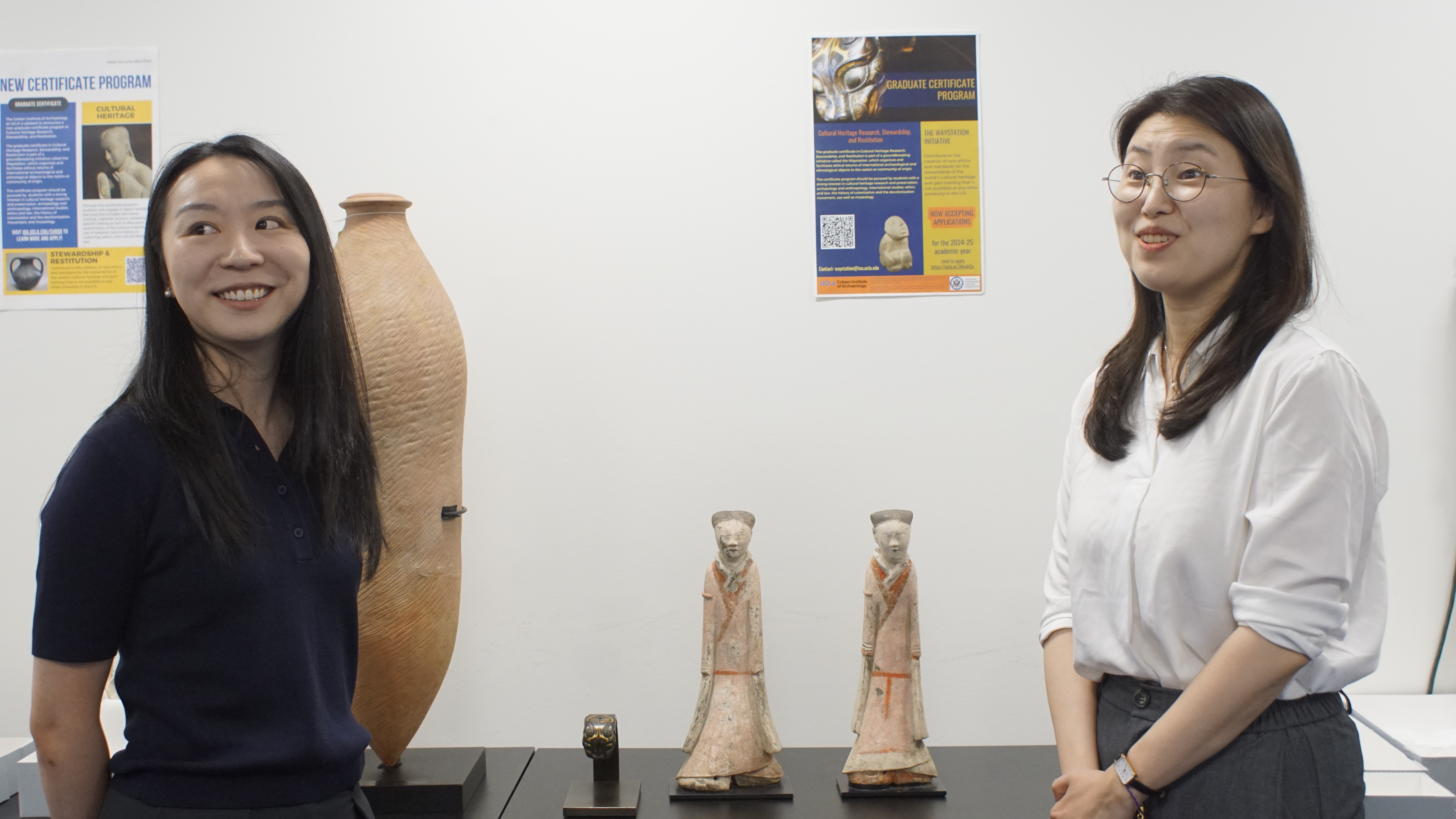
In June 2025, the Waystation completed the return of eight cultural objects to the People’s Republic of China (Fig. 3). This return was carried out as part of a broader agreement among the Waystation, Shandong University’s Qingdao campus, and China’s National Cultural Heritage Administration to facilitate the restitution of Chinese archaeological materials in the Waystation’s care.
NEW INTERNATIONAL COLLABORATIONS
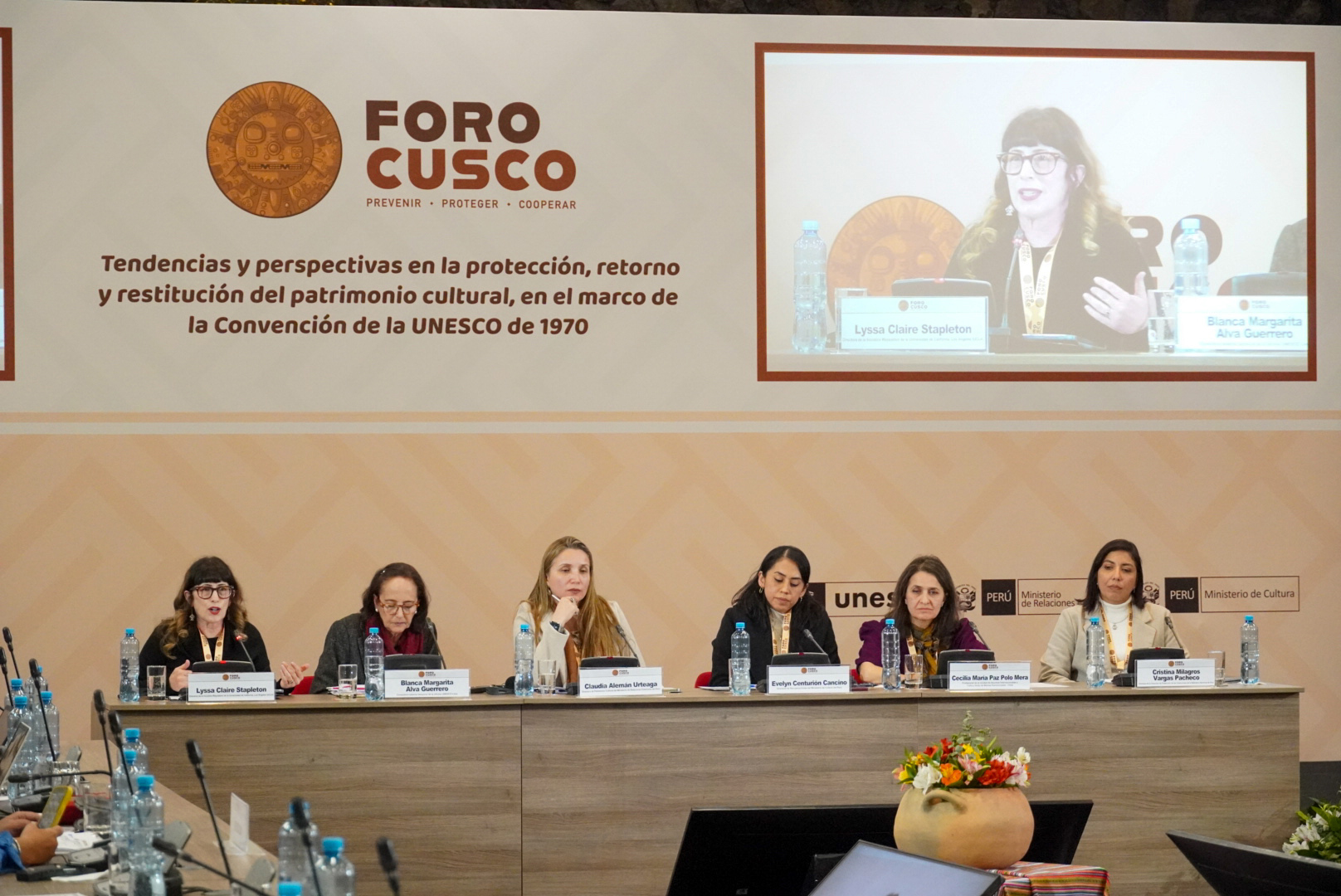
In May I traveled to Peru to participate in the Cusco Forum, a conference of Latin American nations dedicated to the enforcement of the 1970 UNESCO Convention on the Means of Prohibiting and Preventing the Illicit Import, Export, and Transfer of Ownership of Cultural Property. I was honored to be included in a special panel titled Trends and Perspectives on the Protection, Return and Restitution of Cultural Property Within the Framework of the 1970 UNESCO Convention (Fig. 4).
While in Peru, I met with representatives from the Ministry of Culture, the Ministry of Foreign Affairs, and the University of Engineering and Technology (UTEC) in Lima. These meetings advanced discussions with the Ministry of Culture about a collaboration that will both support Peru’s cultural heritage protection efforts and allow Waystation-affiliated stu-dents to conduct research on Peruvian objects that we are temporarily stewarding. We are deeply grateful for the support of our Peruvian col-leagues in the United States as well as in Lima, including Andrés Garrido, head of the Public Diplomacy Department, Embassy of Peru; Jaime Casafranca, consul general, Peruvian Consulate of Los Angeles; Juan Montoya, Ministry of Foreign Affairs, Peru; Claudia Aleman, Ministry of Foreign Affairs, Peru; and Evelyn Centurion, Ministry of Culture, Peru.
The Waystation has also established parameters for a pilot collabo-ration with UTEC, supporting partnerships between students in UTEC’s Masters Program in Collections Management and Preventive Conservation and UCLA students working with the Waystation. Envisioned by Professors Juan Carlos F. Rodríguez Reyes and María Inés Velarde, together with Vanessa Muros and myself, this collaboration will enable joint planning for the long-term care of objects repatriated to Peru. The Waystation thanks Solsiré Cusicanqui Marsano for facilitating these connections and strengthening the Waystation’s ties across Latin America.
With the assistance of Aída Velasco, consul for cultural and educa-tional affairs at the Consulate General of Mexico in Los Angeles, the Waystation has also initiated conversations with Mexico’s Instituto Nacional de Antropología e Historia (INAH). The goal is to establish a collaboration with INAH parallel in spirit to those underway with Peru and China.
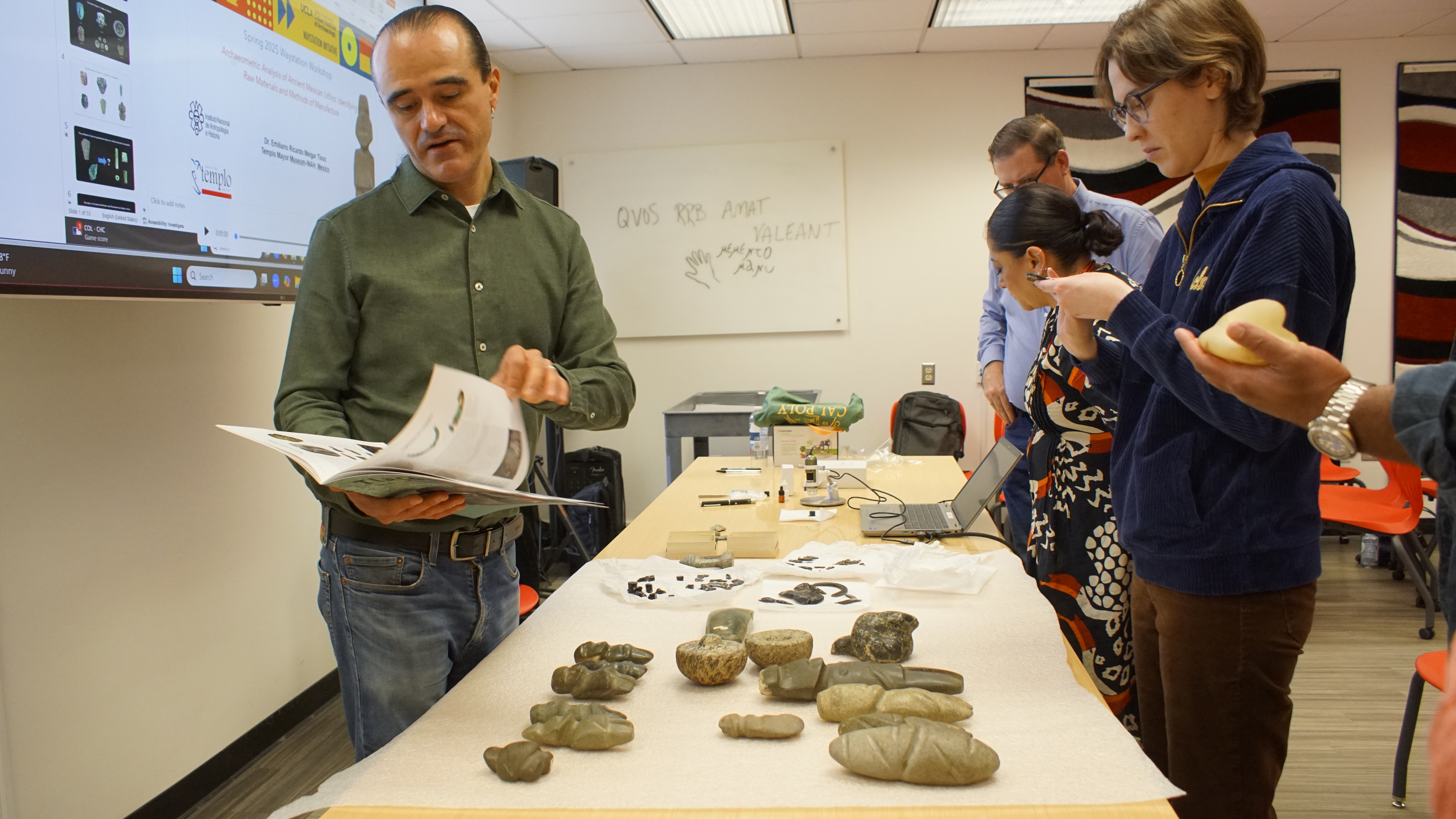
Spring 2025 proved to be an especially active period for the Waystation. In addition to the return of objects to China, the Peruvian partnership meet-ings, and planning for the postponed convening, the Waystation accepted a group of lithics from the estate of Jay and Deborah Last and organized a workshop on Mexican lithics. The workshop, titled Archaeometric Analysis of Ancient Mexican Lithics: Identifying Raw Materials and Methods of Manufacture, was led by Emiliano Melgar Tisoc, an INAH researcher at the Templo Mayor in Mexico City and a specialist in lithic studies (Fig. 5). Melgar was on campus to discuss his new book, Lapidary Objects from the Great Temple: Styles and Technological Traditions, and generously dedicated time to analyze materials from the Last Collection and share his expertise with the Cotsen Institute community.
PATHWAYS TO ACADEMIA: THE UCLA CULTURAL HERITAGE SUMMER PROGRAM, 2025
In spring 2025, Jason De León and I were awarded a grant from the University of California–Hispanic Serving Institutions Doctoral Diversity Initiative (UC–HSI DDI) to support a pilot summer program for students from historically underrepresented communities enrolled at local colleges. Partnering with Professors Julienne Bernard (East Los Angeles College) and Kenneth Seligson (California State University, Dominguez Hills), the program accepted eight city college and undergraduate students (Fig. 6).
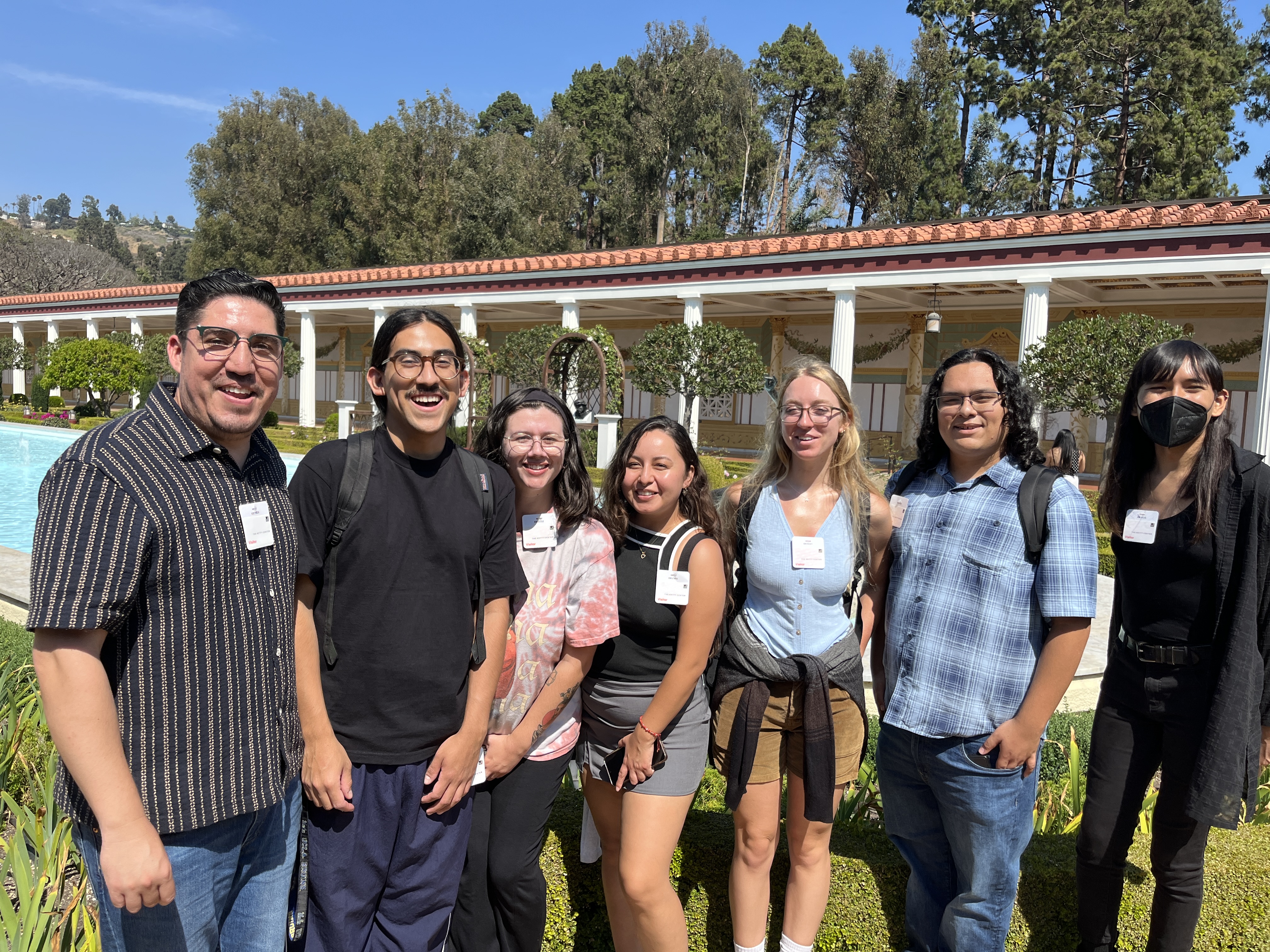
The UC–HSI DDI provides resources to expand pathways toward faculty diversity through programmatic, pedagogical, mentoring, and policy development initiatives. The program’s overarching goal is to help underrepresented students advance toward doctoral education and the professoriate. According to the UC–HSI DDI 2024 request for proposals, “UC has experienced a 73% increase in Latinx undergraduate enrollment over the past decade—from 34,971 in 2011 to 60,651 in 2023. As of fall 2023, the UC system achieved the 25% Latinx undergraduate enrollment threshold required for HSI designation; however, only 12% of UC doctoral students were Latinx.” UCLA is actively pursuing federal designation as a Hispanic Serving Institution.
The Waystation’s four-week experiential summer learning program was a collaboration between UCLA and two HSI campuses—California State University, Dominguez Hills (CSUDH), and East Los Angeles College (ELAC). Its goal was to deepen students’ understanding of how cultural heritage connects past, present, and future while equipping them with research and professional development skills essential for graduate study.
Through mentorship and collaborative learning, participants developed research designs, crafted abstracts, and prepared for academic conferences. They examined the ethical, legal, and social histories of collecting ethnographic and archaeological materials, exploring topics such as rematriation and repatriation, heritage and social justice movements, and global efforts to safeguard cultural heritage.
Working collaboratively, students designed research projects centered on Waystation-held objects slated for return to nations or communities of origin. They also drafted abstracts for professional conference submissions and prepared for an Ethics Bowl, scheduled for the final week of the program. Each student established a research project, and all eight will present papers or posters at the 91st Annual SAA Meeting, April 29–May 3, 2026, in San Francisco. Between the conclusion of the summer session in early September and the SAA meeting, students will continue to receive mentorship from Bernard, De León, Seligson, and myself to ensure they are fully prepared to present their research.
The Waystation’s SAA symposium, titled International Cultural Heritage Restitution: From Provenance Research to Collaborative Return, includes 13 papers by 16 authors. Among them are several of our summer program students, Archaeology IDP student Katrina Kuxhausen, 2024–2025 visiting graduate researcher Anauene Dias Soares, former Waystation undergraduate intern Chloe Gupta, and diverse international scholars.
The summer program concluded with a two-day Ethics Bowl titled Heritage and Social Justice—Who Owns Culture? There, students engaged in structured debates based on two case studies, working in opposing teams of four. Case Study 1, Operation Cerberus Action, examined law enforcement’s 2009 response to the looting of Native American sites in the Four Corners region of the United States. Case Study 2, The Restitution Study Group and the Return of the Smithsonian’s Benin Bronzes, explored the perspectives of Black Americans with ancestral ties to Nigeria regarding the Smithsonian’s return of cultural objects to Benin. Each session featured three judges and a moderator (Stapleton). Judges included program mentors Bernard and Seligson; Erica Jones, senior curator of African Arts and manager of curatorial affairs at the Fowler Museum; Kristine Martirosyan-Olshansky, director of the Armenian Lab at UCLA’s Cotsen Institute of Archaeology; Paige Hilman, an MA student in conservation; and Jessica Strayer, the NAGPRA/CalNAGPRA adminis-trative manager at the Fowler Museum.
WAYSTATION INITIATIVE IMPACT AND FUTURE DIRECTIONS
The inaugural Cultural Heritage Summer Program was a resounding success, and the Waystation is exploring options to make it an ongoing opportunity. Expanding undergraduate engagement directly supports the Waystation’s broader goals: advancing collaborative research while fostering ethical stewardship and inclusive pathways for emerging cultural heritage professionals.
The Waystation Initiative remains deeply committed to promoting ethical stewardship through hands-on training, mentorship, and interdisciplinary collaboration. Its certificate and internship programs cultivate ethical reasoning, research proficiency, and cross-cultural communication—skills that strengthen students’ academic work and professional trajectories. At the same time, the Initiative’s broader efforts in shared stewardship, voluntary returns, and culturally informed collections care continue to model responsible and reciprocal practices for the field.
-
Students interested in interning with the Waystation should email us at waystation@ioa.ucla.edu. ↩︎